A/A Testing: Sanity-Checking Your Experiments
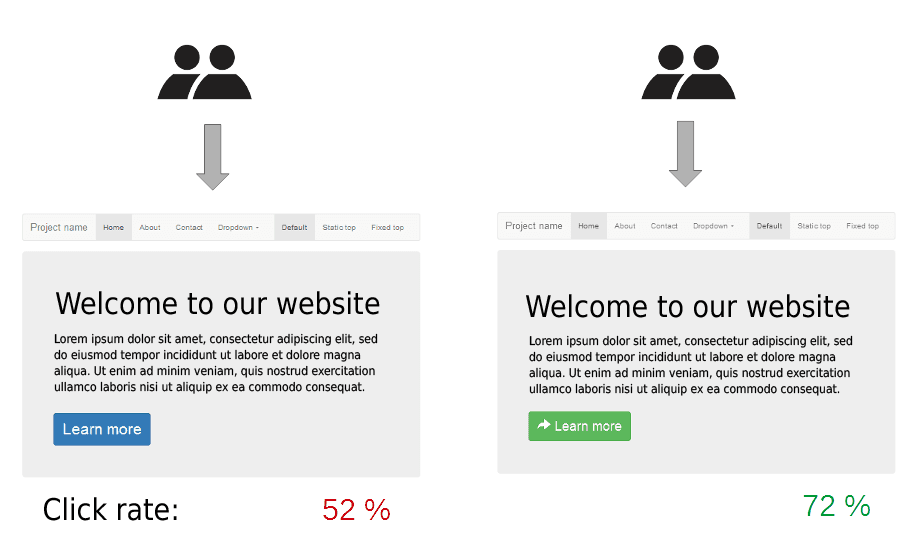
A/A testing is a fire drill for your A/B testing system. You run two identical versions of a page to ensure your tools are working correctly before a real experiment. The biggest footgun is panicking at a false positive; 1 in 20 tests will show.
WHY IT EXISTS: A/B testing relies on the core assumption that the only difference between user groups is the specific change being tested. A/A testing was created to verify this assumption. It checks for hidden biases in the testing infrastructure itself, like faulty randomization or data logging. If you cannot prove two identical experiences perform the same, you cannot trust your tools when they report a difference.
THE MENTAL MODEL: Think of A/A testing as calibrating a sensitive scale. Before weighing two different items to see which is heavier, you would first place two identical weights on the scale to ensure it reads zero difference. An A/A test does exactly this for your experimentation platform, ensuring it's properly calibrated before you measure the impact of real changes.
HOW IT WORKS: An A/A test is configured just like a standard A/B test, but both variants are identical to the control experience. Traffic is split evenly between these two identical groups. You then collect data and run the same statistical analysis you would for an A/B test. The expected and desired outcome is to find no statistically significant difference between the two groups.
WHEN TO USE IT: Use an A/A test when implementing a new experimentation tool, after making significant changes to your existing testing infrastructure, or as a periodic health check on your systems. It's a validation step that builds confidence that any results you see in future A/B tests are trustworthy and not artifacts of a broken system.
WHEN NOT TO USE IT: Do not run an A/A test to find a "winner," as there is none by design. It is also an inefficient use of user traffic to run them constantly if your system is stable and has been previously validated. It is a tool for validation and debugging, not for product optimization.
ONE CANONICAL EXAMPLE: An e-commerce team plans a major A/B test on their checkout flow. To ensure their analytics tool is sound, they first run an A/A test for one week. They split 10% of their traffic evenly, sending 5% to the current checkout flow (Group A1) and the other 5% to the exact same checkout flow (Group A2). They monitor conversion rates and find no statistically significant difference. This gives them confidence to proceed with their actual A/B test.
Read the original → en.wikipedia.org
Get five bites like this every day.
Tezvyn delivers a daily feed of 60-second tech bites with quizzes to lock in what you learn.