Anatomy of a Typeface: Why Letters Lie to Your Eyes
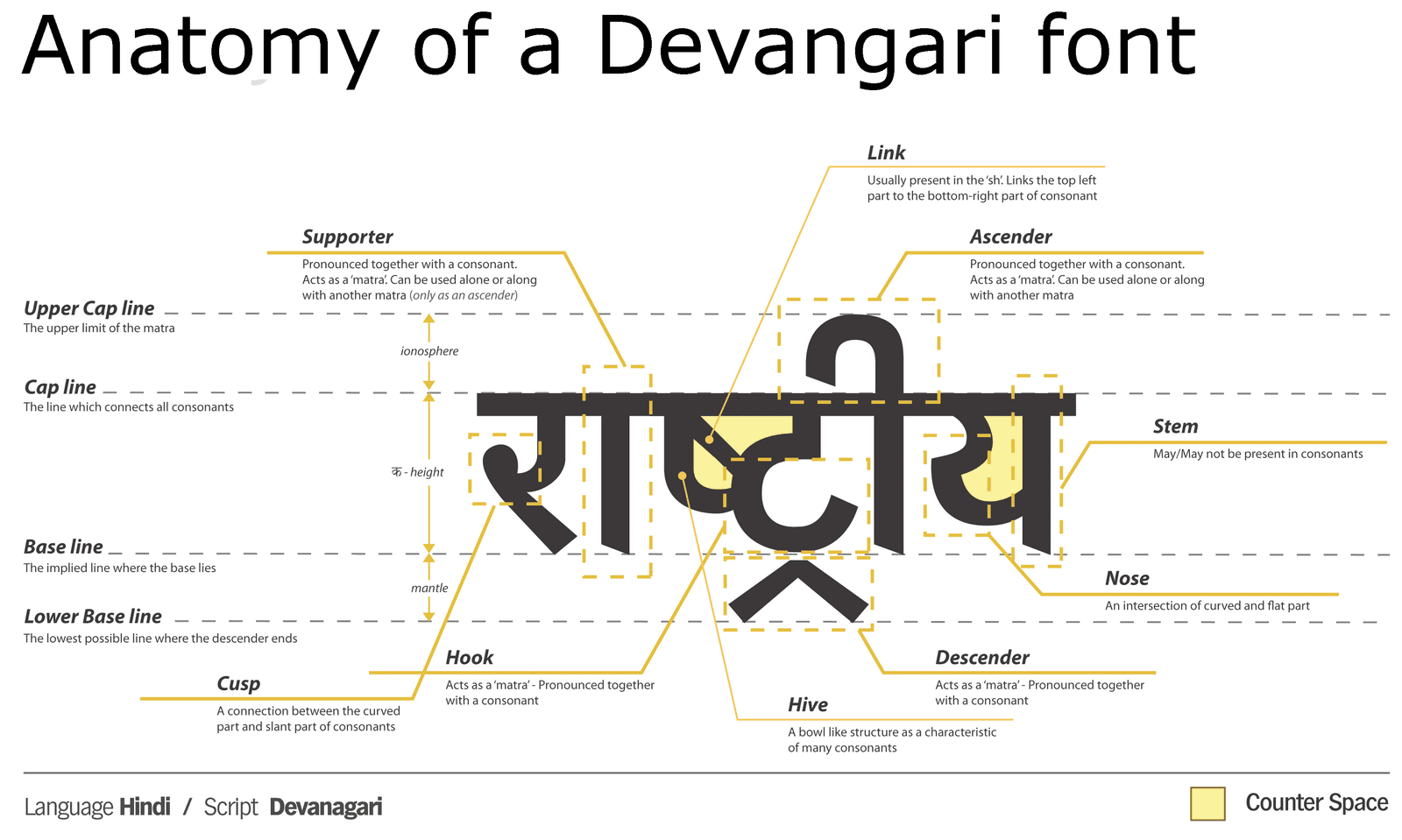
Typeface anatomy is a system of optical illusions. Letters are drawn with inconsistent dimensions to appear uniform. This is why a circle must be taller than a square to look the same size. The footgun is trusting bounding boxes over your eyes for alignment.
WHY IT EXISTS Typefaces are designed for human perception, which is imperfect. Shapes that are mathematically identical often don't appear so to our eyes. Typeface anatomy exists to systematically compensate for these optical quirks, creating a harmonious and legible reading experience that geometric purity alone cannot achieve.
THE MENTAL MODEL Think of typeface design as a game of drawing things differently to make them appear the same. It's a system of controlled inconsistencies. To appear the same height as a square, a circle must be measurably taller. The goal is perceptual balance, not mathematical equality.
HOW IT WORKS This principle of optical correction is applied throughout a font's design. For example, the two strokes in an 'X' are not the same thickness, which prevents the intersection from looking too dark or heavy. The vertical stems of lowercase letters are often thinner than those of their capital letter counterparts to create a balanced texture on the page. Similarly, the ascender on a 'd' isn't the same length as the descender on a 'p'. These subtle adjustments are everywhere once you know to look for them.
WHEN TO USE IT Understanding these principles is vital for UI designers and anyone making layout decisions. When a design element feels 'off' despite being pixel-perfectly aligned, optical correction is often the answer. Trust your eyes to make final adjustments, especially when aligning icons with text or balancing different shapes. For instance, you might need to manually nudge a circular icon down a few pixels to make it feel vertically centered next to a block of text.
WHEN NOT TO USE IT You don't need to redraw letters or apply these corrections yourself; the type designer has already done that work. The key is awareness, not manual intervention in every case. Rely on the font's built-in metrics for initial layout, but be prepared to override them when your eyes spot a visual imbalance.
ONE CANONICAL EXAMPLE The letter 'O' versus the letter 'H'. An 'H' has flat tops and bottoms that sit squarely on the baseline and cap-height lines. To appear the same size, a round letter like 'O' must extend slightly above and below these lines. This is called 'overshoot'. Without it, the 'O' would look noticeably smaller than the 'H'.
Read the original → en.wikipedia.org
Get five bites like this every day.
Tezvyn delivers a daily feed of 60-second tech bites with quizzes to lock in what you learn.