Character Voice: Making Characters Sound Distinct
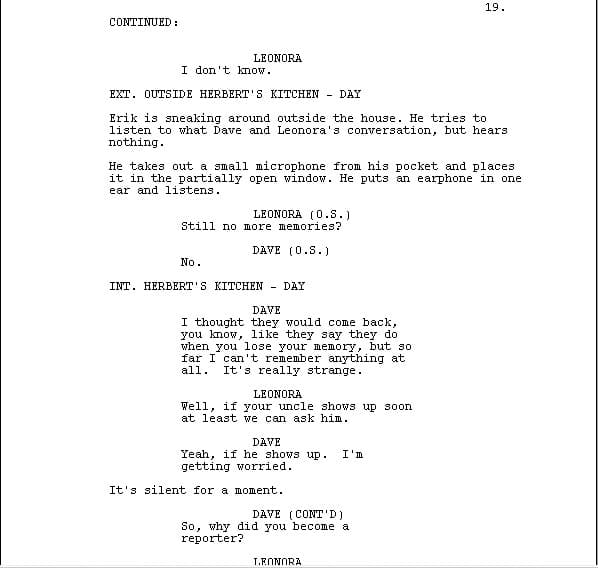
Character voice is a verbal fingerprint—not just what characters say, but their unique way of saying it based on who they are. It's crucial in scriptwriting for believable dialogue that reveals personality.
WHY IT EXISTS: To make characters believable, distinct, and memorable. Without unique voices, characters blend together, forcing the writer to rely on clunky exposition ('As you know, I'm a tough-as-nails detective...') instead of showing personality through dialogue.
THE MENTAL MODEL: Think of character voice as a verbal fingerprint. It's the unique combination of a character's word choice (diction), sentence structure (syntax), rhythm, and favorite topics. It’s not just what they say, but the specific way they choose to say it, which reveals their background, education, and worldview.
HOW IT WORKS: Voice is built from several layers. Diction is the vocabulary: does the character use simple words or complex ones, slang or formal language? Syntax is sentence construction: are their sentences long and flowing, or short and choppy? Rhythm and pacing dictate the speed and flow of their speech. Subtext is what they mean but don't say. A character's voice is the sum of these choices.
WHEN TO USE IT: Always, for every character that speaks. It's a foundational element of characterization in any narrative medium, from screenplays and novels to video games and even chatbot personas. Strong voices help the audience distinguish characters, even off-screen.
WHEN NOT TO USE IT: The primary footgun is author intrusion: when all characters, regardless of their background, sound exactly like the author. This breaks immersion. Another is creating a one-dimensional caricature (e.g., the 'tech bro' who only speaks in buzzwords) instead of a nuanced person. A voice should be consistent but also evolve with the character's arc.
ONE CANONICAL EXAMPLE: In the film Juno, the title character has a highly specific voice. She uses quirky, hyper-stylized slang ('Honest to blog?') and a deadpan, sarcastic tone. This immediately sets her apart as an intelligent, witty, and somewhat guarded teenager. Her voice is so distinct that it became a hallmark of the film and a clear demonstration of a voice that is anything but generic.
Read the original → en.wikipedia.org
Get five bites like this every day.
Tezvyn delivers a daily feed of 60-second tech bites with quizzes to lock in what you learn.