Containerization: Packaging Apps to Run Anywhere
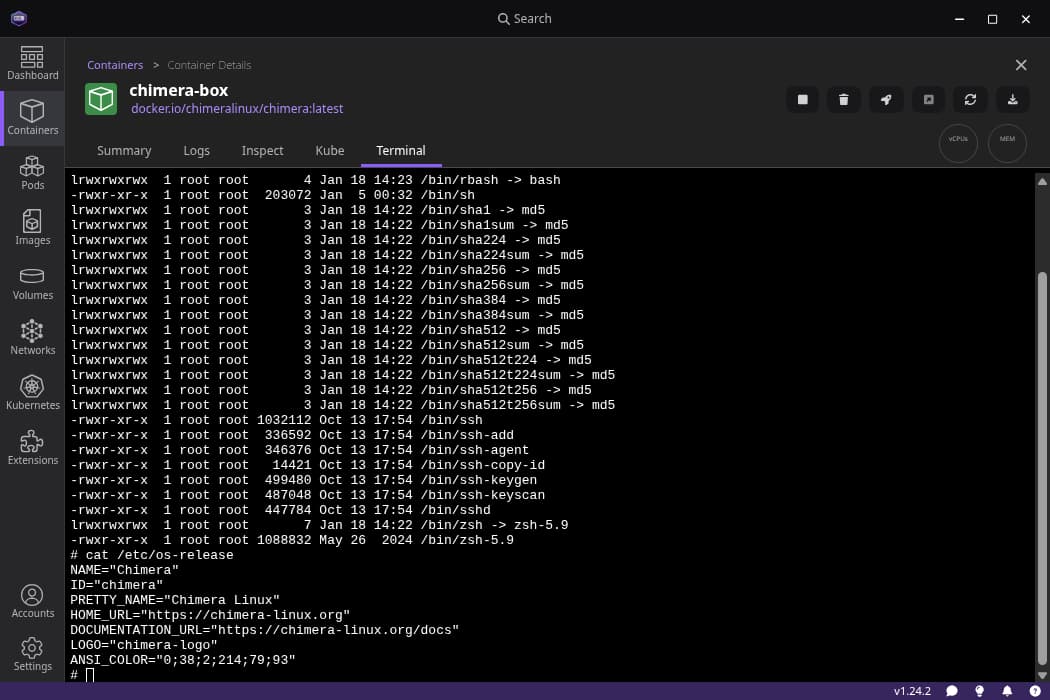
Think of a container as a standardized box for your app, bundling its code and all dependencies. This ensures it runs the same everywhere, solving "it works on my machine" problems. The footgun is confusing them with VMs; containers are less isolated.
WHY IT EXISTS Before containers, deploying software was a constant battle against environment drift. An application that worked on a developer's machine might fail in production because of a different library version or OS patch. Containerization was created to solve this by packaging an application with its entire runtime environment, ensuring consistency everywhere.
THE MENTAL MODEL Think of a software container like a physical shipping container. A shipping container can be moved by any standard truck, train, or ship because its format is universal. Similarly, a software container bundles an application and its dependencies, allowing it to run on any host system with a container runtime, abstracting away the underlying infrastructure.
HOW IT WORKS Containerization is a form of operating-system-level virtualization. Unlike a Virtual Machine (VM) that virtualizes hardware to run a full guest OS, a container virtualizes the OS itself. Multiple containers run as isolated processes on a single host's kernel. Each has its own private filesystem, process space, and network interface, but they all share the same underlying OS kernel. This makes them far more lightweight and faster to launch than VMs.
WHEN TO USE IT Use containers when you need application portability and consistent environments from development to production. They are ideal for microservices architectures, where many small, independent services need to be deployed and scaled efficiently. They are also fundamental to modern CI/CD pipelines, guaranteeing that what you test is what you deploy.
WHEN NOT TO USE IT Avoid containers when you need to run an application that requires a different OS kernel than the host (e.g., a Windows application on a Linux server). Also, if you require the strongest possible security boundary between applications, a full VM is a better choice. Since containers share the host kernel, a kernel vulnerability could potentially affect all containers on that host.
ONE CANONICAL EXAMPLE A developer builds a Python web app on their laptop. They package the app, the specific Python version, and all required libraries into a container image. This image is sent to a test server, which runs it without installing Python or any libraries on the host. Once verified, the exact same image is deployed to dozens of production servers in the cloud, ensuring identical behavior everywhere.
Read the original → en.wikipedia.org
Get five bites like this every day.
Tezvyn delivers a daily feed of 60-second tech bites with quizzes to lock in what you learn.