Email Spam: The Origin of Junk Mail
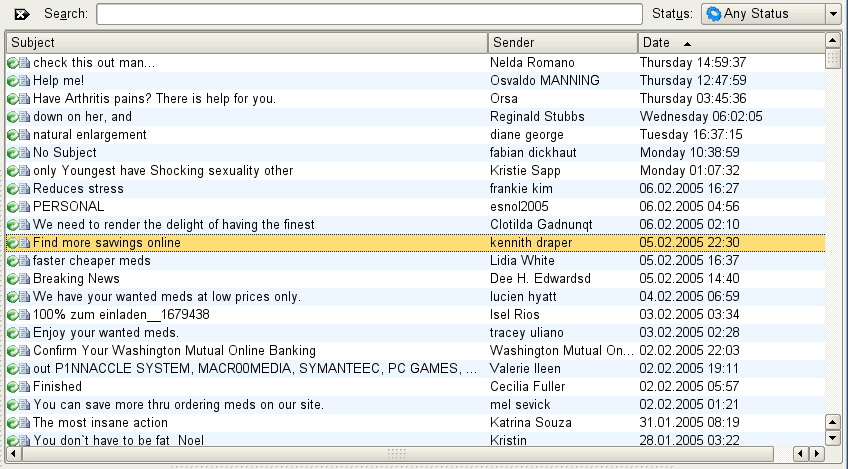
Email spam is any unsolicited message sent in bulk. Named after a Monty Python sketch for its intrusive nature, it grew to comprise 90% of all email by 2014, making spam filters a universal necessity.
WHY IT EXISTS Email spam is the term for unsolicited messages sent in bulk. The problem emerged because the email protocol allows for messages to be sent to vast numbers of recipients easily. While the specific motivations for sending spam aren't covered by its origin story, its existence is defined by this capability of mass, unsolicited communication. This practice has grown significantly since its early days in the 1990s.
THE MENTAL MODEL Think of the Monty Python sketch where the term originated. A couple in a cafe tries to order breakfast from a menu where nearly every dish contains Spam, a canned meat. As they try to order something without it, a group of Vikings starts chanting "Spam, Spam, Spam," drowning out all other conversation. This is the perfect analogy for junk email: it's an intrusive, repetitive, and unwanted element that overwhelms the primary purpose of your inbox.
HOW IT WORKS The mechanism is straightforward: messages are sent "in bulk via email." This implies a system where a single sender can distribute an identical message to a massive list of recipients simultaneously. The power of this bulk-sending capability is demonstrated by its staggering growth. By 2014, this method of communication had become so prevalent that it was estimated to account for around 90% of all email traffic exchanged globally, turning a simple annoyance into a systemic problem.
ITS PRIMARY IMPACT The most significant impact of spam is the overwhelming signal-to-noise problem it creates. With an estimated 9 out of every 10 emails being junk by 2014, email as a communication tool would be practically unusable without a defense mechanism. This reality forced the development and universal adoption of spam filters. The fight against spam is not just about blocking annoying ads; it's a continuous battle to preserve the usability of one of the internet's foundational communication systems.
ONE CANONICAL EXAMPLE The canonical example isn't a specific spam email but the origin story that perfectly illustrates the concept. The Monty Python sketch itself serves as the key example. The feeling of being unable to escape the repetitive mention of "Spam" in the cafe directly mirrors the user experience of an inbox flooded with unsolicited emails. The name itself, borrowed from this sketch, is a constant reminder of the intrusive and overwhelming nature of the problem.
Read the original → en.wikipedia.org
Get five bites like this every day.
Tezvyn delivers a daily feed of 60-second tech bites with quizzes to lock in what you learn.