Freemium Model: Free Forever, Pay for More
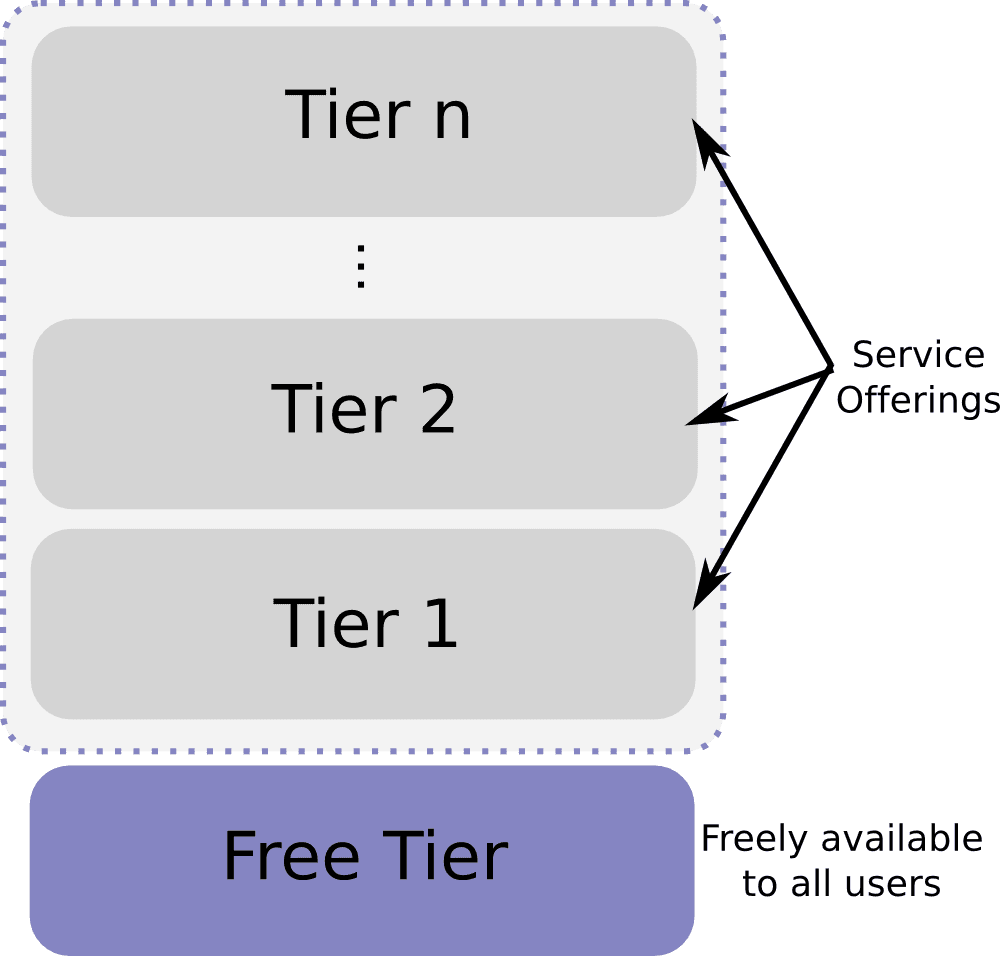
The Freemium model offers a basic product for free, charging only for premium features, services, or goods. This pricing strategy is common in software and video games (as "free-to-play").
WHY IT EXISTS: The freemium model was created to solve the challenge of user acquisition. By eliminating the upfront cost, a product can attract a very large user base with minimal marketing friction, creating a wide funnel of potential paying customers.
THE MENTAL MODEL: Think of freemium not as a time-limited trial, but as a permanently free, feature-limited product that also serves as the primary marketing tool for its paid counterpart. A basic version is given away for free forever. The goal is to get users to value the core product enough that they willingly pay to unlock more powerful features or remove limitations.
HOW IT WORKS: Freemium is a portmanteau of "free" and "premium". A company provides a basic version of its product or service completely free of charge. Revenue is generated by charging for upgrades that expand the functionality of the free version. According to the model, these paid upgrades are not limited to software features; they can also include additional services, virtual goods like in-game items, or even physical goods tied to the service.
WHEN TO USE IT: This model is a staple in the software industry, where it has been used since the 1980s. It is also extremely common in the video game industry, where it is known as the "free-to-play" model. It works well for products where functionality can be separated into distinct tiers, allowing a useful-but-limited free version to exist alongside more powerful paid versions.
WHEN NOT TO USE IT: Freemium is less effective for products where the core value is difficult to offer in a limited capacity or where the cost of serving a free user is high. If the free product isn't compelling, it won't attract users. If the premium features aren't a significant upgrade, free users won't have a reason to convert to paying customers.
ONE CANONICAL EXAMPLE: The "free-to-play" video game model is a classic application of freemium. A game can be downloaded and played for free, attracting millions of players. The game studio then makes money by selling optional virtual goods, such as cosmetic skins for characters, time-savers, or access to exclusive content. This directly maps to charging for "virtual (online) goods" to expand on a free service.
Read the original → en.wikipedia.org
Get five bites like this every day.
Tezvyn delivers a daily feed of 60-second tech bites with quizzes to lock in what you learn.