How do OAuth2 scopes enable granular permissions in FastAPI versus role-based checks?
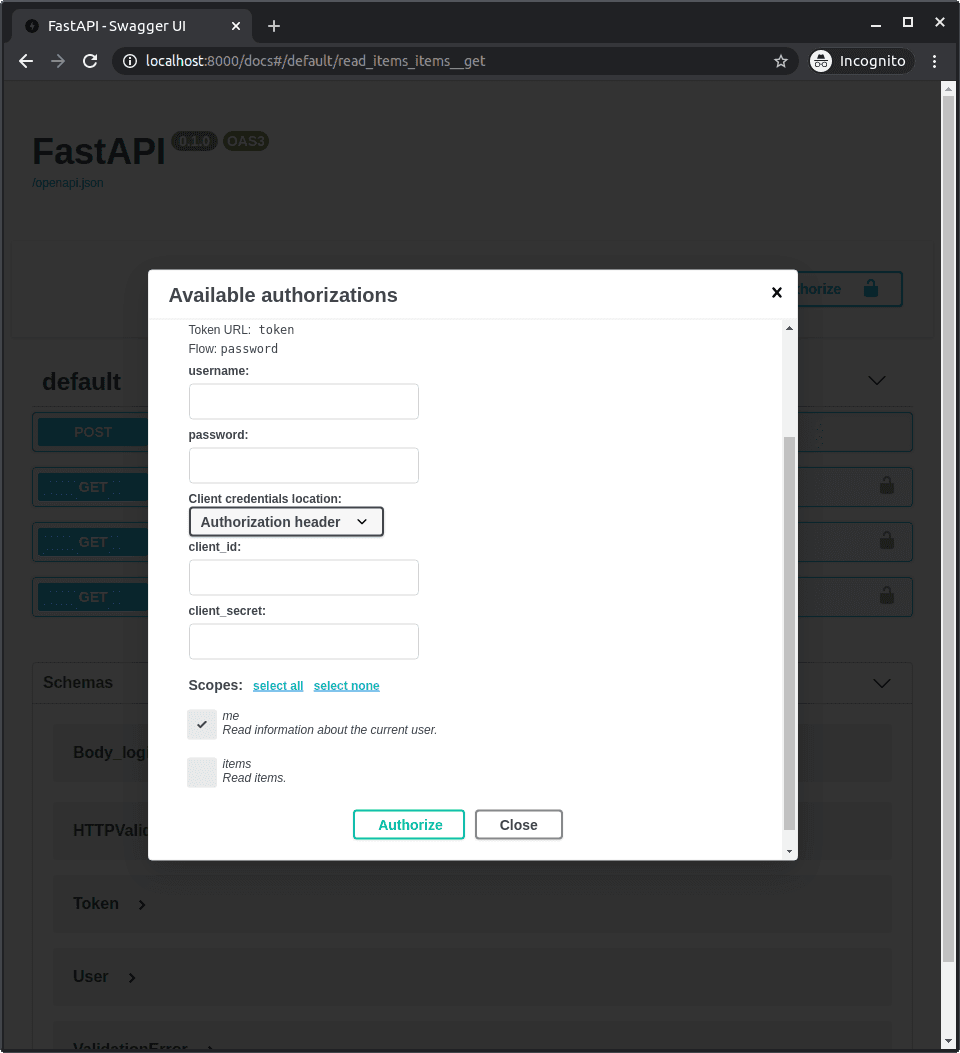
Tests OAuth2 scope granularity vs RBAC and FastAPI SecurityScopes. Strong answers mention JWT claim strings, SecurityScopes per endpoint, and that RBAC is coarse while scopes are fine-grained. Red flag: treating scopes as roles or skipping claim checks.
What's really being asked
Whether you understand OAuth2 scopes as a standard authorization mechanism and how FastAPI integrates them via SecurityScopes for fine-grained access control, plus the architectural and practical differences between scope-based and role-based permission models.
The full answer
First, the purpose of scopes in OAuth2: they are strings representing specific permissions that a client requests and a user consents to, typically embedded as a space-separated list in a JWT access token. Second, FastAPI mechanics: you define scopes in the OAuth2 security scheme, inject SecurityScopes into dependencies to read the required scopes from path operations, and compare them against the scopes present in the incoming token. Third, the RBAC contrast: roles are coarse, usually static attributes assigned to a user identity, while scopes are fine-grained, transaction-level permissions that can vary per token request and are explicitly granted by the resource owner. Fourth, practical wiring: using SecurityScopes in nested dependencies propagates scope requirements down the dependency tree, and FastAPI automatically documents them in OpenAPI. Fifth, schema visibility: FastAPI renders declared scopes in the generated OpenAPI schema so frontends and SDKs know what permissions to request.
The mistakes people make
Treating scopes as simple user roles stored in a database rather than token-bound claims. Implementing scope checks manually inside every endpoint instead of using reusable dependencies with SecurityScopes. Confusing authentication with authorization by discussing scopes before verifying identity. Claiming that FastAPI automatically enforces scopes without you writing the verification logic in a dependency. Ignoring that scopes are client-requested and user-consented, not just server-assigned.
What usually comes next
How would you handle scope hierarchies or wildcards if the standard only supports exact string matches? What happens if a token has no scopes but the endpoint requires some? How do you test endpoints that depend on SecurityScopes without a full OAuth2 provider? Can you combine scopes with role-based checks in the same dependency graph?
A concrete example
An API has users and items. A token can carry scopes users:read and items:write. The read-users endpoint declares dependencies=[Security(get_current_user, scopes=["users:read"])]. A dependency get_current_user receives a SecurityScopes object, decodes the JWT, splits the scope claim by spaces, and raises an HTTPException with status 403 if the required scope is missing. This differs from RBAC where the user might have a role admin that implicitly grants everything; here the client must explicitly request items:delete in the OAuth2 flow and the user must consent before the token ever contains that string.
Interview question
A FastAPI application must enforce permissions that vary per token and require explicit user consent. What makes OAuth2 scopes with SecurityScopes architecturally different from RBAC for this requirement?
- a.RBAC assigns coarse, static roles to user identities, whereas OAuth2 scopes are fine-grained, token-bound permissions requested by the client and verified in dependencies.Correct
- b.FastAPI automatically validates OAuth2 scopes against the token once they are declared, eliminating the need for custom dependency logic.
- c.OAuth2 scopes are stored as static user attributes in a database, while RBAC permissions are dynamic claims embedded in each JWT.
- d.SecurityScopes requires scope checks to be implemented manually inside every endpoint function rather than in reusable dependencies.
Why? this is the answer
RBAC relies on coarse, static roles tied to user identity, while OAuth2 scopes are fine-grained, token-bound claims that a client requests and a user consents to, requiring explicit verification in a SecurityScopes dependency. Option B is tempting but wrong because FastAPI does not automatically enforce scopes—you must write the verification logic that compares required scopes against the JWT claim.
Just read this? Test yourself on what you have been reading.
Read the original → fastapi.tiangolo.com
You just looked this up. Could you explain it out loud?
That is the part interviews actually test. Tezvyn takes questions like this one and gives you what the interviewer is really checking, the answer that lands, and the mistake that ends the conversation, in the four minutes before your next meeting.
The iPhone app is on the way
We are building it. Until it lands, nothing here is held back from you: every interview card, your saved cards, streaks and the job board all work in Safari, plus hundreds of free practice quizzes of thirty questions each. Sign in and it all carries over to the app the day it arrives.
Want it as an icon? Tap Share at the bottom of Safari, then Add to Home Screen. It opens full screen and the cards you have read stay available offline.
We are hiring for this. Every open role lists the topics its interview covers, so you can prepare for the real thing rather than guessing.
See open roles