Loss Aversion: Why Losing $10 Hurts More Than Gaining $10
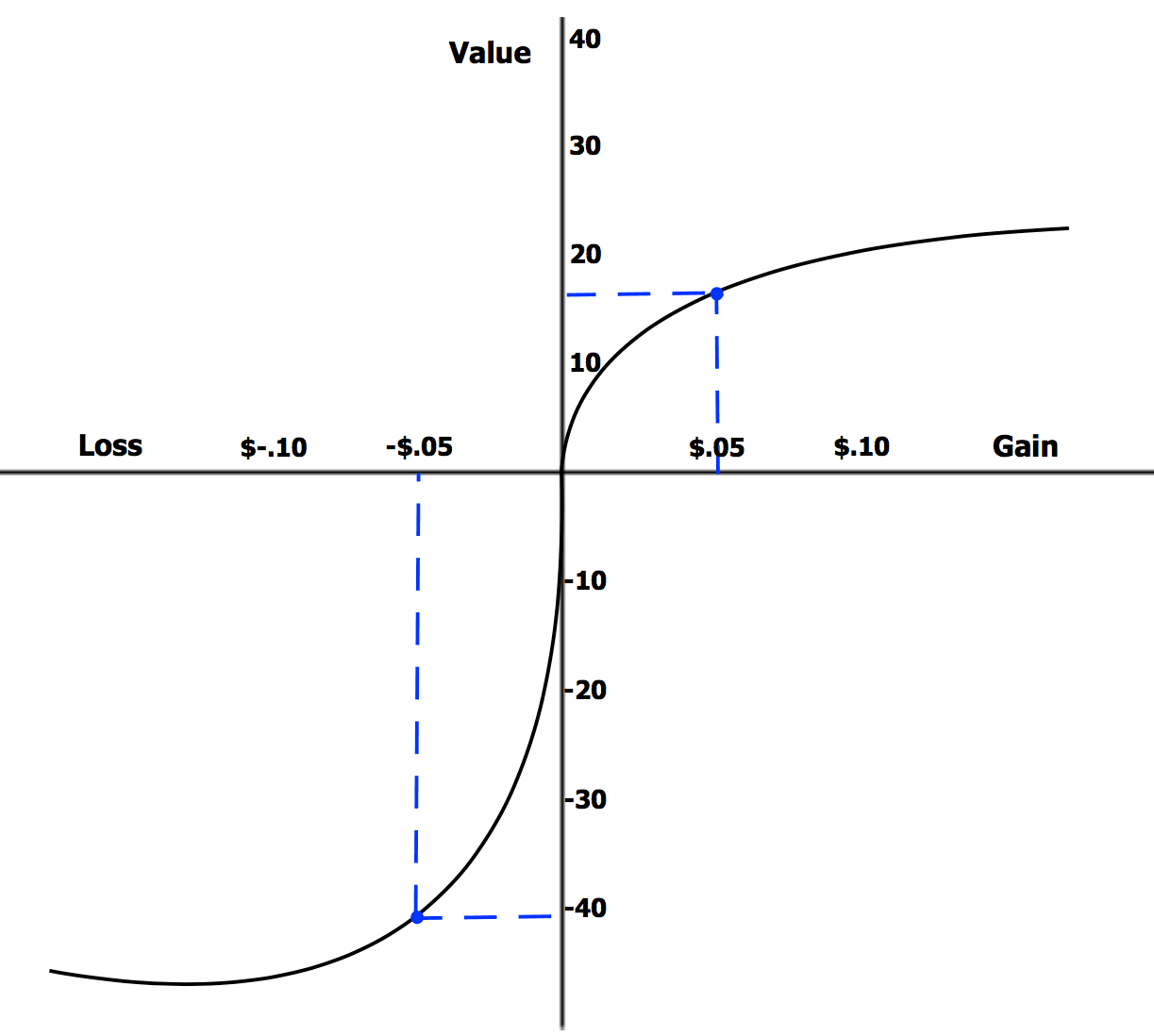
Loss aversion is the bias where losing something feels twice as bad as gaining the same thing feels good. It drives user behavior in free trials and pricing. Don't confuse this emotional reaction to framing with rational risk aversion.
WHY IT EXISTS Humans are wired to react more strongly to potential threats and losses than to potential gains. This was an evolutionary advantage for survival, but in modern contexts like economics or product design, it creates predictable biases in our decision-making. We are predisposed to over-weigh the downside.
THE MENTAL MODEL Think of it as an emotional amplifier for negative outcomes. The subjective pain of losing 100 is significantly greater than the subjective pleasure of winning 100. The two are not equal and opposite on a psychological scale. It's a fundamental asymmetry in how we perceive gains versus losses.
HOW IT WORKS When a choice is framed as avoiding a loss, people are more likely to take action than when the same choice is framed as achieving a gain. For example, a discount framed as "avoid a 5 surcharge" is often more effective than one framed as "get a 5 discount." The perceived value is identical, but the emotional response to the "loss" frame is stronger, compelling more people to act.
WHEN TO USE IT In product design, you can leverage this by offering free trials to create a sense of ownership, making users reluctant to "lose" access when the trial ends. In marketing, framing a price increase as the end of a "discount period" (losing the discount) is more palatable than a simple price hike. It's a powerful tool for driving user action and retention.
WHEN NOT TO USE IT Relying on loss aversion can feel manipulative if not handled carefully. If users feel tricked into a subscription or that a feature was taken away unfairly, it can backfire and create resentment and churn. It is a bias, not a universal law, and should not be confused with rational risk aversion, which is about calculating expected value in uncertain situations.
ONE CANONICAL EXAMPLE In a classic experiment, people are given a choice: receive a guaranteed 50, or take a 50/50 gamble to win 100 or nothing. Most choose the sure 50. But if framed as starting with 100 and choosing between a sure loss of 50 or a 50/50 gamble of losing 100 or losing nothing, many more will take the gamble to avoid the certain loss. The framing, not the value, changes the decision.
Read the original → en.wikipedia.org
Get five bites like this every day.
Tezvyn delivers a daily feed of 60-second tech bites with quizzes to lock in what you learn.