Policy as Code: Rules as Versioned, Testable Code
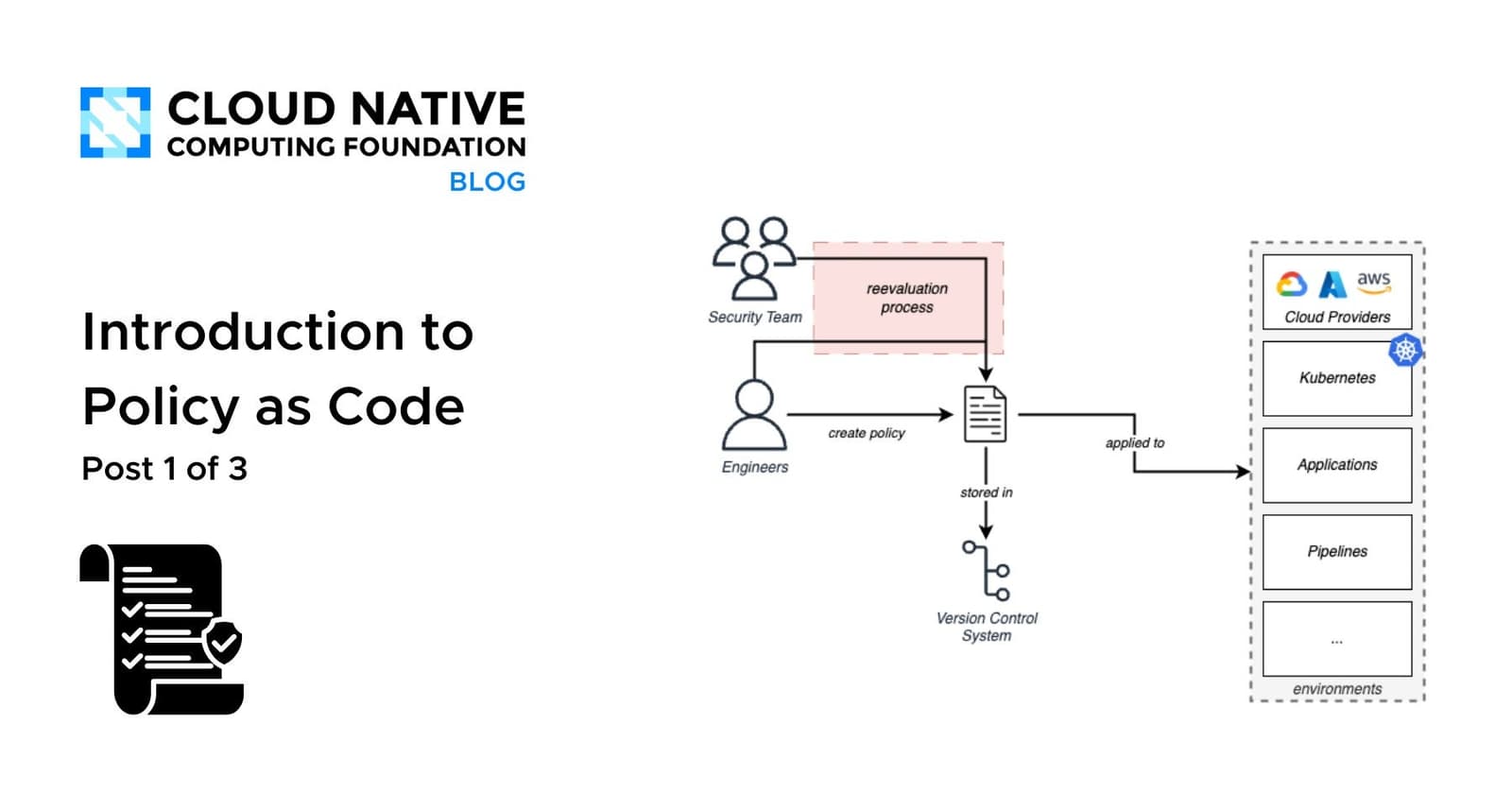
Policy as Code (PaC) treats rules like code: versioned, tested, and automated. Instead of manual UI clicks, you define guardrails in a declarative language. Use it in CI/CD to block bad deploys or in Kubernetes to enforce runtime rules.
Why it exists
Manually configuring security and compliance rules across complex, distributed systems is slow, error-prone, and impossible to scale. As infrastructure became code, the rules governing that infrastructure also needed to become code to keep pace and ensure consistency.
The mental model
Treat your policies—security rules, compliance checks, cost controls—exactly like you treat your application code. They should live in a version control system like Git, be subject to code review via pull requests, have automated tests, and be deployed through a CI/CD pipeline. Instead of a human clicking buttons in a console to, say, prevent public S3 buckets, a machine enforces a rule written in a declarative language.
How it works
You choose a policy engine (like Open Policy Agent - OPA) and a policy language (like Rego). You write policies that define the desired state or constraints, such as "all container images must come from our trusted registry." These policies are then integrated at key points in the software lifecycle. This could be a CI pipeline step that fails a build, a Kubernetes admission controller that rejects a deployment, or an API gateway that denies a request. The engine evaluates incoming configurations against the policies and returns a simple allow/deny decision.
When to use it
Use PaC when you need to enforce consistent guardrails at scale, especially in multi-cloud or hybrid environments. It is critical for regulated industries that require auditable proof of compliance. Key use cases include pre-deployment checks in CI/CD, Kubernetes admission control, and continuous compliance scanning of cloud resources.
When not to use it
PaC can be overkill for small, simple systems with a high-trust team where manual configuration is manageable. It introduces a new dependency—the policy engine—and a learning curve for the policy language. If your rules are simple and static, and your team lacks the skills to manage policy as code, a simpler approach may be better.
One canonical example
A platform team uses Open Policy Agent (OPA) as a Kubernetes admission controller. A developer tries to deploy a service using an image from a public, untrusted repository. The Kubernetes API server forwards the request to OPA, which evaluates it against a policy stating "all images must originate from our company's private registry." Since the image is from an untrusted source, OPA returns a "deny" decision, the API server rejects the deployment, and the developer receives an immediate, automated message explaining the failure.
Interview question
What is a core benefit of Policy as Code (PaC) compared to manual policy management?
- a.It simplifies policy creation through intuitive graphical user interfaces for all stakeholders.
- b.It enables policies to be versioned, tested, and consistently applied across varied infrastructure.Correct
- c.It guarantees that no misconfigurations can ever bypass runtime enforcement mechanisms.
- d.It removes the necessity for human oversight in security and compliance processes.
Why? this is the answer
Policy as Code treats policies like application code, allowing them to be managed in version control, subjected to automated tests, and deployed consistently across diverse environments, which is a key benefit for scalability and reliability. While PaC automates enforcement, it does not eliminate the need for human expertise in defining and reviewing policies, making option D incorrect. PaC typically uses declarative languages, not graphical interfaces, and introduces a learning curve, making option A incorrect. Option C uses absolute terms like 'guarantees' and 'ever', which are generally false; PaC significantly reduces misconfigurations but doesn't eliminate all possibilities.
Just read this? Test yourself on what you have been reading.
Read the original → cncf.io
Put your scrolling time to good use
Learn one idea, try a quiz and save useful cards for revision. Tezvyn makes it easy to learn and stay current in your tech field, a few minutes at a time.
The iPhone app is on the way
We are building it. Until it lands, nothing here is held back from you: every interview card, your saved cards, streaks and the job board all work in Safari, plus hundreds of free practice quizzes of thirty questions each. Sign in and it all carries over to the app the day it arrives.
Want it as an icon? Tap Share at the bottom of Safari, then Add to Home Screen. It opens full screen and the cards you have read stay available offline.
We are hiring for this. Open roles that interview on devops — each one lists the topics its interview covers.
See open roles