Propose two strategies for lazy-loading SPA localization data
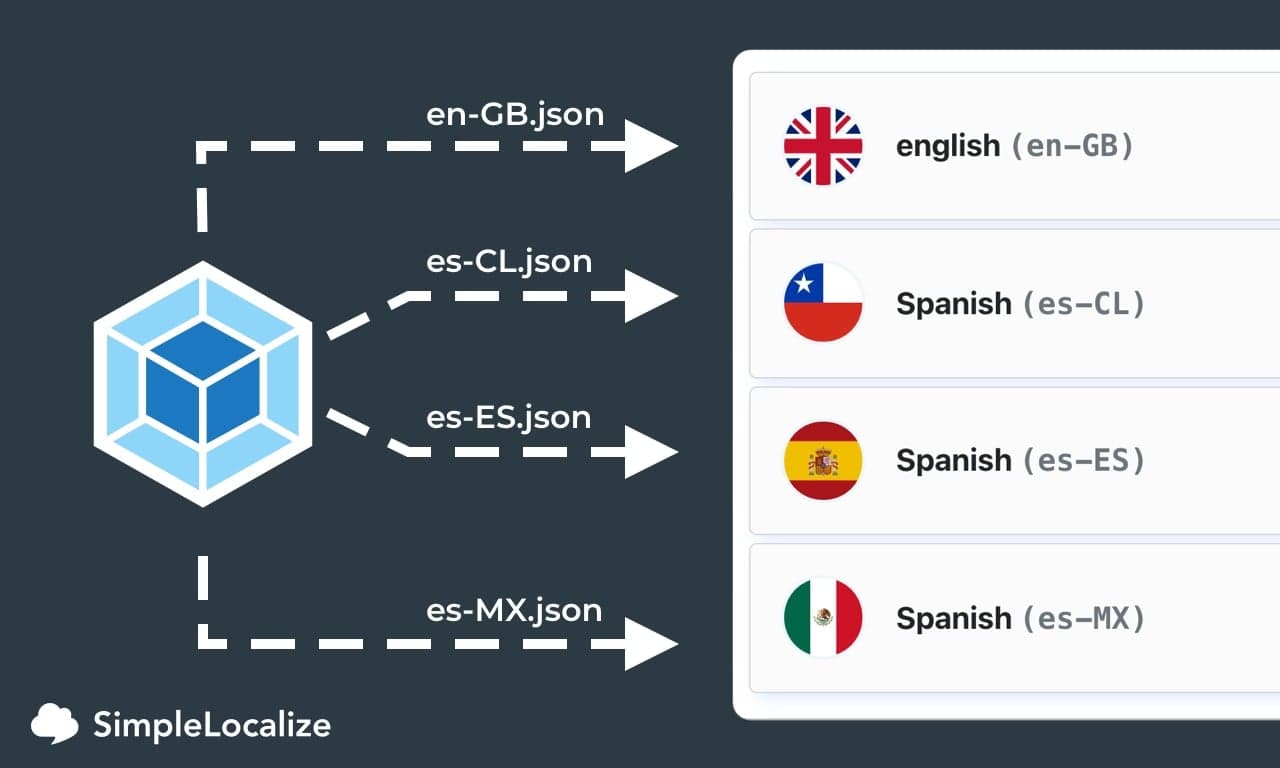
This tests code-splitting for i18n. Strong answers cover: first, per-locale dynamic imports creating separate chunks per language; second, namespace splitting fetching only keys for active UI. Red flag: ignoring bundler chunking or Core Web Vitals impact.
What's really being asked
This question evaluates your ability to marry frontend performance engineering with internationalization architecture. The interviewer wants to see that you understand how modern bundlers create chunks, how dynamic imports work at runtime, and how to measure the outcome through Core Web Vitals rather than just shipping less code blindly.
The full answer
Four things in order. First, per-locale dynamic imports using standard ES dynamic import syntax so the bundler automatically splits each JSON language file into a separate chunk; this turns a roughly 1MB static bundle for 20 languages into a roughly 50KB to 100KB initial payload that only includes the active locale. Second, namespace splitting within a library like i18next so that translations are grouped by UI section such as common, billing, or settings, and each namespace is fetched only when its corresponding component renders. Third, the impact on specific metrics, namely reducing LCP and TTI because the browser downloads and parses less JavaScript on startup. Fourth, a fallback strategy for when a dynamic import fails or a user switches languages mid-session, ensuring the app does not crash or show raw keys.
The mistakes people make
Three red flags stand out. First, suggesting a manual fetch with fetch or XMLHttpRequest without mentioning bundler code-splitting, which misses the point of build-time optimization. Second, proposing to store all translations in a global state manager like Redux without any chunking, which still ships the full payload. Third, ignoring the user experience during language switches by omitting loading states or fallback languages, which can cause layout shifts or blank text that hurts CLS.
What usually comes next
The interviewer may push on four areas. One, how do you handle cache invalidation when translation chunks are versioned separately from the main bundle. Two, how do you prioritize the initial locale chunk to avoid blocking first contentful paint. Three, what is your strategy for right-to-left languages or pluralization rules that require additional logic beyond raw JSON. Four, how would you measure the before-and-after impact using field data from CrUX or lab data from Lighthouse.
A concrete example
Consider a React application using Webpack or Vite. You configure i18next with i18next-resources-to-backend so that the backend callback returns import of a template literal like import of ./locales/{language}/{namespace}.json. When a German user arrives, the bundler has already emitted de/common.js as a distinct chunk; i18next requests only that file, and the settings namespace remains unloaded until the user navigates to the settings page. The initial bundle drops from approximately 1MB to roughly 50KB for the common namespace, improving LCP by several hundred milliseconds on 4G connections.
Interview question
Which architectural approach best reduces initial bundle size and improves LCP for a multi-language SPA using modern bundlers?
- a.Use dynamic imports per locale and namespace so the bundler emits separate on-demand chunksCorrect
- b.Store all translations in a global Redux store and map components to keys at runtime
- c.Fetch translation files from a REST API at runtime to keep them out of the JS bundle
- d.Statically import all locales at build time but compress them with Brotli to reduce transfer size
Why? this is the answer
Dynamic imports per locale and namespace enable the bundler to create separate chunks loaded only when needed, directly reducing initial JavaScript and improving LCP. Fetching from a REST API at runtime may seem to reduce bundle size but bypasses bundler code-splitting and sacrifices build-time optimizations like chunk hashing and preloading.
Just read this? Test yourself on what you have been reading.
Read the original → simplelocalize.io
- #internationalization
- #performance
- #code-splitting
- #core-web-vitals
- #react
You just looked this up. Could you explain it out loud?
That is the part interviews actually test. Tezvyn takes questions like this one and gives you what the interviewer is really checking, the answer that lands, and the mistake that ends the conversation, in the four minutes before your next meeting.
The iPhone app is on the way
We are building it. Until it lands, nothing here is held back from you: every interview card, your saved cards, streaks and the job board all work in Safari, plus hundreds of free practice quizzes of thirty questions each. Sign in and it all carries over to the app the day it arrives.
Want it as an icon? Tap Share at the bottom of Safari, then Add to Home Screen. It opens full screen and the cards you have read stay available offline.
We are hiring for this. Every open role lists the topics its interview covers, so you can prepare for the real thing rather than guessing.
See open roles