Sentiment Analysis: Reading the Room at Scale
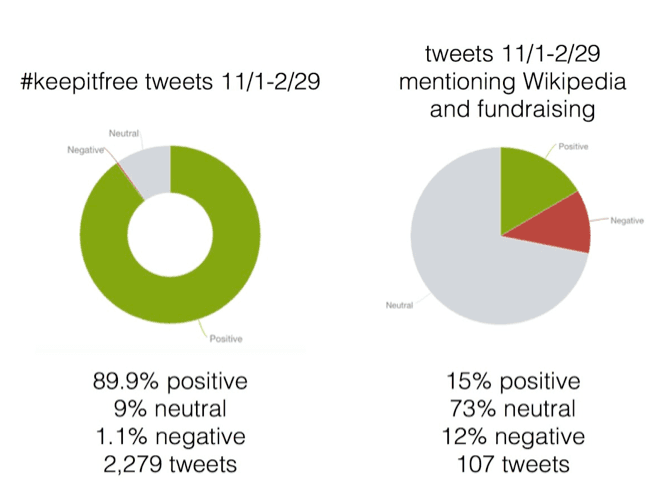
Sentiment analysis is a digital mood ring for text, automatically classifying content as positive, negative, or neutral. It's used to sift through customer reviews and social media to gauge opinion, but often fails on sarcasm or complex context.
WHY IT EXISTS: Businesses and researchers need to understand public opinion, but the volume of unstructured text data from reviews, tweets, and surveys is too vast for humans to read manually. Sentiment analysis was created to automate the process of extracting subjective feelings from text at scale.
THE MENTAL MODEL: Think of sentiment analysis as a high-speed librarian who doesn't read books for plot, but just to sort them into three piles: 'happy,' 'sad,' or 'neutral.' It scans text for emotional cues—specific words, phrases, and punctuation—to make a quick judgment on the author's underlying feeling. It's not about deep comprehension, but about broad-stroke classification of affective states.
HOW IT WORKS: The process starts with text pre-processing, where text is cleaned and broken into words or tokens. Then, a model assigns a sentiment score. Simple, lexicon-based models count positive and negative words from a predefined dictionary. More advanced methods use machine learning models like RoBERTa, which are trained on vast datasets of labeled text to recognize complex patterns, context, and even sarcasm that a simple word count would miss. The output is typically a category (positive, negative, neutral) or a numerical score.
WHEN TO USE IT: Use sentiment analysis for large-scale trend monitoring. It is ideal for gauging the overall reaction to a product launch by analyzing thousands of tweets, tracking shifts in customer satisfaction from support tickets, or summarizing public opinion on a topic from news articles. It provides a high-level dashboard view of public mood.
WHEN NOT TO USE IT: Do not rely on it for high-stakes individual decisions or where nuance is critical. A single customer's sarcastic complaint could be misclassified, leading to poor automated responses. It also struggles with domain-specific jargon, comparative sentences ('Product A is better than B'), and text where the sentiment is not explicitly stated. It's a tool for aggregation, not deep individual understanding.
ONE CANONICAL EXAMPLE: A company launches a new app feature. Instead of manually reading thousands of App Store reviews, they run a sentiment analysis tool. The tool ingests all new reviews, flagging them as positive, negative, or neutral. The product team sees a dashboard showing that 70% of reviews are positive, but a spike in negative reviews mentions 'battery drain.' This allows them to quickly identify a critical bug without reading every single comment.
Read the original → en.wikipedia.org
Get five bites like this every day.
Tezvyn delivers a daily feed of 60-second tech bites with quizzes to lock in what you learn.