StoryBrand: Make the Customer the Hero of Your Message
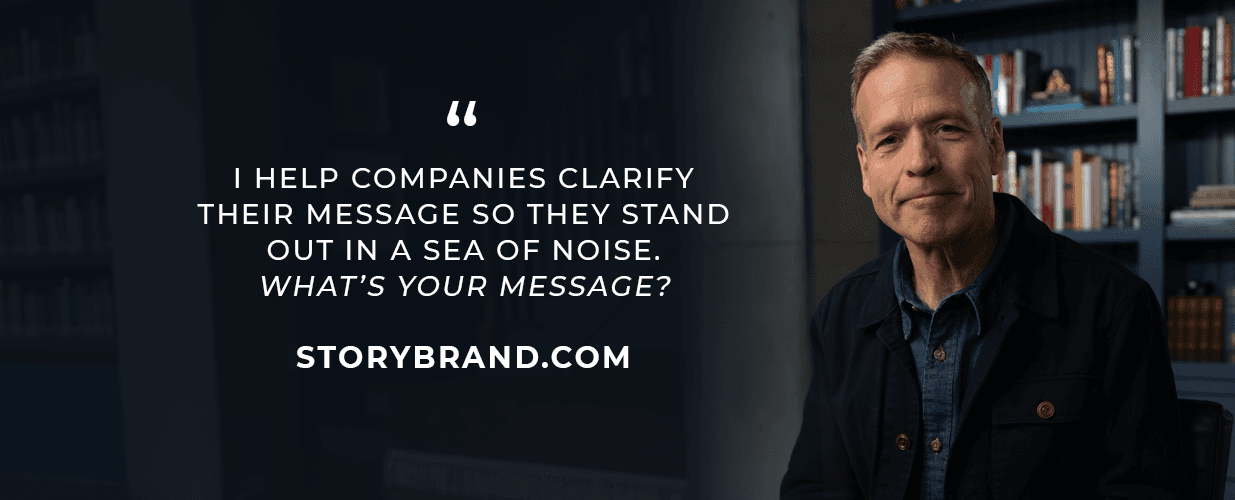
Stop talking about your company; make the customer the hero of a story where your brand is the guide. Use this for website copy and sales pitches to turn a confusing message into one that drives growth. The footgun is making your brand the hero.
WHY IT EXISTS: Businesses often fail not because their product is weak, but because their message is confusing. In a world of scarce attention, customers instinctively say "no" to anything that requires effort to understand. The StoryBrand framework was created to combat this confusion by providing a structure for clear, compelling communication.
THE MENTAL MODEL: Treat all of your marketing like a movie script. Your customer is the hero, facing a problem. Your company is not the hero. Instead, your brand is the wise guide—like Yoda to Luke Skywalker—that understands the hero's problem and provides a plan to help them win. This simple shift forces you to focus your message on the customer's success, not your own story.
HOW IT WORKS: The framework guides you through creating a series of clear, repeatable messages, or "soundbites." These soundbites are engineered to lower the cognitive load on your audience. Instead of forcing customers to connect the dots, you give them a simple narrative they can instantly grasp. The process aims to distill your value proposition into a message so clear that customers understand exactly what you offer and why it matters to them.
WHEN TO USE IT: Apply this framework when your product is hard to explain, your marketing efforts aren't generating leads, or you're losing ground to competitors with a clearer message. It's especially effective for rewriting website homepages, structuring sales presentations, and creating high-converting ad copy and email campaigns.
WHEN NOT TO USE IT: While powerful for direct-response marketing, this narrative approach may be less suited for internal technical communication where precision is more important than story. It's also less applicable for abstract brand awareness campaigns that are not intended to prompt an immediate customer decision.
ONE CANONICAL EXAMPLE: A wealth management firm's website initially received zero leads. After applying the framework, they reframed their message. Instead of talking about themselves, their new website focused on the customer's problem (financial anxiety) and positioned the firm as the guide with a plan for a secure future. Within a month, this clarified message generated two multi-million dollar leads because it spoke directly to the customer's needs.
Read the original → storybrand.com
Get five bites like this every day.
Tezvyn delivers a daily feed of 60-second tech bites with quizzes to lock in what you learn.