SWOT Analysis: A Structured Brainstorming Framework
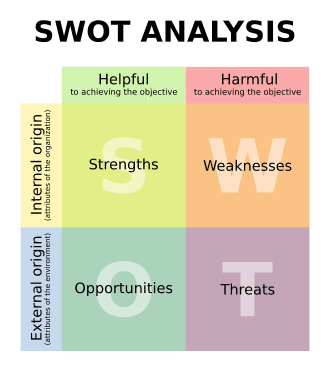
SWOT analysis is a 2x2 grid for decision-making, mapping internal factors (Strengths, Weaknesses) against external ones (Opportunities, Threats). Use it for strategic planning or project evaluation.
WHY IT EXISTS Decision-making can be chaotic. Without a framework, teams often focus on one aspect, like internal strengths, while ignoring others, like external threats. SWOT was created to force a more balanced, comprehensive view before committing to a plan or strategy.
THE MENTAL MODEL Think of it as a structured inventory for a strategic situation. It's a 2x2 grid. The top row is internal factors you control: Strengths and Weaknesses. The bottom row is external factors you don't control: Opportunities and Threats. The goal is to get all these factors out on the table in an organized way before you start forming a plan.
HOW IT WORKS You gather a team and brainstorm items for each of the four quadrants. Strengths are internal capabilities that give you an advantage. Weaknesses are internal factors that put you at a disadvantage. Opportunities are external trends or events you could exploit. Threats are external factors that could harm you. The analysis is only useful when you start drawing lines between the boxes, like using a Strength to seize an Opportunity or mitigate a Threat.
WHEN TO USE IT Use SWOT at the very beginning of a strategic planning cycle. It's great for annual planning, new product kickoffs, competitive analysis, or evaluating a major business decision like entering a new market. It helps align a team on the current state of play.
WHEN NOT TO USE IT Don't use it as your only planning tool. A SWOT analysis is a snapshot in time and can become outdated quickly. It is also not a substitute for quantitative data or deep market research. It generates possibilities; it doesn't validate them.
ONE CANONICAL EXAMPLE A local coffee shop might conduct a SWOT. Strengths: loyal customer base, unique pastry recipe. Weaknesses: limited seating, poor online presence. Opportunities: a new office building opening nearby, growing demand for delivery. Threats: a new Starbucks opening two blocks away, rising coffee bean prices. The strategy isn't the list itself, but the actions it suggests, like using their strong brand (Strength) to launch a delivery service (Opportunity) to counter the new office workers going to Starbucks (Threat).
Read the original → en.wikipedia.org
Get five bites like this every day.
Tezvyn delivers a daily feed of 60-second tech bites with quizzes to lock in what you learn.