The Hook Model: Designing for Repeat Engagement
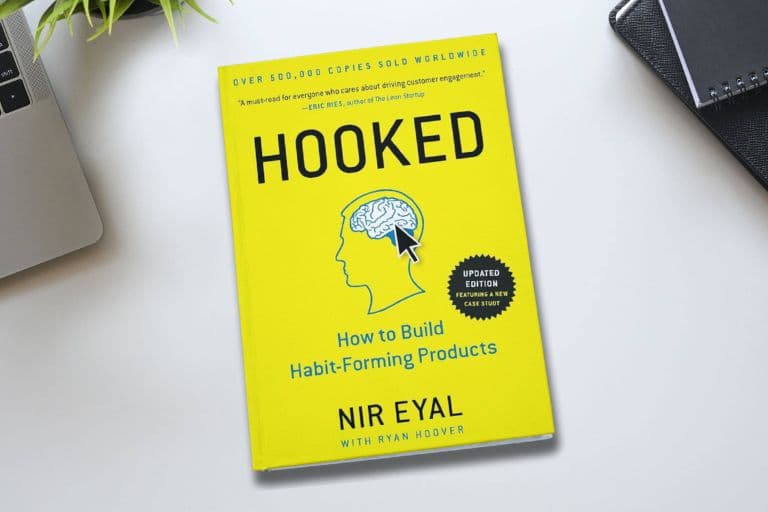
The Hook Model engineers user habits with a 4-step loop: Trigger, Action, Variable Reward, and Investment. It's a framework for building products people return to on their own, common in social media and games.
WHY IT EXISTS Why do some products need constant ad spend while others become part of a user's daily life? The Hook Model was created to explain the pattern behind products that successfully build user habits, reducing reliance on costly marketing by making engagement an organic, repeating cycle.
THE MENTAL MODEL Think of the Hook Model as a flywheel for user engagement. It's a four-phase loop that, once started, builds its own momentum. A Trigger prompts an Action. The Action leads to a Variable Reward, which reinforces the behavior. Finally, a small Investment from the user loads the next trigger, making the next cycle more likely. The goal is to move a user from relying on external triggers (like a push notification) to internal triggers (like feeling bored).
HOW IT WORKS The model consists of four sequential steps. First, a Trigger, either external (an email) or internal (an emotion like boredom), cues the user. Second, the user performs a simple Action, like scrolling a feed. This action must be easier than thinking about it. Third, the user receives a Variable Reward—an unpredictable payoff, like seeing an interesting post, which keeps them engaged. Fourth, the user makes an Investment in the product, such as posting a photo or adding a friend. This investment makes the product more valuable and loads the next trigger.
WHEN TO USE IT Use the Hook Model for products that benefit from high frequency of use and long-term retention. It's well-suited for consumer apps, social networks, media platforms, and games where daily or weekly engagement is a core business metric. It helps answer the question, "How do we make our product a user's go-to solution for a recurring need?"
WHEN NOT TO USE IT The model is less applicable for products used infrequently, like tax software or e-commerce sites for major purchases. The biggest footgun is ethical: using these techniques to create addiction or manipulate users for engagement's sake, rather than to build a genuinely helpful product. If the core product doesn't solve a real problem, the hook will feel hollow and users will eventually churn.
ONE CANONICAL EXAMPLE Instagram's user journey illustrates the model. The TRIGGER is internal (boredom) or external (a notification). The ACTION is opening the app and scrolling, which is incredibly simple. The VARIABLE REWARD is the unpredictable stream of photos and stories from friends. The INVESTMENT is posting a photo, liking a post, or following a new account, which improves the feed for the next visit and increases the likelihood of future triggers.
Read the original → nirandfar.com
Get five bites like this every day.
Tezvyn delivers a daily feed of 60-second tech bites with quizzes to lock in what you learn.