Configuration Management: Enforcing Desired State
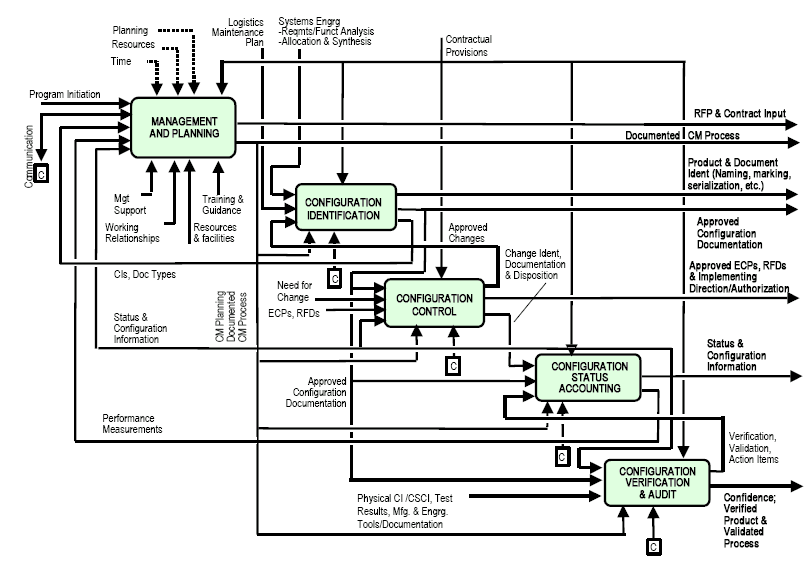
Configuration Management treats your system's setup as code to prevent "configuration drift." It's used to reliably provision servers, deploy apps, and manage fleets, ensuring every component matches its intended design and is reproducible.
WHY IT EXISTS Without a formal process, systems inevitably diverge from their intended design. Manual updates, quick fixes, and undocumented changes create "snowflake" servers that are fragile, impossible to reproduce, and difficult to debug. Configuration Management (CM) was created to solve this problem of system drift by enforcing consistency at scale.
THE MENTAL MODEL Think of Configuration Management as a blueprint and a foreman for your infrastructure. The blueprint is your configuration code (e.g., a set of YAML or HCL files) which declares the exact desired state of a system. The foreman is the CM tool (like Ansible, Puppet, or Chef) that reads the blueprint and continuously works to build and maintain your systems to match it, correcting any deviations it finds.
HOW IT WORKS The process has three core parts. First, you define the desired state of a system as code in version-controlled files. This definition includes everything from required software packages and their versions to user accounts, file permissions, and network settings. Second, a CM agent or controller applies this configuration to your target infrastructure. Third, the tool can run continuously to audit the systems, detect any configuration drift, and automatically remediate it by reapplying the correct state.
WHEN TO USE IT Use CM whenever you need to manage more than a handful of systems or require high degrees of consistency and reproducibility. It is the foundation of Infrastructure as Code (IaC). It's essential for provisioning cloud server fleets, deploying applications with complex dependencies, maintaining security compliance across an organization, and enabling disaster recovery by allowing you to rebuild an entire system from code.
WHEN NOT TO USE IT CM is likely overkill for temporary, single-use development environments or a single, non-critical personal server where manual management is simpler. The overhead of defining state in code may not be justified if the system is simple, short-lived, and has no requirement for reproducibility.
ONE CANONICAL EXAMPLE Imagine managing a fleet of 100 web servers. Your CM configuration declares that every server must run Ubuntu 22.04, have Nginx installed, and have a firewall rule blocking all ports except 80 and 443. If an engineer manually SSHes into one server and opens port 22 for a quick debug session, the CM tool, on its next run, will detect this deviation from the desired state and automatically close the port, restoring consistency across the fleet.
Read the original → en.wikipedia.org
Get five bites like this every day.
Tezvyn delivers a daily feed of 60-second tech bites with quizzes to lock in what you learn.