DAU/MAU Ratio: Measuring Product Stickiness
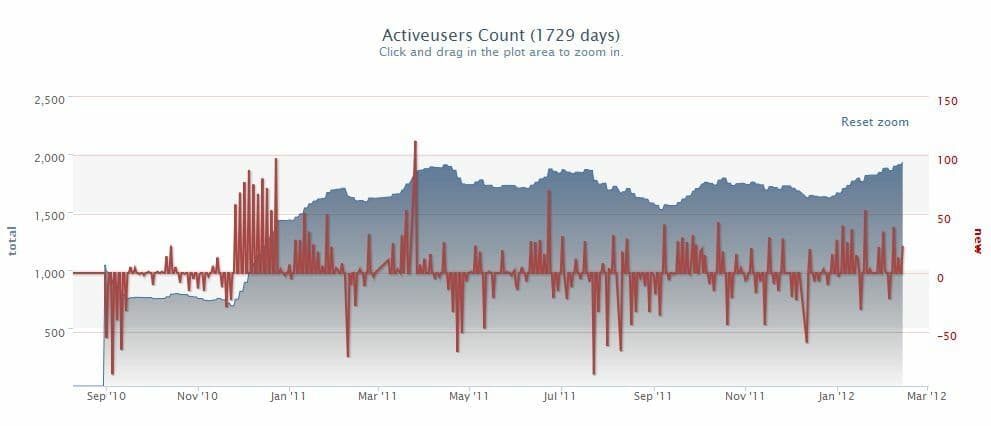
The DAU/MAU ratio measures product “stickiness” by showing what percentage of your monthly users return daily. A high ratio suggests a strong daily habit, common for social or communication apps. The footgun is judging all products by the same benchmark.
WHY IT EXISTS Raw user counts are vanity metrics. Knowing you have a million users is useless if they only logged in once. The DAU/MAU ratio was developed to move beyond simple counts and measure the intensity of user engagement and habit formation. It answers the question: are users just visiting, or are they living in our product?
THE MENTAL MODEL Think of the DAU/MAU ratio as a loyalty score for your user base. It's not about how many unique customers walk into your store in a month (MAU), but what percentage of them come back every single day (DAU). A high percentage means your store is part of their daily routine, not just a place they visit once in a while.
HOW IT WORKS First, define what makes a user "active"—it could be logging in, sending a message, or watching a video. Then, count your Daily Active Users (DAU), the number of unique users performing that action on a given day. Next, count your Monthly Active Users (MAU), the number of unique users who were active at least once in the last 30 days. The ratio is simply DAU divided by MAU. For example, if you have 2,000 DAU and 10,000 MAU, your DAU/MAU ratio is 2,000 / 10,000 = 0.2, or 20%. This implies the average user is active on 20% of the days in a month, or about 6 days.
WHEN TO USE IT This metric is most valuable for products where daily engagement is a key driver of success. This includes social media, messaging apps, mobile games, and news platforms. It's a powerful way to track if product changes are making the app more compelling and habit-forming over time.
WHEN NOT TO USE IT It's a misleading and dangerous metric for products with a naturally infrequent use case. Judging a travel booking site, a mattress e-commerce store, or B2B tax software by its DAU/MAU ratio would be a mistake. For these products, a low ratio is normal and expected. Focusing on it would lead to poor product decisions. A better metric might be WAU/MAU (Weekly/Monthly Active Users) or tracking repeat actions over a longer timeframe.
ONE CANONICAL EXAMPLE A social media app like Facebook lives and dies by this metric. A DAU/MAU ratio above 50% is considered world-class, indicating a deeply ingrained user habit. In contrast, an enterprise software for quarterly financial reporting might have a DAU/MAU below 5% and still be incredibly successful and valuable, because its users only need to engage with it intensely a few times per year.
Read the original → en.wikipedia.org
Get five bites like this every day.
Tezvyn delivers a daily feed of 60-second tech bites with quizzes to lock in what you learn.