Describe a framework to strategically manage tech debt during product discovery
This tests strategic debt tradeoffs under speed pressure. A strong answer classifies debt by interest, caps MVP debt with guardrails, and reserves fixed sprint capacity for repayment. Red flag: vilifying debt or deferring cleanup without triggers.
What's really being asked
Whether you view technical debt as a portfolio of strategic options rather than purely a failure of craftsmanship. The interviewer cares about product-engineering alignment and your ability to optimize for learning velocity during discovery without letting compounding interest destroy future agility. They want evidence that you can make risk-adjusted tradeoffs and operationalize repayment.
The full answer
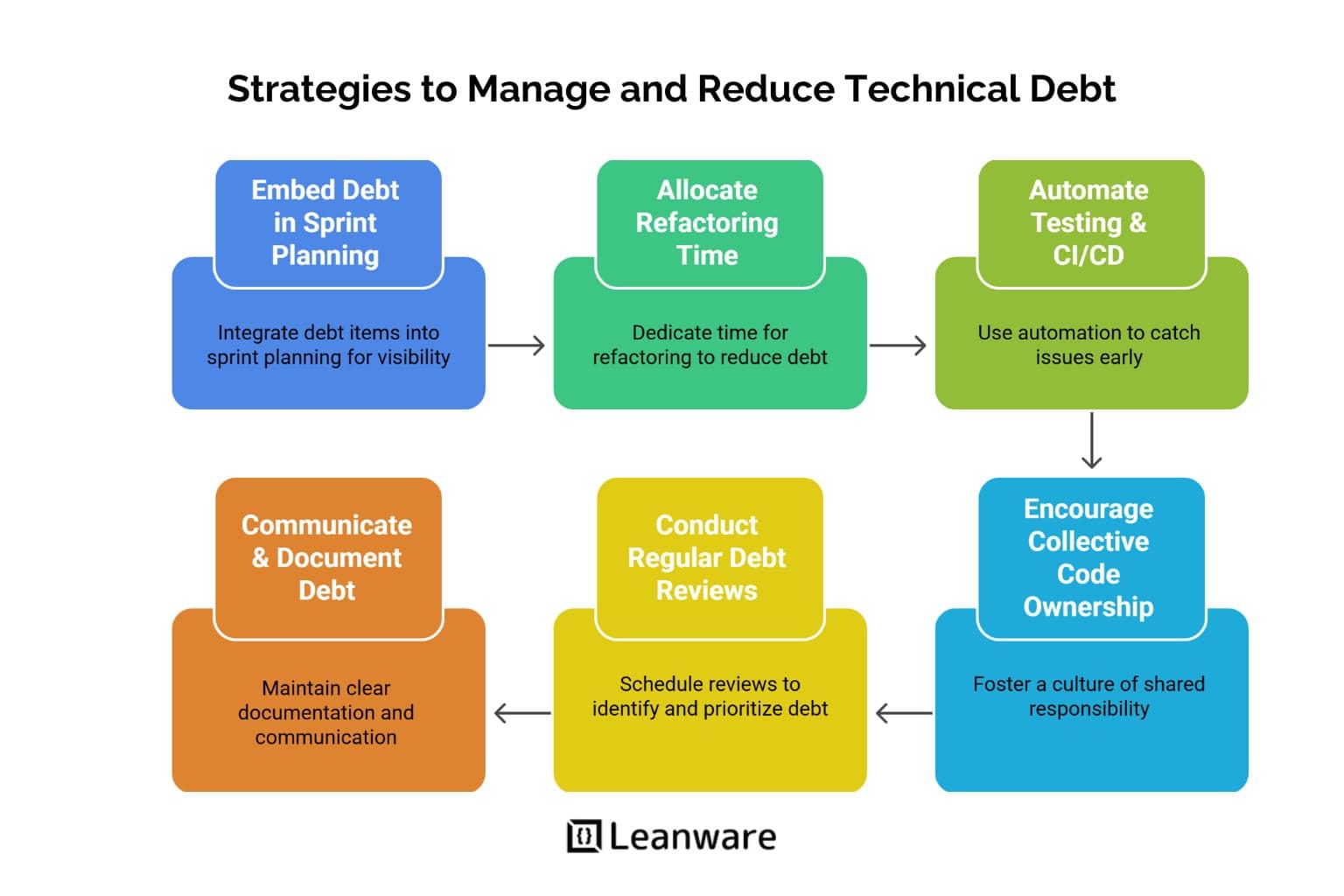
First, a classification framework. Mention Martin Fowler's technical debt quadrants or a custom risk matrix that maps debt by interest rate and principal so the team can compare items. Second, explicit decision criteria for incurring debt. It is acceptable when the debt is time-boxed, reversible, and tied to a specific hypothesis with a clear kill criteria. Third, visibility mechanisms. Make debt explicit in the backlog, tag tickets, or maintain a debt register so it cannot hide. Fourth, repayment infrastructure. Reserve fifteen to twenty percent of every sprint for refactoring, use refactoring OKRs, or enforce a cleanup-before-feature policy once a metric threshold is hit. Fifth, governance. Define owners, review debt in quarterly planning, and treat repayment as a first-class roadmap item rather than a side task.
The mistakes people make
Treating all debt as bad and advocating zero-tolerance during discovery. Promising to refactor later without triggers, dates, or capacity allocation. Blaming product or business for debt while ignoring engineering's shared role in the tradeoff. Suggesting a big-bang rewrite as the primary solution. Failing to mention how you measure the cost of debt in terms of slowed delivery or incident risk.
What usually comes next
How do you quantify the interest payments on a specific debt item. What do you do when product refuses to prioritize repayment. Describe a time when debt you thought was safe became dangerous. How do you prevent test or documentation debt from accumulating silently. Whether you have ever used debt to kill a hypothesis faster.
A concrete example
A team building a recommendation engine incurs design debt by hardcoding ranking weights to validate engagement lift within a two-week experiment. The debt is tagged in the backlog with a trigger: if click-through rate exceeds five percent, the team must generalize the model before scaling to one hundred percent traffic. They allocate twenty percent of the next two sprints to migrate to a configuration-driven architecture, preventing the hardcoded logic from becoming a reliability risk and preserving the ability to iterate on ranking strategies without deployments.
Interview question
A team takes on technical debt to speed up product discovery. Which approach best prevents that debt from compounding and destroying future agility?
- a.Tagging the debt in the backlog and documenting the shortcuts so all stakeholders have visibility
- b.Keeping the experiment time-boxed to two weeks and ensuring the code is reversible if the hypothesis fails
- c.Binding the debt to a hypothesis with a kill criteria and reserving sprint capacity for repayment triggered by a metric thresholdCorrect
- d.Classifying the debt by interest rate and reviewing it quarterly with joint engineering-product ownership
Why? this is the answer
The correct answer operationalizes repayment by combining a hypothesis-bound trigger with fixed sprint capacity, which is the core guardrail against compounding interest. Option B is tempting because time-boxing and reversibility are valid criteria for taking on debt, but without explicit repayment triggers and reserved capacity, the debt can still erode agility if the hypothesis succeeds.
Just read this? Test yourself on what you have been reading.
Read the original → leanware.co
- #technical debt
- #agile
- #product discovery
- #engineering strategy
- #prioritization
You just looked this up. Could you explain it out loud?
That is the part interviews actually test. Tezvyn takes questions like this one and gives you what the interviewer is really checking, the answer that lands, and the mistake that ends the conversation, in the four minutes before your next meeting.
The iPhone app is on the way
We are building it. Until it lands, nothing here is held back from you: every interview card, your saved cards, streaks and the job board all work in Safari, plus hundreds of free practice quizzes of thirty questions each. Sign in and it all carries over to the app the day it arrives.
Want it as an icon? Tap Share at the bottom of Safari, then Add to Home Screen. It opens full screen and the cards you have read stay available offline.
We are hiring for this. Open roles that interview on technical debt — each one lists the topics its interview covers.
See open roles