Exposure Fusion: HDR Looks Without the HDR File
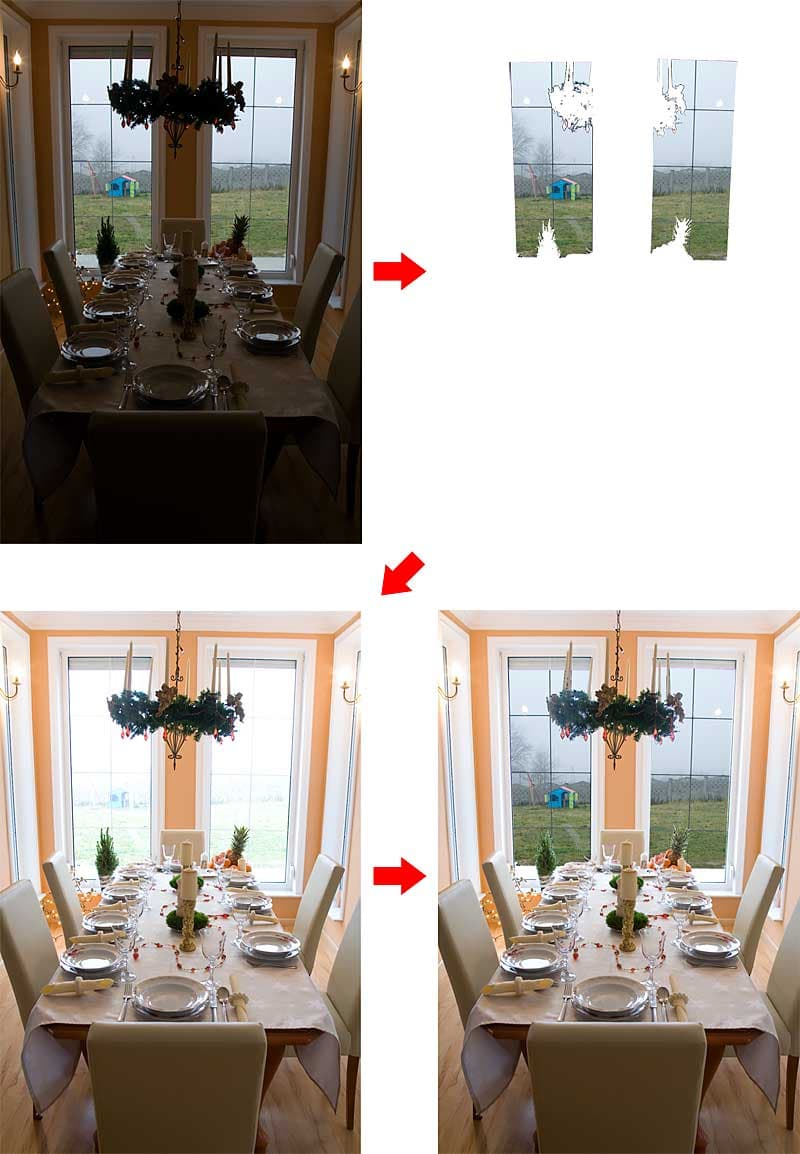
Exposure fusion blends the best-lit pixels from several bracketed shots into one image. This lets you capture high-contrast scenes, like a bright window in a dark room, without creating a full HDR file.
WHY IT EXISTS: Cameras struggle with scenes that have both deep shadows and bright highlights, like a sunset. A single exposure will either blow out the highlights to pure white or crush the shadows into black. Exposure fusion was developed to solve this by combining information from multiple exposures to create a single image that looks more like what the human eye sees.
THE MENTAL MODEL: Think of it as a smart digital collage. You give it a stack of photos of the same scene, each taken at a different brightness. The algorithm acts like an artist, cutting out the best-exposed parts of each photo—the clear sky from the dark shot, the detailed foreground from the bright shot—and seamlessly pasting them together into a single, balanced picture. It's a direct path from multiple inputs to one great-looking output.
HOW IT WORKS: Exposure fusion operates directly on the pixels of the source images. For each location in the final image, the algorithm evaluates the corresponding pixels from all the input exposures. It uses quality metrics like local contrast, saturation, and how "well-exposed" a pixel is (not too dark, not too bright) to decide which source pixel is "best". These best pixels, or a weighted average of them, form the final image. This process avoids creating a full 32-bit HDR radiance map and then tone-mapping it back down for display.
WHEN TO USE IT: Use exposure fusion for static scenes with high dynamic range where the goal is a pleasing, natural-looking final image with minimal fuss. It's ideal for landscape photography, real estate interiors (capturing both the room and the view out the window), and any situation where you need to quickly combine bracketed shots without the overhead of a full HDR workflow.
WHEN NOT TO USE IT: Avoid exposure fusion when you need a true HDR image file (like a .hdr or .exr) for visual effects, 3D lighting, or intensive post-processing. Because fusion creates a standard 8-bit image, the extended range data is lost. It's also unsuitable for scenes with significant motion between frames, as this will create ghosting or artifacts in the blended result.
ONE CANONICAL EXAMPLE: A classic example is photographing the interior of a room with a large window showing a bright, sunny day outside. A single shot will either expose for the room, blowing out the window to pure white, or expose for the outside, plunging the room into darkness. By taking three shots—one dark (for the window), one medium, and one bright (for the room)—exposure fusion can blend them to create a single photo where both the room's details and the outdoor scenery are clearly visible.
Read the original → en.wikipedia.org
Get five bites like this every day.
Tezvyn delivers a daily feed of 60-second tech bites with quizzes to lock in what you learn.