How do you synthesize low-level codes into high-level themes?
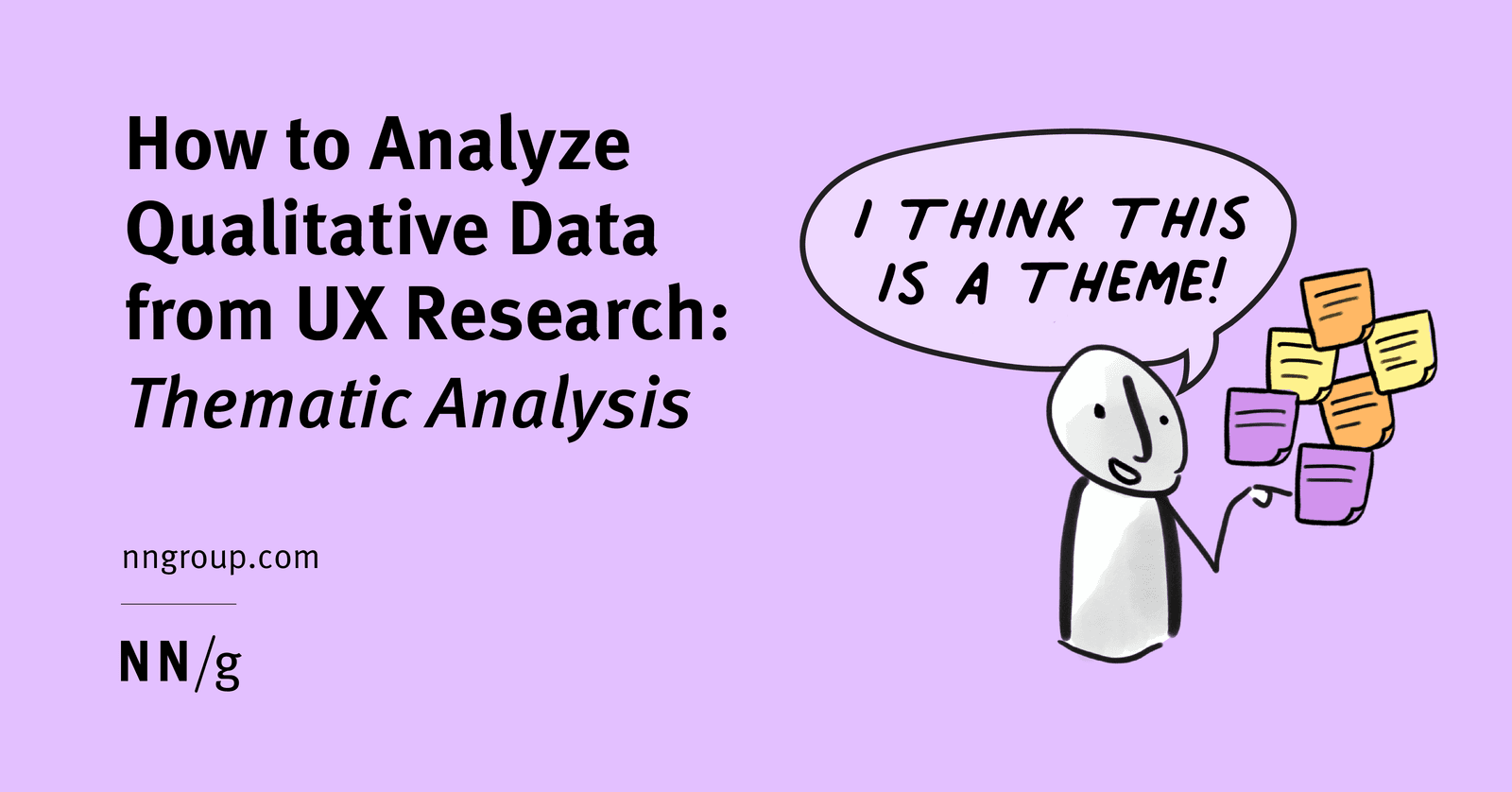
Tests systematic thematic analysis. Strong answers cover tagging observations with codes, grouping related findings into themes that emerge across participants, and choosing methods like affinity diagramming based on context.
What's really being asked
This question tests whether you treat qualitative synthesis as a systematic, repeatable discipline rather than an impressionistic summary. Interviewers want to know if you can manage the volume and richness of exploratory data without getting lost in detail or cherry-picking anecdotes. The core concept is thematic analysis: breaking down observations by tagging them with codes so that significant themes emerge based on patterns across participants, not on the volume of a single voice.
The full answer
A strong response walks through a structured progression from raw data to actionable themes. First, it acknowledges that individual observations and quotations are tagged with appropriate codes to keep the analysis organized and focused. Second, it explains that a theme is defined as a description of a belief, practice, need, or phenomenon that is discovered from the data and only qualifies when related findings appear multiple times across participants or data sources. Third, it names specific synthesis methods such as affinity diagramming, software-assisted analysis, or journaling, and emphasizes that the best method is determined by the data context, constraints of the analysis phase, and personal working style. Fourth, it notes that thematic analysis keeps the researcher organized and prevents superficial skimming or misdirected analysis.
The mistakes people make
Red flags include describing analysis as reading through notes until something feels important, which leads to superficial analysis and fixation on only memorable events or quotes. Another warning sign is presenting contradictions in the data as definitive proof of a single viewpoint, or ignoring feedback that does not fit the researcher's beliefs. A poor answer also treats the output as a simple regurgitation of what participants said without any analytical thinking applied to it.
What usually comes next
An interviewer may ask how you handle data that contradicts your initial hypotheses, how you decide when a cluster of codes becomes a full theme versus a sub-theme, or how you communicate themes back to stakeholders who were not in the room during analysis. They may also probe whether you prefer digital tools or physical affinity diagrams and why.
A concrete example
Suppose you conducted twelve user interviews and generated two hundred raw observations. You would begin by tagging each observation with a concise code that captures its essence. As you review the full set, you notice that codes around workaround behaviors appear in nine of the twelve sessions. Because related findings appear multiple times across participants, you elevate that cluster into a high-level theme describing a shared workaround practice, rather than treating each instance as an isolated anecdote. You might use affinity diagramming to physically or digitally sort these coded observations into groups, or you might use qualitative software if the dataset is large, selecting the approach based on your timeline and team constraints.
Interview question
During thematic analysis, when should a cluster of coded observations be elevated to a high-level theme?
- a.When the cluster aligns with the researcher's initial hypothesis about user behavior
- b.When related findings emerge repeatedly across different participants or data sourcesCorrect
- c.When the researcher encounters a particularly memorable or vivid supporting quote
- d.When the same participant repeats it frequently within a single session
Why? this is the answer
A theme must be grounded in patterns that appear across multiple participants or data sources, not in the volume of a single voice or in memorable anecdotes. Choosing based on vivid quotes or personal hypotheses reflects the superficial, impressionistic analysis that thematic analysis is designed to prevent.
Just read this? Test yourself on what you have been reading.
Read the original → nngroup.com
- #ux research
- #thematic analysis
- #qualitative synthesis
- #affinity diagramming
- #user research
You just looked this up. Could you explain it out loud?
That is the part interviews actually test. Tezvyn takes questions like this one and gives you what the interviewer is really checking, the answer that lands, and the mistake that ends the conversation, in the four minutes before your next meeting.
The iPhone app is on the way
We are building it. Until it lands, nothing here is held back from you: every interview card, your saved cards, streaks and the job board all work in Safari, plus hundreds of free practice quizzes of thirty questions each. Sign in and it all carries over to the app the day it arrives.
Want it as an icon? Tap Share at the bottom of Safari, then Add to Home Screen. It opens full screen and the cards you have read stay available offline.
We are hiring for this. Open roles that interview on ux research — each one lists the topics its interview covers.
See open roles