Incident Command System (ICS): Taming Outage Chaos
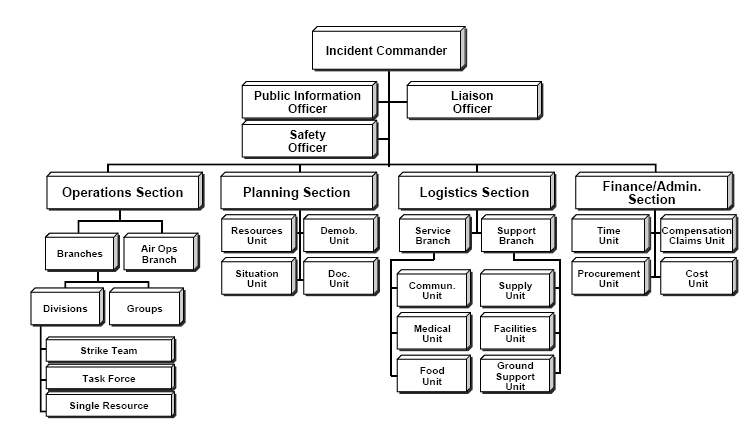
ICS gives a chaotic outage a clear command structure, defining roles so everyone knows who's in charge. It's used for major service outages or security breaches where multiple teams must coordinate. The footgun: not pre-assigning roles before a crisis hits.
WHY IT EXISTS When a critical system fails, the natural response is chaotic: multiple people jump in, communication becomes a firehose of DMs and alerts, and effort is duplicated. The Incident Command System was designed to replace this chaos with a standardized, predictable structure for managing emergencies.
THE MENTAL MODEL Think of ICS like the command structure on a film set. You have a Director (the Incident Commander) who has the final say and overall vision. They don't operate the camera or adjust the lights. Instead, they delegate to a Director of Photography (Operations Lead) and a 1st AD (Communications Lead), who manage their own specialized crews. Everyone knows who to report to and what their specific job is.
HOW IT WORKS ICS establishes a pre-defined set of roles and responsibilities that are activated during an incident. The most critical role is the Incident Commander (IC), who manages the incident but does not perform hands-on technical work. The IC's job is to coordinate, delegate, and remove roadblocks. They delegate tasks to other roles, such as an Operations Lead to direct the technical response, a Communications Lead to manage stakeholder updates, and Subject Matter Experts to perform debugging. The key principles are a unified command (each person reports to only one manager) and a manageable span of control.
WHEN TO USE IT Use ICS for any incident that requires coordination between more than a few people or across multiple teams. This includes major production outages, security breaches, data loss events, or critical deployment failures. If an incident's scope is growing and communication is becoming chaotic, it's time to formally declare an incident and spin up the ICS structure.
WHEN NOT TO USE IT It's overkill for small, routine issues that a single on-call engineer can resolve quickly. A single server needing a reboot or a minor bug fix does not require a full ICS response. Applying it to every minor alert causes fatigue and dilutes its importance for true emergencies.
ONE CANONICAL EXAMPLE A major e-commerce site's payment gateway fails. An SRE declares a severe incident. An Incident Commander is assigned. They immediately delegate: an Ops Lead starts working with the payments team to diagnose the failure, and a Comms Lead begins drafting status page updates. The IC doesn't debug the code but instead focuses on coordinating these efforts and ensuring everyone has what they need.
Read the original → en.wikipedia.org
Get five bites like this every day.
Tezvyn delivers a daily feed of 60-second tech bites with quizzes to lock in what you learn.