Large-Scale Scrum (LeSS): Scaling Scrum by Descaling the Org
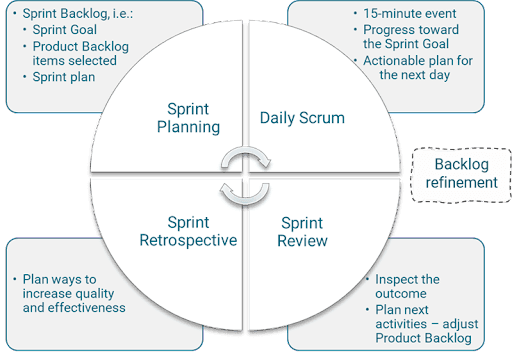
LeSS scales Scrum by simplifying the organization, not adding processes. It applies one-team Scrum principles to multiple teams working on one product. Use it when 2-8 teams need to collaborate on a single product backlog.
THE MENTAL MODEL: Large-Scale Scrum (LeSS) is a framework for applying Scrum principles to multiple teams working on a single product. The core idea is to scale by descaling the organization—removing roles, processes, and hierarchical complexity—to be as close to one-team Scrum as possible.
HOW IT WORKS: LeSS is built on core Scrum rules but applied across teams. There is only one Product Owner for the entire product, one Product Backlog from which all teams pull work, and one common Definition of Done. All teams operate in the same Sprint, producing one single, integrated, Potentially Shippable Increment at the end. The framework has two variants: LeSS for up to eight teams, and LeSS Huge for more. Events are scaled; for example, Sprint Planning starts with all teams together to align, then breaks out for individual team planning. The Sprint Review is a large-scale event where teams show their combined work.
WHEN TO USE IT: Use LeSS when you have several teams building one cohesive product and you want to optimize for learning, adaptability, and delivering customer value. It is for organizations that are willing to fundamentally change their structure, such as moving from component teams to long-lived, cross-functional feature teams that can deliver end-to-end value.
WHEN NOT TO USE IT: LeSS is not a good fit if the organization is unwilling to dissolve traditional management structures (like the project manager role) or empower teams to self-manage and coordinate directly. It is also not a portfolio management framework for multiple unrelated products. If your teams cannot be restructured into true feature teams, implementing LeSS will be painful and likely fail.
ONE CANONICAL EXAMPLE: A financial services company is building a single mobile banking app with ten teams. They adopt LeSS. All ten teams work from one Product Backlog prioritized by a single Product Owner. In one Sprint, three different teams might work on features related to a new 'pay-a-friend' function. They coordinate directly with each other in a shared team space and during multi-team refinement sessions to ensure their work integrates, rather than waiting for a manager to assign and coordinate tasks.
Read the original → en.wikipedia.org
Get five bites like this every day.
Tezvyn delivers a daily feed of 60-second tech bites with quizzes to lock in what you learn.