Localization vs. Detection: One Box or Many?
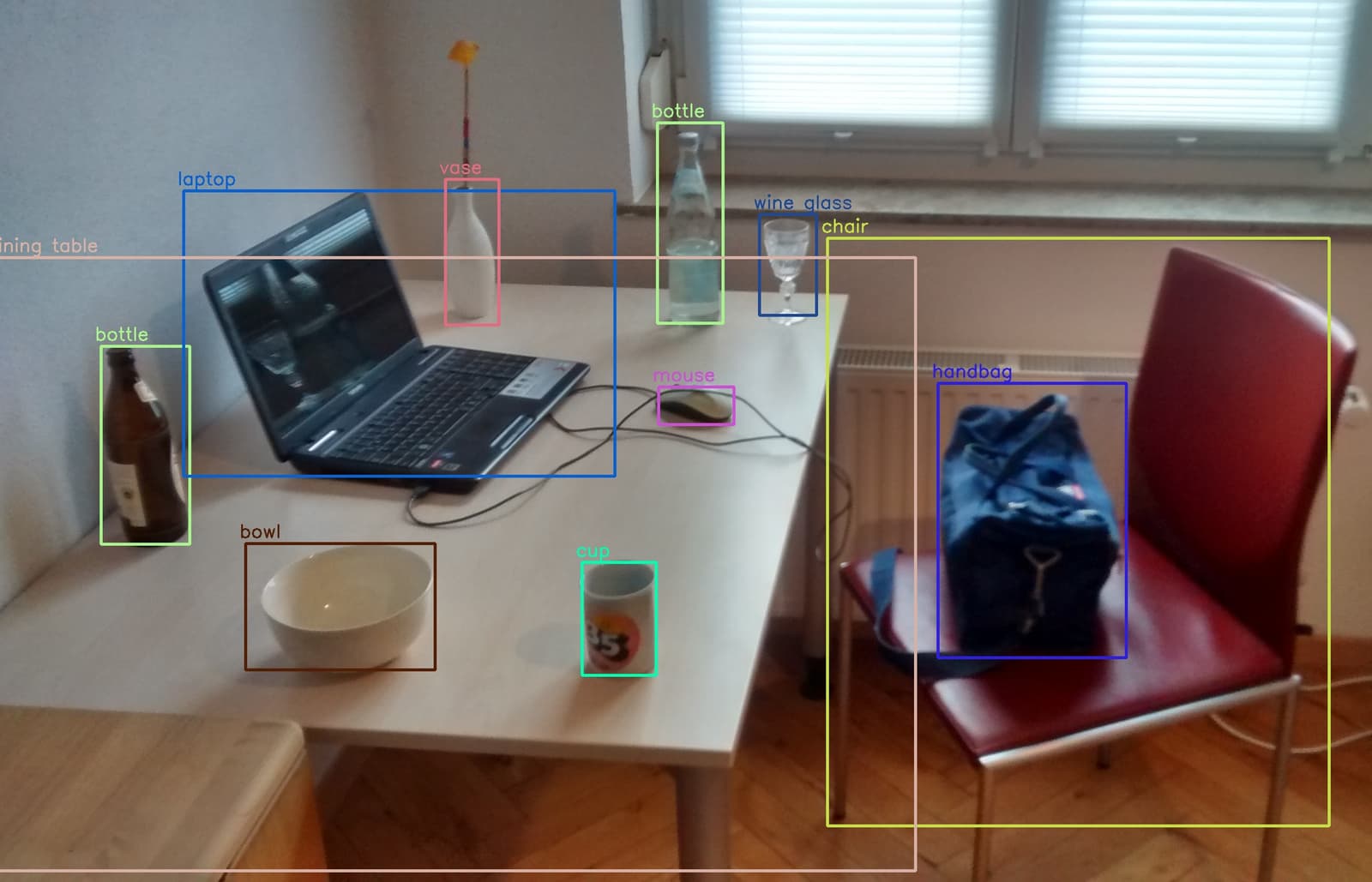
Object localization draws one box around an image's main object. Object detection finds and boxes *every* instance of a class, like all pedestrians. Use localization for single-subject tasks, detection for finding everything.
WHY IT EXISTS: Simply classifying an image ('this contains a car') is often not enough. To interact with the world, systems need to know where objects are. This requirement split into two distinct tasks: finding the single most important object (localization) and finding every object of a certain type (detection).
THE MENTAL MODEL: Think of a 'Where's Waldo?' puzzle. Object localization is like being asked to find Waldo and draw one box around him. Object detection is being asked to find and draw a box around every person wearing a red-and-white striped shirt in the entire scene. Localization is 'find one,' detection is 'find all.'
HOW IT WORKS: An object localization model outputs a single set of coordinates for a bounding box that encloses the object. It assumes there's only one object of interest. An object detection model, however, scans an image and outputs a list of bounding boxes. Each box in the list comes with a class label (e.g., 'person,' 'car') and a confidence score, because it must handle finding multiple, potentially overlapping objects of various sizes.
WHEN TO USE IT: Use localization when you know there is only one object of interest or you only care about the most prominent one, like a camera's portrait mode focusing on a person. Use object detection when you cannot afford to miss any instance of an object. This is critical for applications like video surveillance, inventory management, and especially autonomous vehicles that must identify every pedestrian and vehicle.
WHEN NOT TO USE IT: Don't use localization when multiple objects are present and all are important, as it will only find one. Don't use the more computationally expensive detection if a simple classification ('is there a cat in this image?') will suffice, or if your problem guarantees only one object will ever be present.
ONE CANONICAL EXAMPLE: A self-driving car's perception system uses object detection to identify and track every car, pedestrian, and cyclist in its field of view. Using simple localization would be catastrophic, as it might identify only the closest pedestrian while missing another one stepping into the road.
Read the original → en.wikipedia.org
Get five bites like this every day.
Tezvyn delivers a daily feed of 60-second tech bites with quizzes to lock in what you learn.