SLAM: Mapping a Room While You're Still In It
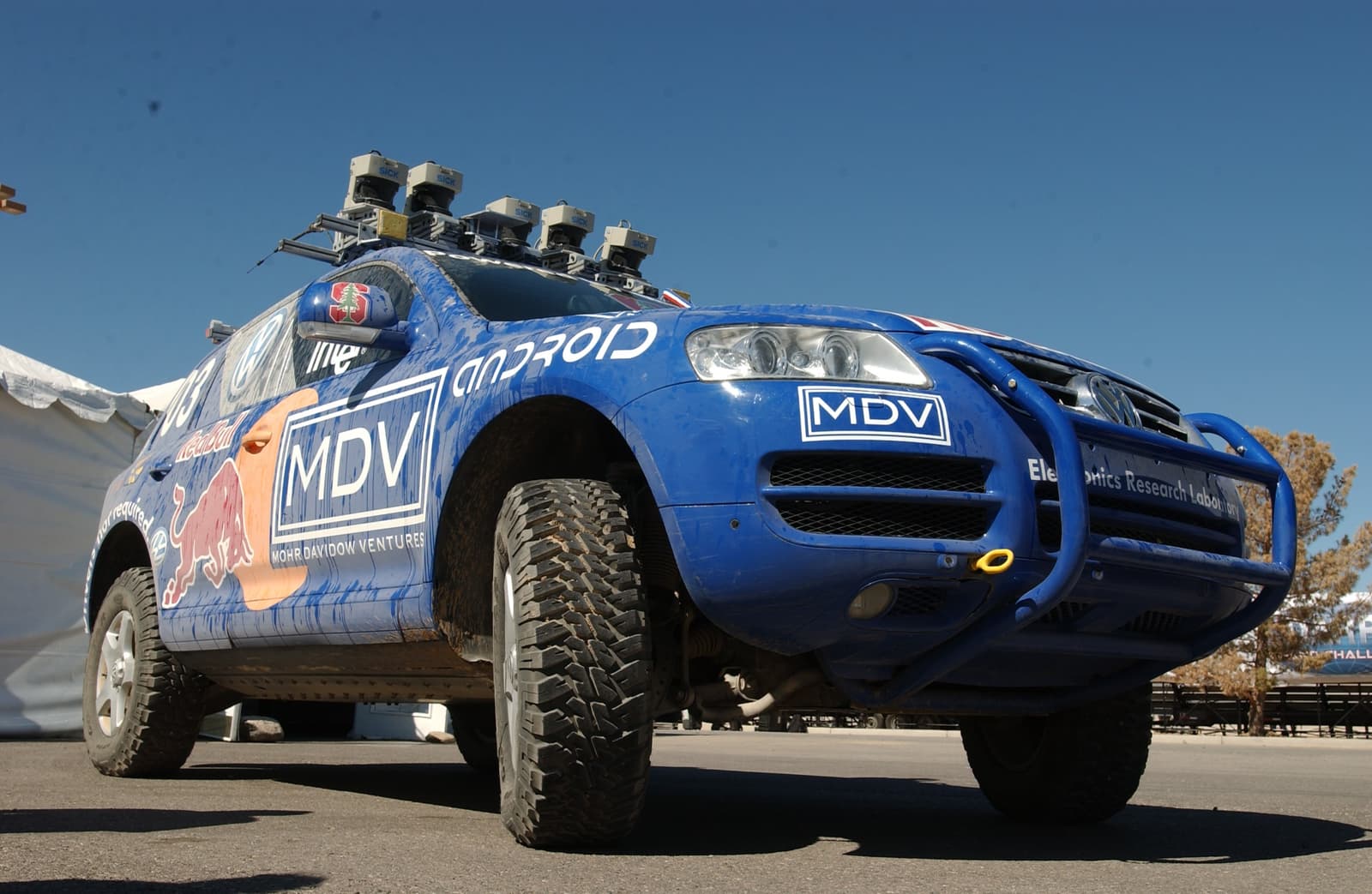
SLAM solves a chicken-and-egg problem: you can't map a space without knowing your location, and you can't know your location without a map. It does both at once. It's used by robots and AR headsets to navigate.
WHY IT EXISTS To allow an autonomous agent to navigate and operate in a completely unknown environment. Without a pre-existing map, a robot is blind. It needs a way to build its own map while simultaneously figuring out where it is on that map it's currently building.
THE MENTAL MODEL Imagine waking up in a dark, unfamiliar house with only a flashlight and a notepad. To get out, you'd sketch a map of what you see, take a step, and then update your map and your position on it based on your movement and what you now see. SLAM is the algorithmic version of this process. It's a constant cycle of "Where am I?" and "What does this place look like?".
HOW IT WORKS SLAM is a two-part process running in a loop. First, the localization step estimates the agent's current position and orientation (its "pose") based on sensor data (like from a camera or LiDAR) and a motion model. Second, the mapping step uses this estimated pose to update the map of the environment with the new sensor data. This new map then helps improve the localization in the next step. Because both estimations have uncertainty, algorithms like Kalman filters or particle filters are used to manage these probabilities. The system maintains a belief about its pose and the map, constantly refining both.
WHEN TO USE IT Use SLAM when an agent must operate in an environment for which no prior map exists or the environment is dynamic. This is fundamental for mobile robotics (like warehouse bots or rovers), autonomous vehicles navigating new areas, and augmented reality applications that need to anchor virtual objects to the real world.
WHEN NOT TO USE IT Don't use SLAM if you have a reliable, static map and a good global positioning system (like GPS outdoors). If the environment is known and you can reliably determine your absolute position, SLAM adds unnecessary complexity and computational overhead. It's for the unknown, not the known.
ONE CANONICAL EXAMPLE A robot vacuum cleaner starts in a new room. It moves forward, using its camera to see walls and furniture, creating an initial map. It then turns, predicts its new position based on wheel rotations (odometry), and takes another sensor reading. It matches the new reading to its existing map to correct its position estimate. This corrected position is then used to add the new features to the map. Over time, it builds a complete floor plan while always knowing where it is within that plan.
Read the original → en.wikipedia.org
Get five bites like this every day.
Tezvyn delivers a daily feed of 60-second tech bites with quizzes to lock in what you learn.