Text-to-Image Synthesis: From Prompt to Picture
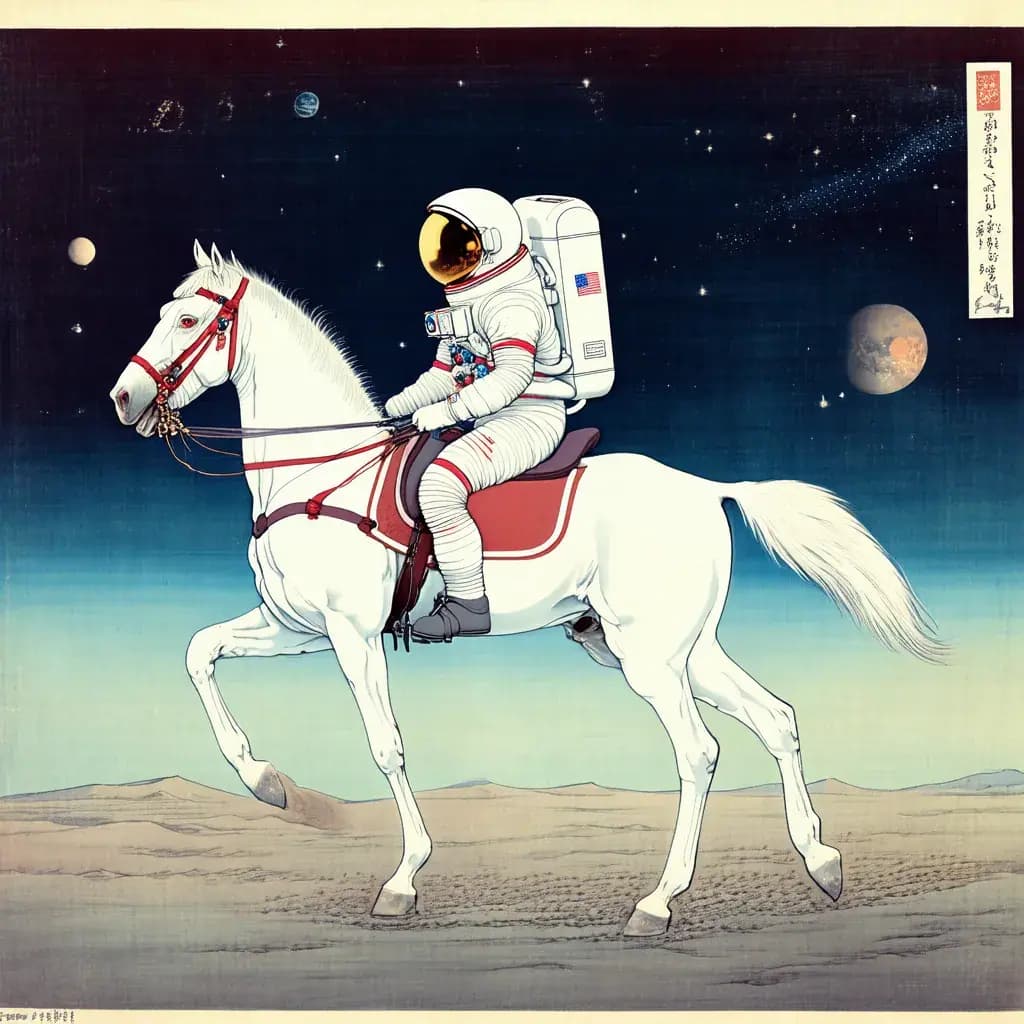
Text-to-image models translate words into pixels by learning statistical links between text and images. They power creative tools like DALL-E but don't truly understand prompts, leading to errors in logic like counting or spatial arrangement.
WHY IT EXISTS The goal was to bridge the gap between human language and visual creation. Historically, creating digital images required specialized skills and tools. Text-to-image models democratize this process, allowing anyone to generate visuals directly from their ideas, expressed in natural language.
THE MENTAL MODEL A text-to-image model is like an artist who has studied millions of captioned images. It doesn't copy-paste, but learns the statistical essence of concepts. When you say "a red apple on a wooden table," it knows the typical shape of an apple, the color red, the texture of wood, and the physics of how one object sits on another. It then synthesizes a new image that fits these learned patterns.
HOW IT WORKS Modern diffusion models start with random noise—a staticky, meaningless image. Guided by the text prompt (which is converted into a numerical representation called an embedding), the model iteratively "denoises" the image, step-by-step, shaping the noise into a coherent picture. It's like a sculptor starting with a block of marble and chipping away everything that isn't the statue; the text prompt is the blueprint telling the sculptor what to create.
WHEN TO USE IT Use text-to-image for rapid ideation, concept art, creating marketing materials, generating storyboards, or producing unique assets for games and websites. It's excellent for tasks where visual exploration and speed are more important than perfect, pixel-level control. It can also be used to create variations on a theme quickly.
WHEN NOT TO USE IT Do not rely on it for tasks requiring absolute precision, logical consistency, or factual accuracy. These models struggle with rendering legible text, counting objects correctly (e.g., a hand with six fingers), and depicting complex spatial relationships. It is not a tool for retrieving existing images; it generates new ones.
ONE CANONICAL EXAMPLE A user provides the prompt: "A photorealistic astronaut riding a horse on Mars." The model converts this text into a numerical embedding that captures the key concepts. It then starts with a field of random noise. In each step, the model refines the noise, gradually forming shapes that its training data associates with these concepts. It pulls the orange-red palette for "Mars," the form of a "horse," and the suit of an "astronaut," blending them into a novel, coherent scene.
Read the original → en.wikipedia.org
Get five bites like this every day.
Tezvyn delivers a daily feed of 60-second tech bites with quizzes to lock in what you learn.