The Sprint: A Timeboxed Rhythm for Work
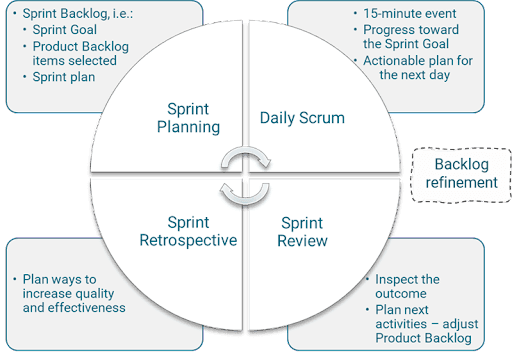
A sprint is a fixed-length container, typically 1-4 weeks, where a team turns ideas into a valuable product increment. Sprints give a predictable rhythm to software teams and marketing campaigns. The footgun is treating a sprint as a mini-waterfall project.
THE MENTAL MODEL: Think of a sprint as a short, fixed-length project, usually one to four weeks long. It's a container for all other Scrum events: Planning, Daily Scrums, Review, and Retrospective. The goal isn't just to be busy; it's to produce a 'Done,' usable, and potentially releasable product increment by the end. This creates a consistent rhythm for the team and stakeholders.
HOW IT WORKS: A sprint begins with Sprint Planning, where the team selects work from the Product Backlog and defines a Sprint Goal. During the sprint, the team meets daily in the Daily Scrum to coordinate and inspect progress. The scope is fixed; no changes are made that would endanger the Sprint Goal, and quality is not compromised. At the end, the team demonstrates the work in the Sprint Review and reflects on their process in the Sprint Retrospective. A new sprint starts immediately after the previous one concludes.
WHEN TO USE IT: Sprints are the core of the Scrum framework, used for any complex project where requirements might change or are not fully known upfront. They are ideal for software development, product design, and marketing campaigns where learning and adapting are key. The fixed cadence provides predictability in an uncertain environment.
WHEN NOT TO USE IT: Sprints are less effective for highly predictable, repetitive work with no discovery involved. They are also a poor fit for purely reactive, interrupt-driven work, such as an IT support desk, where a continuous flow model like Kanban might be more suitable.
ONE CANONICAL EXAMPLE: A software team commits to a two-week sprint with the Sprint Goal: 'Allow users to log in with their Google account.' They pull the necessary user stories into their Sprint Backlog. For two weeks, they work exclusively on this goal. At the end of the sprint, they demonstrate the working Google login feature to stakeholders in the Sprint Review, even if other minor tasks weren't finished.
Read the original → en.wikipedia.org
Get five bites like this every day.
Tezvyn delivers a daily feed of 60-second tech bites with quizzes to lock in what you learn.