Time-Series Forecasting: Predicting the Future from the Past
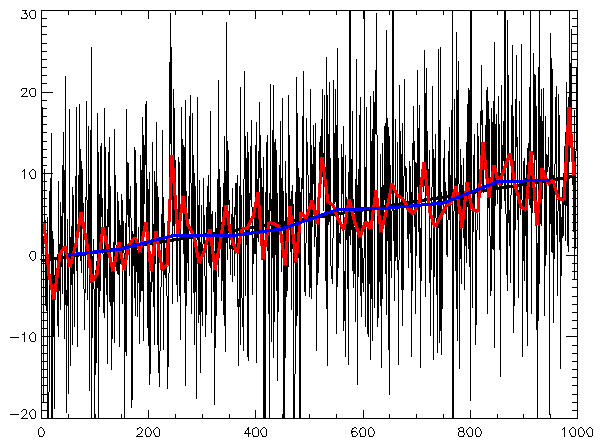
Time-series forecasting uses past data points, ordered by time, to predict future values. It's used for capacity planning and financial modeling. The footgun is assuming past trends will hold, as sudden system changes can invalidate all predictions.
WHY IT EXISTS: Systems and businesses need to anticipate future needs to allocate resources effectively. Time-series forecasting provides a structured, data-driven method for making predictions about future events, moving beyond simple guesswork for planning capacity, budgets, and inventory.
THE MENTAL MODEL: Imagine driving by looking only in the rearview mirror. You're using the history of the road you've been on—its curves, its incline—to predict the road ahead. A time series is that history: a sequence of data points recorded at regular intervals, like CPU usage per second or sales per day. Forecasting is the act of analyzing that history to spot patterns like trends (long-term growth), seasonality (daily or weekly cycles), and noise, then projecting those patterns forward.
HOW IT WORKS: Forecasting models analyze a time series to decompose it into its core components: trend, seasonality, and residual noise. The model learns the characteristics of these components from the historical data. For instance, it might identify a 5% month-over-month growth trend and a recurring spike in activity every Friday. The forecast is then generated by extrapolating these learned patterns into the future. The core assumption is that the underlying factors that influenced the past data will continue to influence the future in a similar way.
WHEN TO USE IT: Use forecasting when you have a history of measurements and a reasonable expectation that past patterns will continue. This is common in monitoring for capacity planning (e.g., predicting disk space usage), business analytics (forecasting quarterly revenue), and resource management (estimating future electricity demand based on historical temperatures and usage).
WHEN NOT TO USE IT: Forecasting is unreliable when the underlying system is highly volatile or subject to sudden, unpredictable changes. If the future is fundamentally different from the past, historical data is a poor guide. It's also less effective on very short or very noisy datasets where clear patterns cannot be distinguished from random fluctuations.
ONE CANONICAL EXAMPLE: A retail company tracks daily sales of a product. By analyzing years of this data, a forecasting model can predict sales for the next month. The model would account for the overall trend (is the product growing in popularity?), seasonality (sales might spike before holidays), and other factors. This allows the company to optimize inventory and avoid stockouts or overstock situations.
Read the original → en.wikipedia.org
Get five bites like this every day.
Tezvyn delivers a daily feed of 60-second tech bites with quizzes to lock in what you learn.