Translate qualitative insights into user stories and requirements
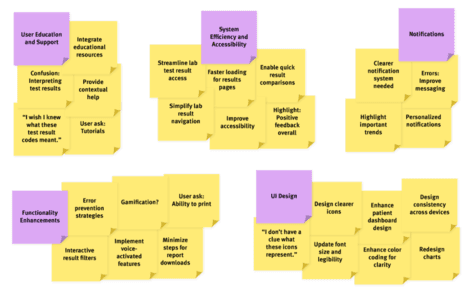
Turning qualitative themes into scoped engineering work.
clusters themes by frequency/severity, reframes pain points as user stories with clear AC, maps to technical spikes, prioritizes by impact.
WHAT THIS TESTS: Whether you can translate fuzzy qualitative signals into concrete, prioritized engineering work without losing user intent or overcommitting to unvalidated solutions. Senior engineers are expected to partner with UX and Product to decompose research into actionable scope that the team can actually deliver.
A GOOD ANSWER COVERS: Four steps in order. First, synthesis and validation: cluster quotes into themes by frequency and severity, distinguishing outliers from real patterns. Second, problem framing: convert themes into problem statements or Jobs-to-be-Done rather than jumping straight to features. Third, translation: write user stories with acceptance criteria that trace back to specific quotes, and map them to technical requirements, architecture changes, or research spikes when feasibility is unclear. Fourth, prioritization and negotiation: use effort versus impact to sequence work, involve UX and PM to validate that the stories still reflect user intent, and push back on scope that does not address a validated theme.
COMMON WRONG ANSWERS: Treating every user quote as a ticket without clustering or synthesis. Skipping problem framing and immediately solutioning. Writing vague stories without acceptance criteria or traceability to research. Ignoring technical feasibility and failing to flag unknowns as spikes. Letting UX own the entire translation without engineering input on effort or architecture constraints.
LIKELY FOLLOW-UPS: How do you handle conflicting user quotes or minority opinions? What do you do when a requested feature is technically expensive but low user impact? How do you validate that a story actually solves the original pain point? How do you keep research insights alive after the initial tickets are written?
ONE CONCRETE EXAMPLE: Imagine five users complain about checkout friction. You cluster quotes around three themes: unexpected shipping costs, forced account creation, and slow page loads. You validate frequency and severity with any available analytics, then reframe each as a problem statement. For forced account creation, the story becomes: As a guest shopper, I want to complete my purchase without creating an account so that I can save time. Acceptance criteria include a guest checkout option, email capture only for receipts, and a post-purchase account upsell. You flag the payment processor integration as a spike, estimate engineering effort, and prioritize behind the shipping cost fix because data shows it has higher drop-off.
Read the original → uxmatters.com
Get five bites like this every day.
Tezvyn delivers a daily feed of 60-second tech bites with quizzes to lock in what you learn.