Why do our analytics and backend user counts not match?
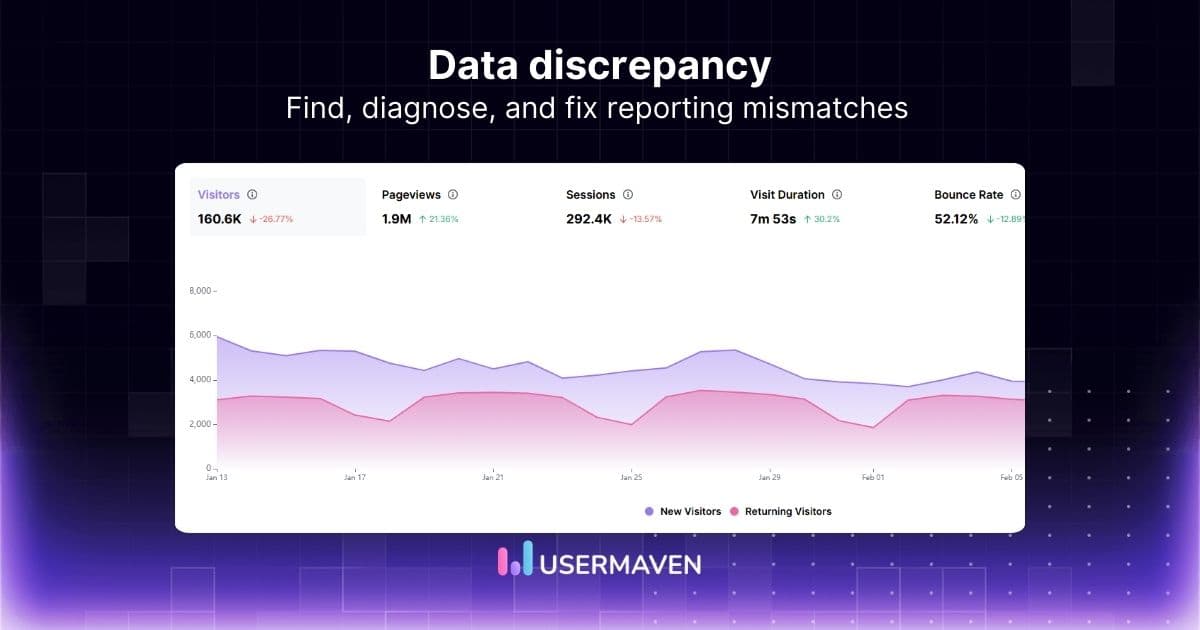
This tests your ability to systematically debug data integrity issues. A great answer first defines the metric, then investigates tracking implementation, privacy blockers, and time zone settings. A red flag is blaming one tool without a structured plan.
WHAT THIS TESTS: This question assesses your ability to think systematically about data pipelines and debug discrepancies between a source of truth (backend DB) and an event-based reporting system (analytics tool). It's not about knowing a specific tool's quirks, but about having a robust, general-purpose investigation framework. Interviewers want to see you move from clarifying definitions to isolating technical root causes.
A GOOD ANSWER COVERS: A good answer outlines a multi-step investigation. First, precisely define the metric: are we comparing "all users ever created" in the DB to "all users ever identified" in analytics? Or "daily active users"? Second, investigate client-side tracking implementation issues, such as missing tracking scripts on certain pages, events failing to load, or incorrect event configuration. Third, quantify the impact of factors that block client-side tracking, like ad blockers, browser privacy settings, and cookie consent restrictions. Fourth, verify system configurations, especially time zone settings, which can cause daily or weekly counts to differ.
COMMON WRONG ANSWERS: A red flag is immediately blaming one tool as "wrong" without evidence. Another is a disorganized "shotgun" approach, listing random causes without a clear investigation sequence. Weak answers focus only on one potential cause (e.g., "it's probably ad blockers") and fail to present a comprehensive plan. Forgetting to first clarify the exact metric definition is a common oversight for junior candidates; a senior should start there.
LIKELY FOLLOW-UPS: "Let's say you suspect tracking implementation errors. How would you confirm this?" (Answer: Use browser developer tools to inspect network requests, check for failed event calls, and simulate different user flows). "How would you estimate the percentage of users with ad blockers?" (Answer: Use a server-side rendered pixel or a backend event as a control group to compare against client-side event volume). "What level of discrepancy is acceptable?" (Answer: Depends on the metric, but for user counts, anything over 2-3% warrants investigation, while >10% is critical).
ONE CONCRETE EXAMPLE: Imagine your backend database shows 10,000 new signups yesterday, but your analytics tool only shows 8,700 "new user" events. The 13% discrepancy is significant. A systematic approach would be: 1. Confirm both systems are using the same time zone (e.g., UTC). 2. Investigate the signup flow. You might discover the "user identified" event script is missing on the "Sign up with Google" flow but present on the email/password flow. 3. You could also find that the script fails to load on certain slow networks, preventing the event from ever firing for those users. This points to a tracking implementation issue as the root cause.
Read the original → usermaven.com
Get five bites like this every day.
Tezvyn delivers a daily feed of 60-second tech bites with quizzes to lock in what you learn.