Everything in Analytics & Metrics, page 9
Design an experiment to isolate long-term impact from novelty effect
Tests if you can design experiments for long-term impact, not just short-term lift. A good answer involves a long-running test, segmenting users by tenure, and modeling the effect over time to find its stable asymptote.
Design a Real-Time Analytics Pipeline for Mobile Events
This tests your grasp of low-latency streaming architectures. A good answer outlines ingestion (SDK to Kafka/Kinesis), real-time processing (Flink/Spark), and sinking to a fast OLAP database (Druid/ClickHouse). A red flag is proposing a batch-based ETL design.

Design a data model for tracking feature adoption
This tests your grasp of data warehouse star schemas for analytics. Outline a fact table for events and dimension tables for users and features, explaining how this structure enables fast, ad-hoc cohort analysis for a product manager.

Explain cohort analysis and write a retention query
Tests your grasp of user behavior metrics. First, define a cohort (e.g., May signups). Then, explain why it's better than aggregate retention. Finally, outline a query grouping users by signup week and checking for activity. A red flag is a flawed query.

Track an 'Export to CSV' button's usage
This tests modeling a feature's full lifecycle (intent, success, failure) in analytics. Propose one custom event like export_interaction with a status parameter ('success', 'failure') fired on completion, not just on click.
Design a Near Real-Time Analytics Pipeline
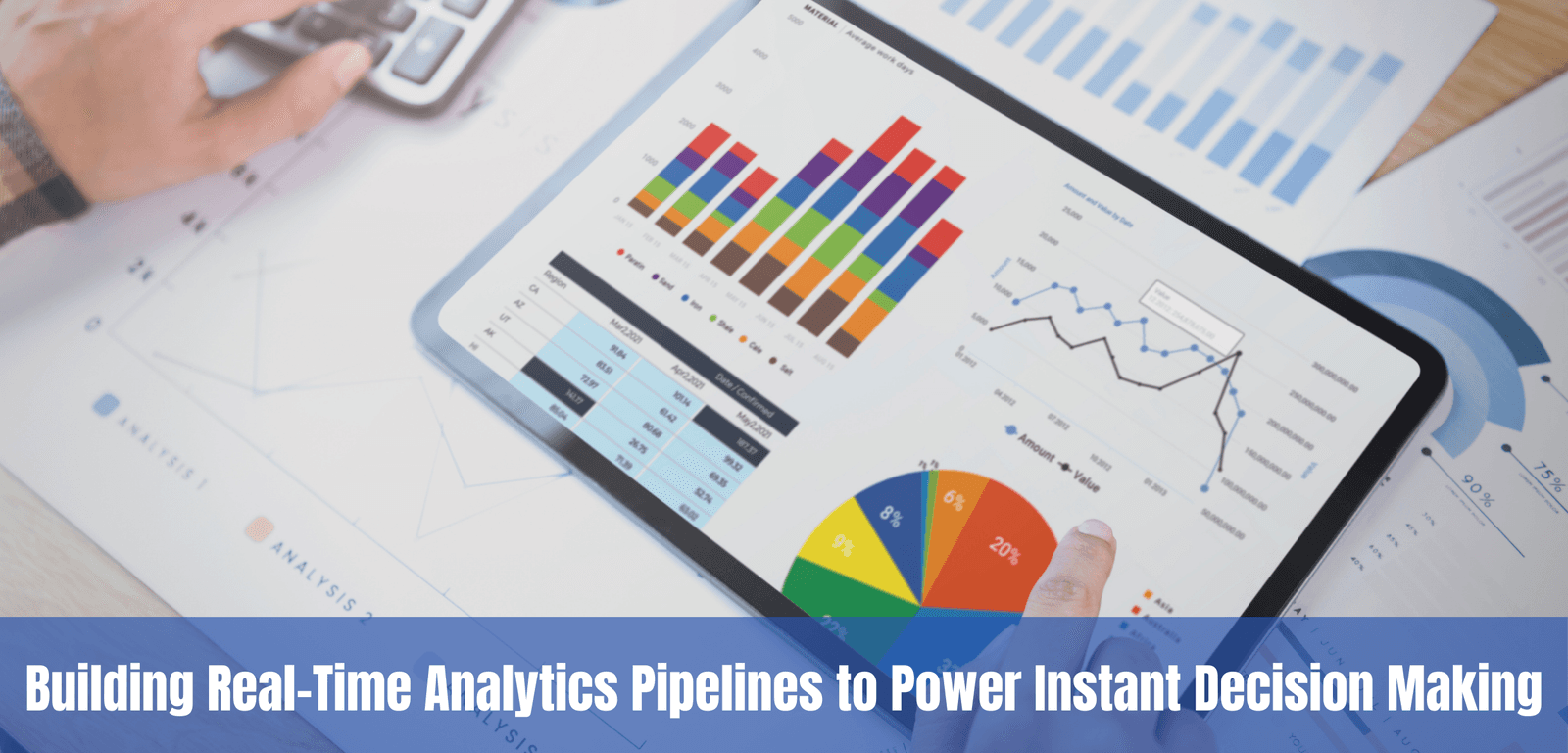
Tests your ability to design a low-latency data system and articulate trade-offs. A good answer covers ingestion (Kafka), processing (Flink), storage (Druid), and visualization (Grafana), contrasting the architecture's low latency with a batch setup.
Optimizing a Slow, Expensive Data Warehouse for BI Dashboards
Tests your grasp of data warehouse architecture beyond basic SQL. A great answer covers partitioning/clustering, materialized views for pre-aggregation, and cost controls. A red flag is suggesting only query rewrites or just 'adding more compute'.
Explain event schemas and the purpose of a schema registry
Tests your grasp of data contracts at scale. A good answer defines schemas as contracts, a registry as the enforcer of compatibility (e.g., backward/forward), and explains how this prevents 'poison pill' messages and brittle analytics.
Design a Data Model for a Feature Adoption Dashboard
This tests your ability to translate a business need into a scalable star schema. A great answer defines a central fact table (e.g., fct_feature_usage) and its dimensions (dim_users, dim_features, dim_date).

Describe the role of dbt in a modern analytics stack
Tests your grasp of modern ELT patterns. A good answer explains how dbt uses SQL for in-warehouse transformations, enabling software engineering practices like version control and testing. A red flag is confusing dbt with a full ETL tool or an orchestrator.

Describe tracking a user event from frontend to BI tool
Tests your grasp of the modern data stack. A great answer outlines the five stages: frontend emission, ingestion, loading into a warehouse, transformation, and BI visualization. A red flag is describing only the frontend code and ignoring the data pipeline.

Correlate API Slowness with User Engagement
This tests your ability to design a controlled experiment and join disparate data. A good answer outlines an A/B test with an artificial delay, logging with shared IDs, and statistical analysis. A red flag is proposing a purely observational study.
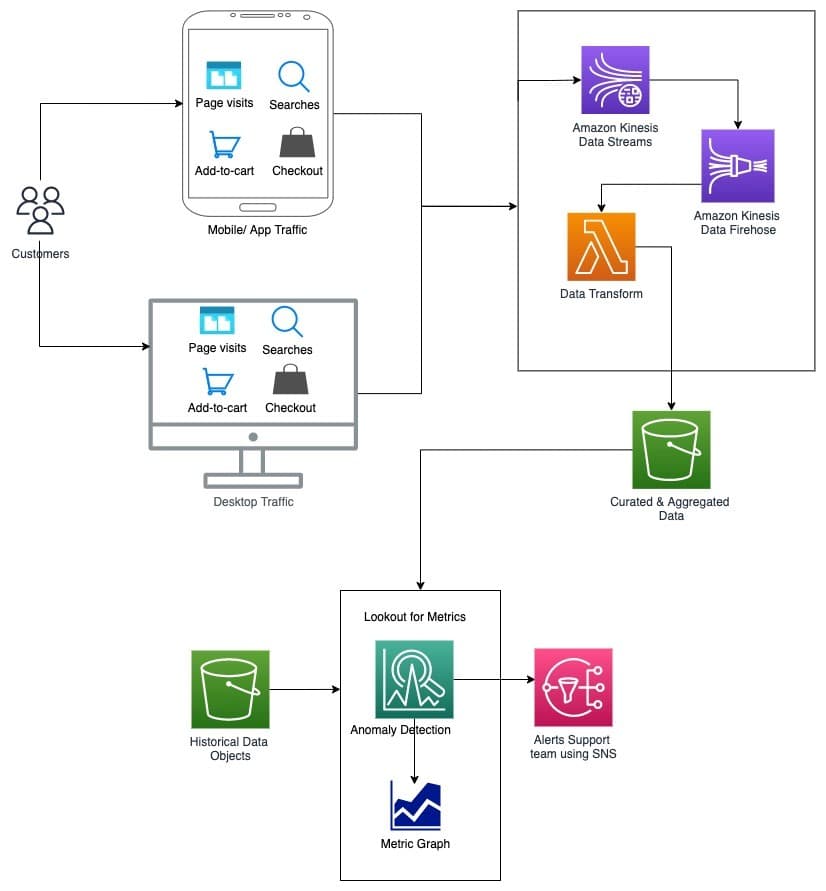
Design a Real-Time Anomaly Detection System for E-commerce Events
This tests your ability to design a real-time data pipeline and apply ML to a business problem. Outline a streaming architecture (e.g., Kinesis), processing, and storage.
How would you measure P95 latency by geographic region?
Tests your ability to translate a business need into a concrete observability implementation. A good answer involves instrumenting the API with a histogram metric, adding a region label via GeoIP, and querying with histogram_quantile.
How would you capture UTM parameters for attribution?
This tests your grasp of the data lifecycle from capture to persistence. A good answer covers client-side parsing, cookie storage, and linking anonymous data to a user record upon sign-up. A red flag is forgetting to persist the data server-side.
Describe the client-side event for an 'Add to Cart' button
Tests your knowledge of standard analytics schemas (like GA4) and designing payloads for business analysis. A great answer names the 'add_to_cart' event, details the 'items' array with product data, and mentions user/session context.

Describe two methods for generating prediction intervals
This tests your grasp of uncertainty quantification. A great answer contrasts an analytical method (assuming normal errors, using multipliers like 1.96 for 95%) with a simulation method (bootstrapping residuals).
How do you diagnose and fix a model's degrading performance?
Tests your MLOps process for handling model decay. Name it "concept drift," then outline a plan: diagnose by comparing data distributions, solve with a targeted retraining strategy, and implement proactive monitoring. A red flag is just saying "retrain it."

Which model for forecasting with seasonality and trend?
This tests your knowledge of classical time series models. A good answer names Holt-Winters, explaining its level, trend, and seasonal components. It also discusses choosing between additive and multiplicative methods. A red flag is jumping to complex models.
Train-Test Split vs. Time-Series Cross-Validation
This tests your grasp of data leakage in temporal data. A good answer explains why random splits create lookahead bias, then details how rolling-origin validation respects time. A red flag is just describing methods without explaining *why* one is necessary.
We are hiring for this. Every open role lists the topics its interview covers, so you can prepare for the real thing rather than guessing.
See open roles