Data Vault Modeling: An Audit-First Data Warehouse
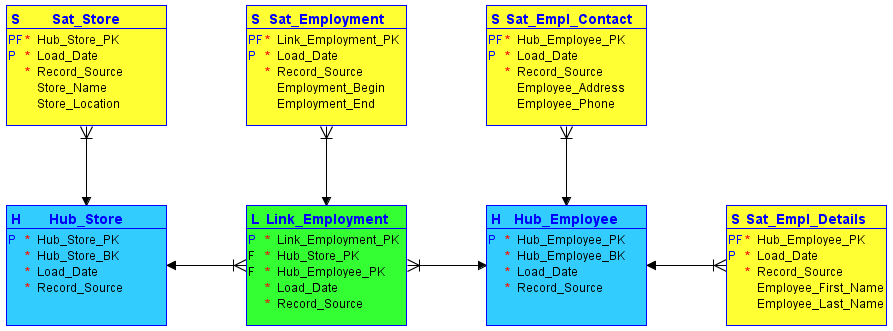
Data Vault modeling builds a warehouse like a financial ledger, where every entry is permanent and traceable. It excels at storing historical data from multiple systems for auditing.
THE MENTAL MODEL: Think of a data warehouse built like a financial ledger. Every piece of data that enters is recorded permanently and can be traced back to its exact origin and time of arrival. Data Vault modeling is designed for long-term, auditable historical storage, prioritizing data lineage and resilience to change over immediate query performance.
HOW IT WORKS: The core principle is that every row of data is stored with metadata that answers two questions: "Which system sent this?" and "When did we load it?". This is achieved by mandating that every row includes attributes for the record source and the load date. This approach creates an immutable, append-only log of all data from all source systems. It is designed to be loaded in parallel, which increases loading speed, and its structure is flexible, allowing new data sources to be added without redesigning the entire warehouse.
WHEN TO USE IT: Use Data Vault modeling when building a central data warehouse that integrates data from multiple, disparate operational systems. It is ideal for enterprise environments where regulatory compliance, data lineage, and full auditability are critical. Its design makes it resilient to changes in source systems and efficient at ingesting large volumes of data.
WHEN NOT TO USE IT: Do not use the Data Vault as the final, queryable layer for business intelligence or reporting. Its structure is optimized for ingestion and auditing, which makes direct querying complex and slow. It is also overkill for simple projects with a single data source and no strong historical auditing requirements.
ONE CANONICAL EXAMPLE: Imagine a company has a CRM and an e-commerce system, both containing customer data. A Data Vault would ingest a customer record from the CRM, tagging it with record_source='CRM' and the load_date. When the same customer's data arrives from the e-commerce system, it is also stored, tagged with record_source='E-COMMERCE' and its load_date. Both raw records are preserved, providing a complete, auditable history of how the customer's data appeared across systems over time. An auditor can trace every attribute back to its origin.
Read the original → en.wikipedia.org
Get five bites like this every day.
Tezvyn delivers a daily feed of 60-second tech bites with quizzes to lock in what you learn.