Describe key components for EDA on three years of daily user sign-ups
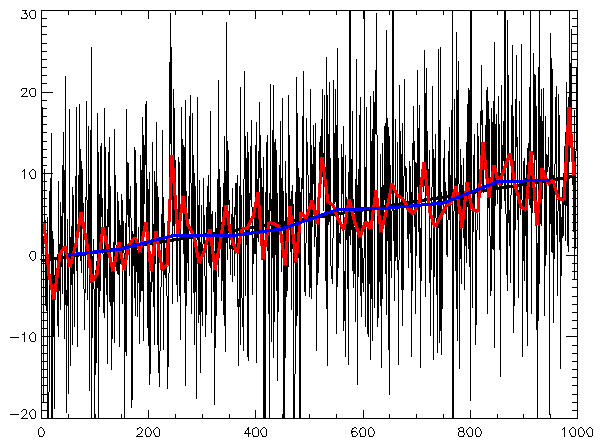
This tests time-series decomposition intuition. A strong answer covers trend, seasonality, and noise via plots, autocorrelation, and calendar effects, plus checks for missing days and outliers. Red flag: jumping to forecast models before validating structure.
What's really being asked
This question checks whether you treat a time series as ordered, equally spaced discrete-time data rather than a static cross-sectional sample. The interviewer wants to see that you validate temporal structure before making assumptions about independence or distribution. Mentioning that daily observations are discrete-time points indexed in chronological order shows you understand the basic definition.
The full answer
A strong response moves through four areas in order. First, data integrity and spacing: verify there are no missing days, duplicate timestamps, or timezone shifts because the sequence must be equally spaced to form a valid discrete-time series. Second, visual inspection of the raw series: plot the three years of daily sign-ups to spot obvious trend direction, level shifts, or anomalous spikes. Third, decomposition into components: separate the signal into long-term trend, repeating seasonal patterns such as day-of-week or month-of-year effects, and residual noise. Fourth, autocorrelation and lag analysis: check whether today's sign-ups correlate with yesterday's or last week's to reveal cyclic behavior that violates independence assumptions.
The mistakes people make
The biggest red flag is jumping straight to model names like ARIMA or Prophet without first describing what you would look for in the data. Another mistake is treating the data as independent draws and reporting simple means or histograms while ignoring chronological order. Failing to mention calendar effects or holiday anomalies is also a weakness for daily data. A third error is neglecting to check for data collection gaps around weekends or holidays.
What usually comes next
The interviewer may ask how you would handle a sudden drop on a specific date, whether you would transform the series for stationarity, or how you would distinguish between a one-time campaign spike and a lasting trend shift. They might also ask you to sketch what the decomposition plot would look like for a consumer product with strong weekly seasonality. Be ready to explain why you would difference the series or take a log transform.
A concrete example
Suppose sign-ups rise every Monday and fall every Saturday, grow twenty percent year over year, and spike on Black Friday. In your EDA you would flag the weekly seasonality with a seven-day autocorrelation, quantify the yearly trend with a rolling thirty-day average, and isolate the Black Friday residual as an outlier to avoid distorting baseline forecasts. You would also verify that the Black Friday spike does not create a phantom trend line.
Interview question
When starting EDA on three years of daily user sign-ups, what should you validate before analyzing trend or seasonality?
- a.That the timestamps form an equally spaced sequence with no missing days or duplicatesCorrect
- b.Which forecasting model such as ARIMA or Prophet would produce the best fit
- c.The seven-day autocorrelation to confirm weekly seasonality
- d.The overall mean and standard deviation by treating each day as an independent draw
Why? this is the answer
The card emphasizes that you must first verify equal spacing and chronological integrity to establish a valid discrete-time series. Checking seven-day autocorrelation is valuable but should come only after confirming the data is complete and properly ordered.
Just read this? Test yourself on what you have been reading.
Read the original → en.wikipedia.org
- #time series
- #eda
- #analytics
- #data quality
- #seasonality
You just looked this up. Could you explain it out loud?
That is the part interviews actually test. Tezvyn takes questions like this one and gives you what the interviewer is really checking, the answer that lands, and the mistake that ends the conversation, in the four minutes before your next meeting.
The iPhone app is on the way
We are building it. Until it lands, nothing here is held back from you: every interview card, your saved cards, streaks and the job board all work in Safari, plus hundreds of free practice quizzes of thirty questions each. Sign in and it all carries over to the app the day it arrives.
Want it as an icon? Tap Share at the bottom of Safari, then Add to Home Screen. It opens full screen and the cards you have read stay available offline.
We are hiring for this. Open roles that interview on time series — each one lists the topics its interview covers.
See open roles