Propose a platform strategy to beat competitor feature velocity
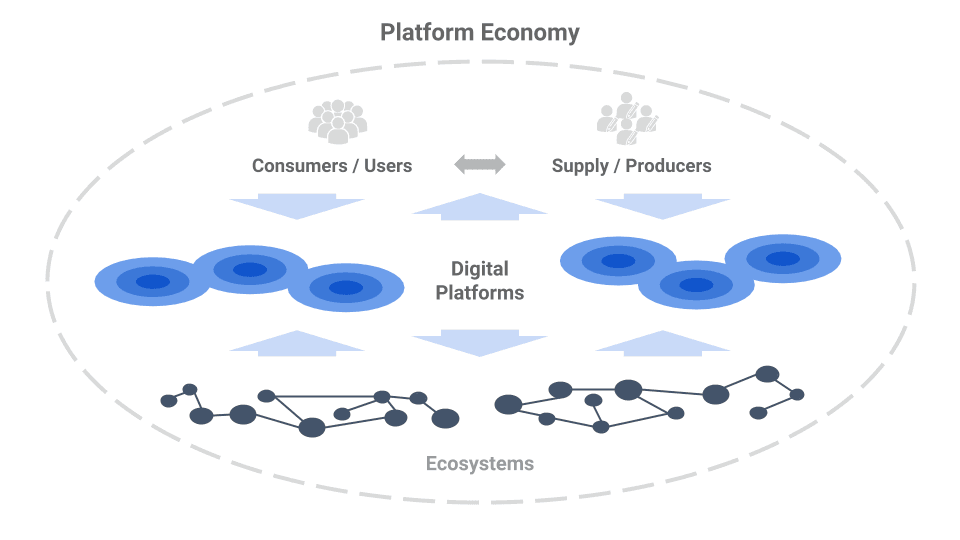
Tests trading feature parity for architectural leverage. Strong answers frame the platform as an intermediary enabling interactions and innovation via self-service APIs, composable primitives, and data loops. Red flag: a shared library creating bottlenecks.
WHAT THIS TESTS: This question tests whether you think in leverage and compounding returns rather than linear output. The interviewer wants to see if you understand that a platform is not just shared infrastructure but an intermediary that enables interactions, transactions, collaboration, and innovation among distinct groups of users. They are looking for strategic patience: the willingness to absorb slower initial velocity in exchange for an architecture that accelerates every subsequent feature. Senior candidates should demonstrate how technical choices create economic moats.
A GOOD ANSWER COVERS: First, define the platform as an intermediary with network effects, not merely a codebase. Second, list technical characteristics that enable this: self-service APIs and composable primitives so teams build without blocking on a central group; multi-tenant data and identity infrastructure that scales to new use cases without re-architecture; governance and quality guardrails that reduce coordination cost; and observability and billing mechanisms that turn internal capabilities into productized services. Third, explain the flywheel: as more teams or external developers adopt the platform, the cost of new innovation drops while the data or integration moat deepens. Fourth, contrast this with the competitor's linear model, showing that while they ship features additively, your platform multiplies future shipping capacity.
COMMON WRONG ANSWERS: A red flag is proposing a centralized shared library or internal framework that teams are forced to use. This often creates a bottleneck, adds process friction, and lacks the ecosystem incentives that make platforms self-sustaining. Another mistake is ignoring the two-sided nature of the platform; if you only build for producers and neglect consumer experience, adoption stalls. Candidates also err by focusing entirely on technology without explaining how it changes the business trajectory or speeds up future delivery.
LIKELY FOLLOW-UPS: Expect the interviewer to ask how you would sequence the build versus buying time, how you prevent the platform team from becoming a blocking service desk, and how you measure success if feature count drops in the short term. They may also probe migration strategy: how do you move existing features onto the platform without stopping the world.
ONE CONCRETE EXAMPLE: Imagine a SaaS company competing with a rival that ships a new dashboard widget every week. Instead of matching them widget for widget, you build an embedded analytics platform exposing a self-service query engine, standardized visualization primitives, and a permission-aware data layer. The first widget takes longer because you are laying track, but subsequent widgets become configuration rather than custom code. Over six months, your effective feature velocity overtakes the rival because their engineers still write bespoke code while yours assemble certified components. The platform intermediates between data producers and product teams, enabling innovation without central bottlenecks.
Read the original → en.wikipedia.org
Get five bites like this every day.
Tezvyn delivers a daily feed of 60-second tech bites with quizzes to lock in what you learn.