Systems Thinking: Optimize the Whole, Not the Parts
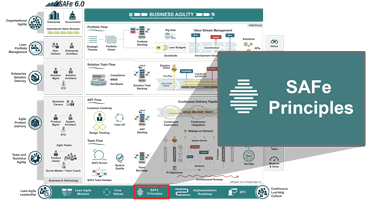
Systems thinking means optimizing the entire system, not just its individual parts. In large-scale development, siloed teams create local efficiencies that harm the overall delivery pipeline.
THE MENTAL MODEL: Systems thinking is a holistic approach that views a product, its environment, and the people who build it as one interconnected system. Instead of focusing on the performance of individual components, it prioritizes the health and performance of the whole. The goal is to optimize the entire value stream, from concept to delivery. As W. Edwards Deming warned, if left alone, system components become selfish and competitive, ultimately destroying the system.
HOW IT WORKS: By applying systems thinking, leaders and teams focus on the interactions and relationships between different parts of the organization. This involves understanding the flow of value to the customer and identifying bottlenecks that slow it down. Instead of asking "How can my team be faster?", the question becomes "How can we as a system deliver value faster and more reliably?" This encourages cooperation between functions like development, QA, and operations toward a shared, system-level goal.
WHEN TO USE IT: Use systems thinking in any complex environment with multiple teams or dependencies, which is common in large-scale software development. It is a foundational principle of frameworks like the Scaled Agile Framework (SAFe). It's especially powerful for diagnosing recurring problems; instead of blaming a single team for a failure, you analyze the systemic pressures and incentives that led to the outcome.
WHEN NOT TO USE IT: For a very small project with a single team and a simple, linear workflow, a deep systems analysis might be overkill. In such cases, focusing on direct task management can be sufficient. However, completely ignoring the system—including user needs and the deployment environment—is always risky.
ONE CANONICAL EXAMPLE: A company measures its development team on feature velocity, its QA team on bugs found, and its operations team on server uptime. The dev team rushes to ship code, creating bugs. The QA team, rewarded for finding bugs, becomes a bottleneck. The ops team, rewarded for stability, resists frequent deployments. Each team is locally optimized, but the system as a whole fails to deliver value to customers efficiently. A systems thinking approach would create a shared goal, like reducing cycle time, forcing all three teams to cooperate on building and shipping high-quality software.
Read the original → framework.scaledagile.com
Get five bites like this every day.
Tezvyn delivers a daily feed of 60-second tech bites with quizzes to lock in what you learn.