Everything in Analytics & Metrics, page 12
How do you create a 'golden record' from fragmented data?
Tests your ability to design a data reconciliation system. A great answer outlines a process: profiling sources, defining survivorship rules, implementing a matching engine, and creating a stewardship process. A red flag is suggesting a simple one-off script.

Handle Schema Evolution in a CDC Analytics Pipeline
This tests your ability to design robust data systems that anticipate change. A great answer includes a schema registry, compatibility rules, a dead-letter queue for non-compliant records, and automated alerting.
Explain data lineage and how you would implement it
This tests your ability to design for data observability. Define lineage (origin, transformation, movement), then propose a solution using metadata extraction (OpenLineage) and a central graph store/UI (Marquez) to trace data from microservices to analytics.

What is a data schema and why enforce it on ingestion?
This tests your understanding of data contracts. A great answer defines a schema as a data blueprint, then explains how early enforcement prevents bad data, ensuring consistency and reliability for analytics. A red flag is only defining the term.
What validation checks would you implement for an email field?
Tests your understanding of practical validation vs. theoretical purity. A great answer prioritizes user experience, uses simple syntax checks (like a single '@'), and relies on sending a verification email as the ultimate test.
How would you handle 10% null values in a key column?
This tests your understanding of data cleaning trade-offs. First, investigate the cause of nulls. Then, discuss simple imputation (mean/median) vs. discarding rows, weighing pros and cons. A red flag is jumping to a solution without asking about the data.

Design a framework for ensuring data quality and integrity
This tests your ability to design a proactive, multi-layered data quality system, not just reactive fixes. Start with governance (roles/ownership), then detail profiling, validation, and cleansing. Finally, discuss lineage. Red flag: focusing only on one tool.
Diagnosing Out-of-Memory Errors in a Spark Job
This tests your systematic debugging of distributed systems. A great answer first diagnoses the failure location via the Spark UI, then investigates data skew and code inefficiencies, and finally tunes memory configs.
Data Warehouse vs. Data Lake vs. Lakehouse
Tests your grasp of modern data architectures. A great answer defines warehouses (structured, schema-on-write) and lakes (raw, schema-on-read), then explains how a lakehouse adds ACID transactions and governance on top of a lake.
What is data partitioning in a cloud data warehouse?
Tests your grasp of physical data layout optimization. A good answer defines partitioning as dividing a table by a column (e.g., date), then explains how this enables partition pruning to improve query speed and reduce cost by scanning less data.
Handling Late-Arriving Data in a Streaming Pipeline
Tests your grasp of event time vs. processing time. A great answer defines watermarks to track completeness, uses event-time windowing to group data, and sets triggers with allowed lateness to correctly incorporate out-of-order events.
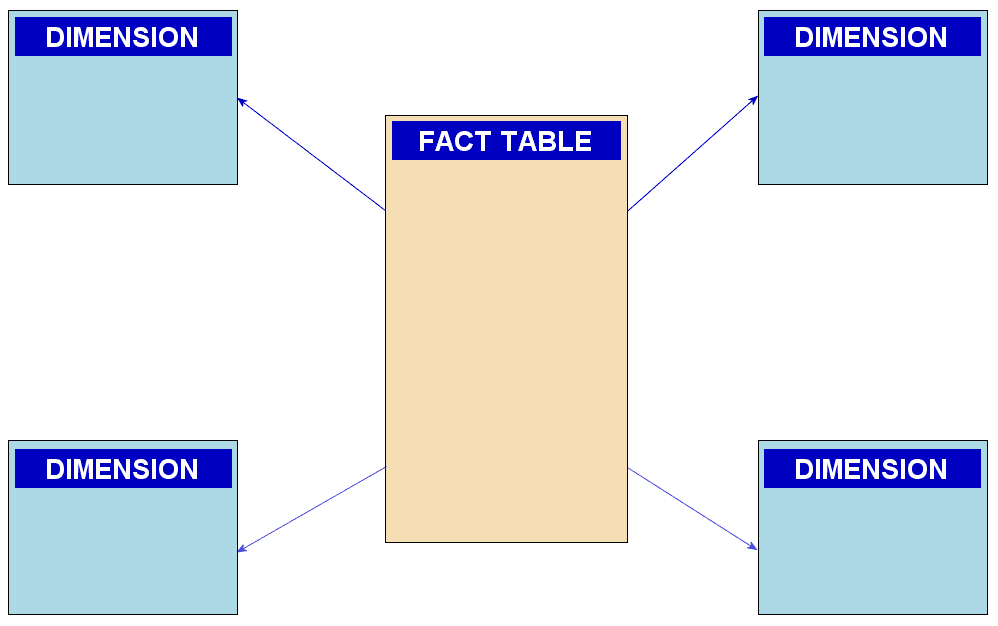
Star vs. Snowflake Schemas: Trade-offs
Tests your grasp of data warehouse design trade-offs. Define star (denormalized, fast queries) and snowflake (normalized, storage efficient) schemas. Explain the core trade-off: star's query speed vs. snowflake's storage/integrity.

What is a data warehouse vs. a transactional database?
Tests your grasp of systems optimized for different access patterns (writes vs. reads). Define OLTP for transactions and OLAP for analytics. Contrast their schema (normalized vs. denormalized), data, and workload. A red flag is calling it a 'big database'.
Build a pipeline to load a daily CSV into a database
This tests your ability to connect basic cloud services (storage, compute, database) into a simple, event-driven data pipeline. A good answer mentions an event trigger (S3), a serverless function (Lambda), and a database (RDS), plus error handling.

ETL vs. ELT: Key Differences and When to Use Each
This tests your grasp of data pipeline trade-offs. Define ETL (transform first) vs. ELT (load first), contrasting transform location and data state. A red flag is ignoring how cloud warehouses make ELT the modern default for flexibility.

Guarantee at-least-once delivery for a critical analytics event?
Tests reliable messaging patterns to avoid dual-write issues. Propose the Transactional Outbox pattern: atomically write business data and the event to a DB outbox table. A separate relay process then sends the event.

Design a Client-Side Event Batching System
Tests your grasp of client-side performance, network optimization, and data loss edge cases. A great answer batches events in memory, sends them with fetch(), and uses navigator.sendBeacon() on pagehide to reliably send the final batch.
How do you approach user identity stitching?
This tests your grasp of data architecture for analytics, not just a simple algorithm. A strong answer defines anonymous vs. known IDs, explains the backfilling/rekeying process upon authentication, and notes the need for a central event store.

Build vs. Buy: Third-Party Analytics SDK or In-House Pipeline?
This tests your grasp of the time vs. control trade-off. A great answer weighs the speed of buying against the total control of building, focusing on the hidden, long-term maintenance costs of an in-house solution.
Sudden metric drop, no recent deployments. What's the cause?
This tests your ability to debug data discrepancies beyond code, focusing on the analytics pipeline. First, distinguish data loss from misattribution. Then, check processing delays and hidden data sources. A red flag is not segmenting data first.
We are hiring for this. Every open role lists the topics its interview covers, so you can prepare for the real thing rather than guessing.
See open roles