Everything in Analytics & Metrics, page 3
Design a self-service analytics platform for non-technical users
Tests separation of semantic modeling, UI, and query generation for safe self-service analytics. Strong answers cover a semantic layer with unified metrics, drag-and-drop UI with AST-based SQL generation, and caching.
How would you design an automated data quality monitoring system?
Tests turning data quality into tiered checks for exec dashboards. Strong answers combine freshness, volume, schema, and distribution validation with severity-based paging. Red flag: static thresholds without noise reduction or business-impact triage.

Propose a technical architecture for a centralized Metrics Layer or Metrics Store
This tests your ability to decouple metric semantics from storage and query tools. A strong answer outlines a semantic layer with versioned definitions, a query API, and enforced downstream consumption.
Instrument a mobile event and surface it in analytics
This tests full-stack analytics plumbing. A good answer hits: structured client logging, batched transmission, backend validation, warehouse aggregation, and dashboard verification. A red flag is fire-and-forget logging with no schema checks or reconciliation.
What data do you need and what steps build a WAU dashboard?
Tests defining a metric, modeling events, and wiring them into a BI tool. A strong answer names the feature event, sets a rolling 7-day window, counts distinct users by period, and configures the BI layer. Red flag: jumping to charts before defining active.
Design an A/B test separating novelty from true long-term impact
Tests distinguishing novelty from stable effects. Strong answer: staggered rollout with difference-in-differences comparing early and late adopters over weeks. Red flag: extending the A/B test without modeling time-interaction or control maturation.
Design a real-time mobile analytics pipeline
Tests decoupling high-volume ingestion from low-latency querying. Strong designs use an event broker, a stream processor for windowed aggregates, and an OLAP database for sub-second dashboards.

Design a data model for feature adoption tracking
Tests dimensional modeling for high-volume events so PMs can query Feature A not B without complex SQL. A strong answer uses an event fact table plus a materialized user-feature summary. Red flag: a wide user table with boolean columns per feature.

Explain cohort retention and write a pseudo-query for May signups
Tests cohort retention vs aggregate DAU and SQL self-joins for Week 1, 2, and 4 retention from May signups. Strong answers define cohorts by signup date, use datediff, and left-join activity. Red flag: using calendar week instead of relative signup date.

Describe client-side events and properties to track Export to CSV usage
This tests telemetry design for async actions. A strong answer defines three custom events—click, success, failure—with properties like location, file_size, error_code, and user_id, fired at the right lifecycle moments.
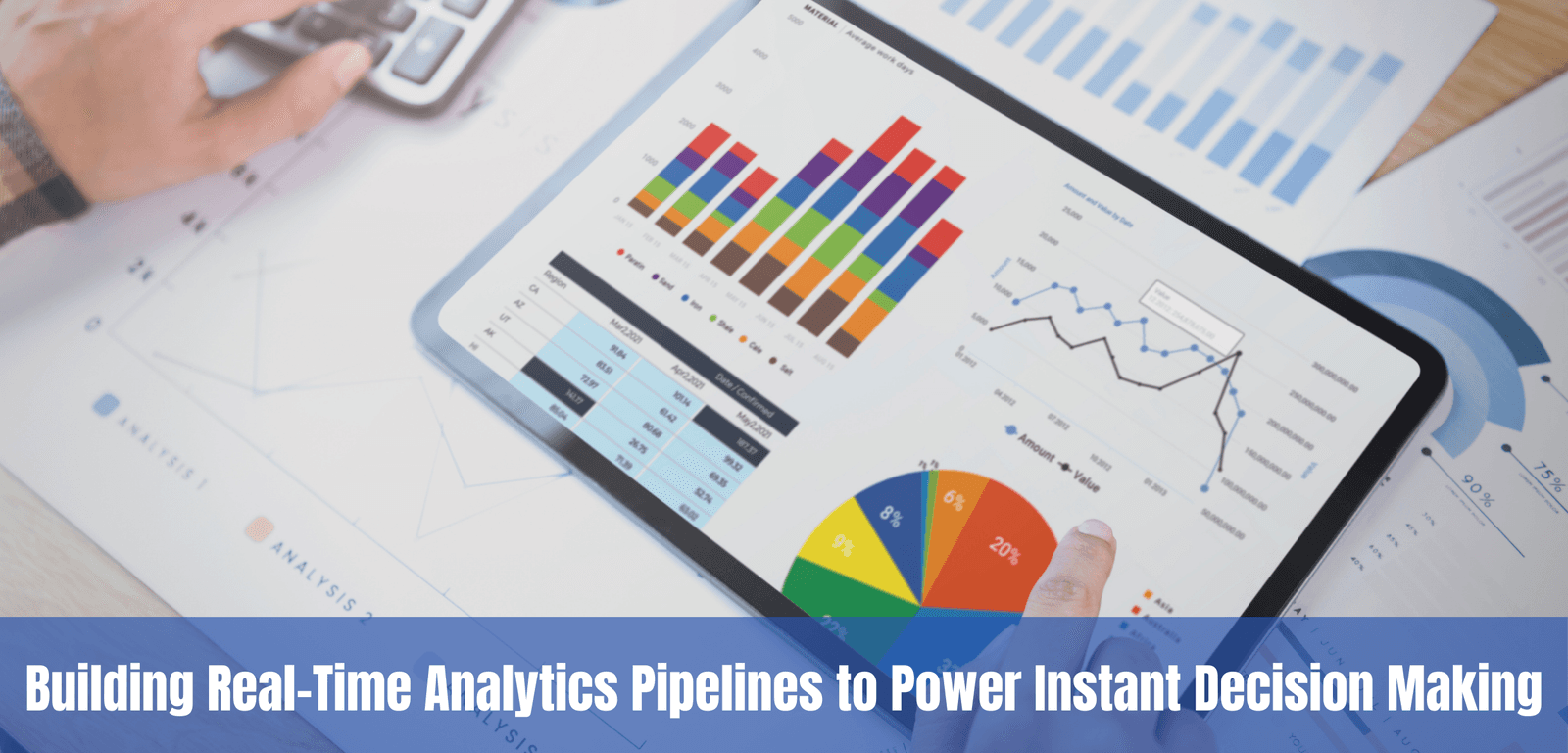
Design a near real-time pipeline to monitor orders per minute
Tests stream architecture and batch trade-offs. Outline: Kafka or Kinesis ingestion, Flink with tumbling windows, Druid or Pinot storage, Grafana alerts. Contrast batch on latency, exactly-once semantics, and cost. Red flag: calling cron SQL real-time.
How do you optimize a data warehouse for billions of rows?
Tests physical design in columnar warehouses at scale. Strong answers cover partition and cluster pruning, materialized views or rollups to reduce joins, caching and search indexes for hot paths, and reserved slots or autoscaling.

Describe dbt's role and how it differs from traditional ETL
Position dbt as ELT's T with lineage, tests, docs; contrast with Python ETL using external compute and Airflow only scheduling tasks.

Describe tracking a user event end-to-end from frontend to BI tool
Mention frontend instrumentation, routing, ingestion, warehouse transforms, and BI querying.

Design an experiment and logging to link API latency to engagement
Causal inference and data integration. Randomly inject latency for a treatment group with a control at baseline, then join server trace IDs to client events via a shared request ID. Never confuse correlation with causation or miss join issues.
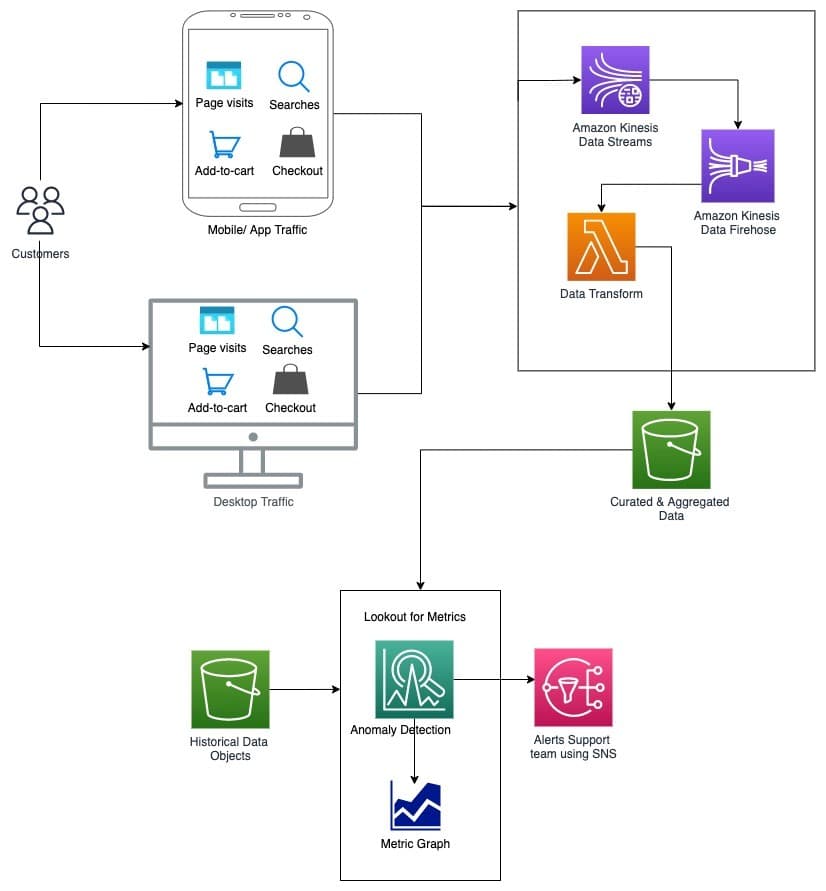
Design a system to detect sudden add-to-cart drops in real time
This tests streaming pipeline design and seasonality-aware anomaly detection. Outline Kafka or Kinesis ingestion, windowed aggregations, and ML baselines tuned to hourly and weekly trends. Red flag: static thresholds that ignore daily patterns.
How would you design UTM capture and attribution persistence?
Capture UTMs on landing, store in a first-party cookie with TTL, attach to events, and persist on conversion.
What event and data payload track Add to Cart actions?
This tests GA4 ecommerce schema design. Fire add_to_cart with items array containing item_id, price, currency, quantity; include user_id, user_segment, session_id, and timestamp. Red flag: generic button_click with DOM selectors instead of semantic data.

Describe two methods for generating prediction intervals or probabilistic forecasts
Tests uncertainty quantification for risk-adjusted decisions. Strong answers: (1) parametric intervals via forecast error variance and normal multipliers, (2) bootstrap residual resampling for empirical percentiles.

Random split vs walk-forward validation in forecasting
Random splits leak future data into training; walk-forward validation rolls the origin ahead, testing only on later observations.
We are hiring for this. Every open role lists the topics its interview covers, so you can prepare for the real thing rather than guessing.
See open roles