Everything in Analytics & Metrics, page 7
Pitfalls of using conversion rate as a checkout North Star?
Tests if you know over-optimizing conversion can degrade revenue quality or trust. Strong answers cite lower AOV or fraud risks, then list guardrails like refund rate, lifetime value, and checkout errors. Red flag: insisting conversion is the sole metric.

How do you translate increase user engagement into a technical measurement plan?
Align with PM to define engagement, map touchpoints for events, pick a north star and guardrails, then draft technical schema.
MRR: The Subscription Heartbeat
MRR is the monthly pulse of a subscription business. SaaS teams use it to forecast growth and measure churn. Counting one-time fees or annual contracts without proration inflates the metric and misleads stakeholders.
PII: Data That Identifies a Real Person
PII is any data that can identify a real person. Email addresses, IP addresses, and device IDs all count, so analytics systems must mask or hash them before storage. A leaked salt can still expose a hashed email, so do not assume hashing removes PII.
Define and calculate Weekly Active Users (WAU) for Slack
Tests translating a business metric to a technical spec. Define 'active' by key actions (sending messages, not just opening), then COUNT(DISTINCT user_id) on an events table, filtering out bots and background syncs. A red flag is a generic definition.

When is an A/B test not feasible, and what is DiD?
This tests your grasp of causal inference when randomization isn't possible. Explain a scenario like a state-level launch, introduce Difference-in-Differences (DiD), and state its core parallel trends assumption.
Determine Sample Size for a 2% Lift A/B Test
This tests your grasp of statistical power and the business trade-offs in experimentation. A great answer defines baseline conversion rate, minimum detectable effect (MDE), and statistical power. A red flag is ignoring the business context of MDE.
Design a Schema Validation System for Analytics Events
Tests your grasp of data quality engineering, client/server trade-offs, and failure design. A good answer defines a Tracking Plan, enforces it on both client and server, and handles failures by blocking or forwarding with violation flags.

Calculate Monthly Recurring Revenue (MRR) with SQL
This tests your ability to translate a business metric into a robust SQL query, handling time-series logic. A good answer filters for active subscriptions, sums the price, and correctly amortizes annual plans. A red flag is using incorrect date filtering.

What is a p-value, and what does 0.03 practically mean?
This tests your ability to translate stats into business decisions. A great answer defines p-value, compares 0.03 to the standard 0.05 threshold to reject the null hypothesis, and recommends shipping.
How do you handle timezones for a global daily sales report?
This tests your ability to translate ambiguous business needs (a "day") into a robust data model. First, clarify the business definition of a day. Then, store all event times in UTC and convert to the target timezone at query time for reporting.
Implement CDC from an OLTP database to a data warehouse
This tests your grasp of production system trade-offs. A good answer compares log-based and trigger-based CDC, focusing on source impact and data fidelity, then recommends log-based for its low overhead.

Propose a multi-touch attribution model and its data pipeline
This tests your ability to choose a practical data model under real-world constraints. Propose a time-decay or position-based model, then describe the data pipeline: event collection, identity resolution, and aggregation. A red flag is ignoring signal loss.
Transform a Time Series for a Gradient Boosting Model
Tests your ability to convert a sequential problem into a tabular one. A great answer covers creating lagged/rolling features and time-based features (e.g., day of week), and crucially, specifies a time-aware validation split.

How would you find leading indicators for long-term churn?
Tests your ability to connect a lagging business KPI to leading product metrics. A good answer defines churned/retained cohorts, analyzes first 30-day engagement differences (e.g., feature adoption), and validates findings. A red flag is jumping to ML models.
Calculate Daily Active Users (DAU) with SQL
This tests your ability to translate a business metric into a precise technical definition and query. A good answer defines "active," specifies the event data needed (user_id, timestamp, event_name), and uses COUNT(DISTINCT user_id).
Client-Side vs. Server-Side Event Tracking: Pros and Cons
Tests your grasp of data integrity trade-offs. A good answer defines both, contrasts reliability vs. implementation ease, and gives clear examples like 'payment_processed' (server) vs. 'button_click' (client). Red flag: Ignoring ad-blockers and data loss.

Build a SQL query for a multi-step conversion funnel
Tests your ability to translate a product question into robust SQL. A great answer uses CTEs or left joins to count users at each step, defining the attribution model (e.g., first-touch) and time windows. A red flag is a naive query that double-counts users.
Trade-offs: Bundled Analytics vs. a Warehouse-Native Stack?
This tests your grasp of modern data stack trade-offs: cost, data governance, and flexibility. Discuss the pros of warehouse-native (unified data, lower cost, security) vs. the cons (loss of specialized UI, implementation complexity).
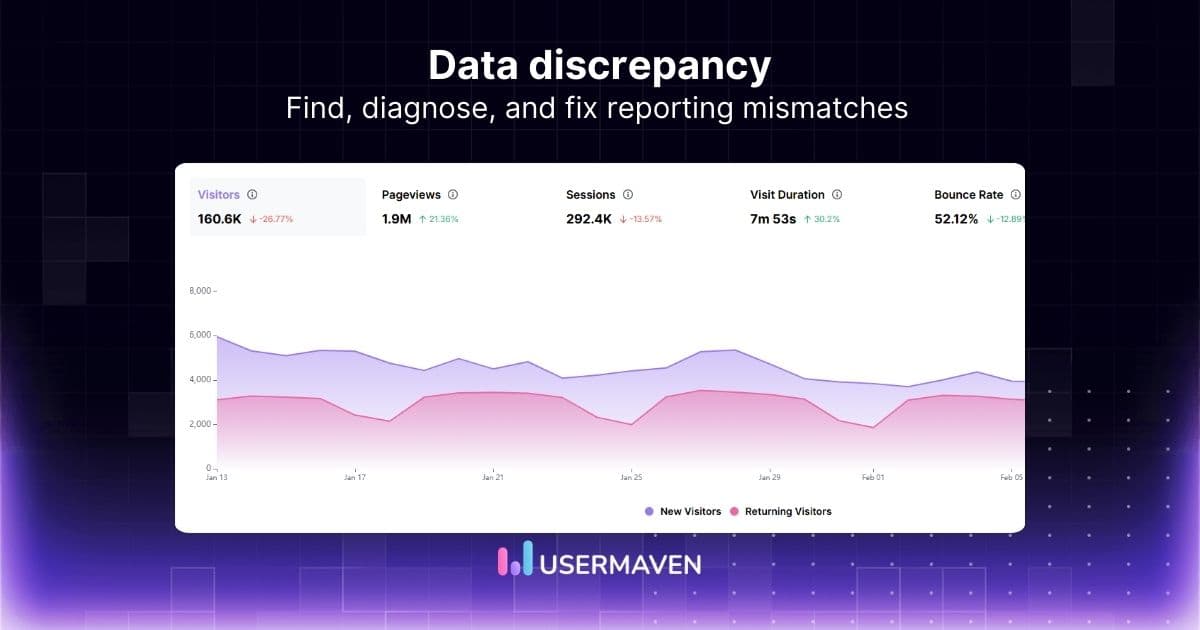
Why do our analytics and backend user counts not match?
This tests your ability to systematically debug data integrity issues. A great answer first defines the metric, then investigates tracking implementation, privacy blockers, and time zone settings. A red flag is blaming one tool without a structured plan.
We are hiring for this. Every open role lists the topics its interview covers, so you can prepare for the real thing rather than guessing.
See open roles