Everything in Analytics & Metrics, page 6

What is a data schema and why enforce it at ingestion?
Tests schemas as contracts and ingestion validation as a quality gate. Strong answers cite blueprints with constraints, fail-fast ingestion catching type errors upstream, and downstream trust. Red flag: treating schemas as optional docs affecting only storage.
What validation checks would you implement for a user-submitted email field?
Tests whether you separate syntax validation from deliverability and know practical ingestion guards. A strong answer covers RFC-aware syntax, domain checks, normalization, and deduplication.
How do you handle 10% nulls in a key numerical column?
Check MCAR/MAR/MNAR; prefer median or mean imputation; add an "is_missing" indicator.

Design a data quality framework from source to consumption
This tests full-lifecycle data architecture. Strong answers define ownership first, then schema contracts at ingestion, profiling and anomaly detection in CI/CD, column-level lineage, and KPI-linked scorecards. Red flag: tools before ownership or RACI.
Diagnose out-of-memory errors in a growing Spark job
Inspect plans for skewed partitions and joins; tune shuffle partitions, batch sizes, and join strategies; leverage AQE and statistics.
What is data partitioning in a cloud data warehouse?
Tests physical data layout and cost/performance tradeoffs. Strong answers define time-based or integer-range partitioning, explain partition pruning avoids full scans, and warn against high-cardinality keys.
How would you handle late-arriving data in a streaming analytics pipeline?
Tests understanding of event-time processing, watermarks, and windowing for correctness. A strong answer covers watermarks with allowed lateness, event-time triggers, and idempotent updates to sinks.
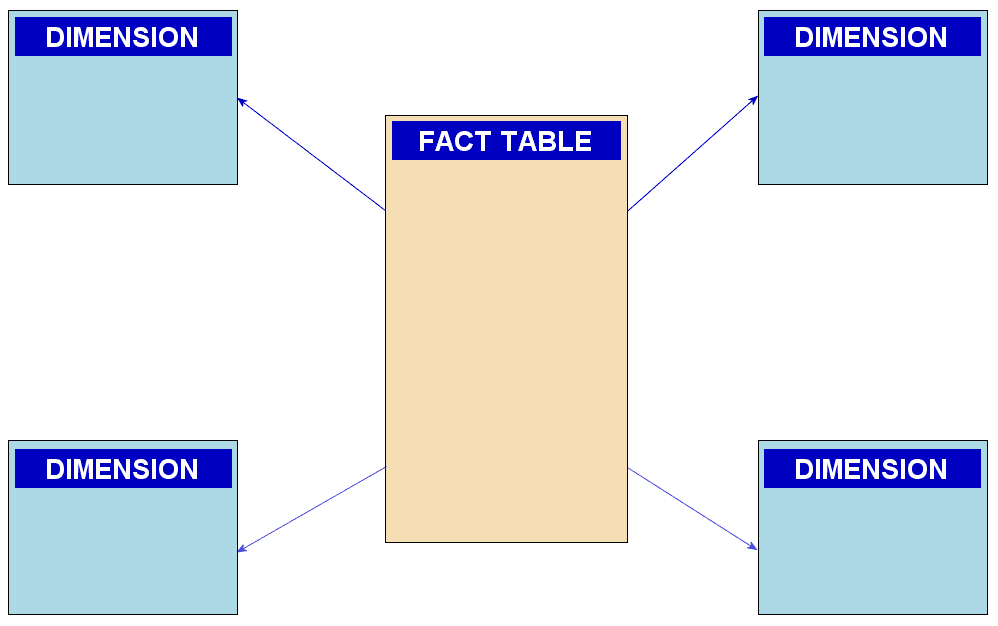
Describe star and snowflake schemas and their trade-offs
Star schemas flatten dimensions for fast joins; snowflake schemas normalize hierarchies to reduce redundancy but add joins.

Explain data warehouse purpose and how it differs from OLTP
This tests whether you know the OLTP versus analytics split. A great answer contrasts OLTP row-level writes and normalized schemas with warehouse denormalized schemas and BI reads. A red flag is calling a warehouse just a bigger OLTP database.
Outline an automated pipeline to load a daily CSV into a database
Event trigger on drop, schema validation, idempotent load, and observability.

Differences between ETL and ELT, and when to choose each
ETL transforms before loading for structured data; ELT loads raw first and transforms in the warehouse for scale.

How do you guarantee at-least-once event delivery for a financial transaction?
Write events to a DB outbox in the same transaction as the biz update; a relay polls and publishes to analytics.

Design client-side event batching and prevent unload data loss
It tests balancing network efficiency and data reliability in browser analytics. Strong answers cover in-memory batching with size or time triggers, sendBeacon or fetch keepalive on visibilitychange, and a retry queue.
How do you approach user identity stitching across devices?
Tests cross-channel identity resolution design. Strong answers capture a persistent anonymous ID per device, rekey to a person ID at login via field-based or graph-based stitching, and respect consent.

Trade-offs: third-party analytics SDK versus in-house pipeline
This tests strategic build-versus-buy judgment for data infrastructure. Strong answers weigh time-to-market, maintenance burden, data sovereignty, and compliance against core product focus.
Conversion metric dropped suddenly with no recent deployments; debug instrumentation causes
Distinguishing real regressions from telemetry pipeline failures. Segment by device, channel, and geography to spot uniform loss signaling a tagging break; verify vendor delays and sampling; check for consent or ad-blocker shifts.
How do you track page views in a Single Page Application?
This tests SPA analytics beyond classic page loads. A strong answer covers History API pushState and popstate events, framework router hooks like useEffect or afterEach, and beaconing views. A red flag is relying only on window.load or polling URL changes.

How do you measure data platform ROI and track it?
Cite adoption, time to insight, downtime cost, and cost per workload; then describe cost tags and usage telemetry.
How would you develop balanced KPIs for a two-sided marketplace?
Tests dual-sided metric design beyond B2C playbooks. Strong answers define buyer and seller liquidity separately, prioritize match rate over GMV, and monitor supply-demand balance granularly.

How do you diagnose why a new feature's adoption is flat?
Tests structured analytics thinking across the adoption funnel. A strong answer maps discovery to habituation, segments cohorts, pairs behavior with feedback, and validates via experiments. Red flag: blaming UI without proving users know the feature exists.
We are hiring for this. Every open role lists the topics its interview covers, so you can prepare for the real thing rather than guessing.
See open roles