Trending
What everyone else is opening right now, ranked by reads. A good place to start if you do not know which topic you need yet.
Most read right now
When adding more AI agents makes a workflow harder to maintain
NN/g reports how piecemeal AI workflows become fragile. Start small and keep clear boundaries.
CNCF argues agents should propose system state, not receive production root
A CNCF Ambassador argues that agents should express changes as versioned system state and pass them through review, build and deployment controls instead of receiving unrestricted production root.
Cloudflare introduces Web Search API through AI Gateway
Cloudflare announced a Web Search API in AI Gateway with Ceramic.ai, Exa and Linkup, returning fresh web context and links for grounded agent applications.
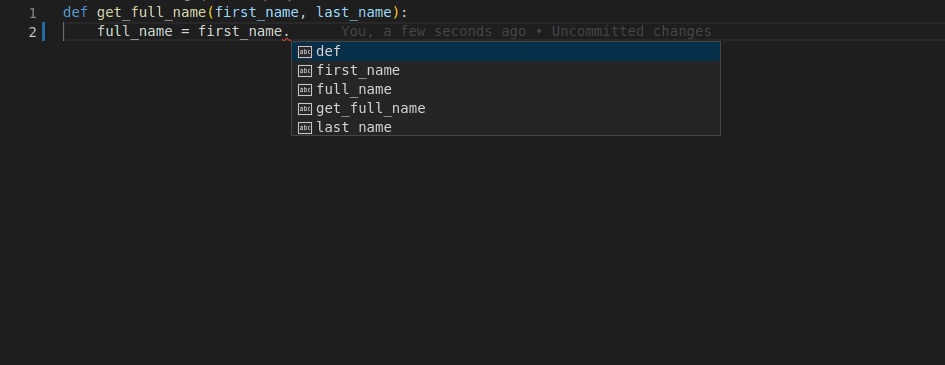
Explain Python type hints and their importance in FastAPI
Python type hints describe expected data, but Python itself does not enforce them. FastAPI reads those annotations with Pydantic to parse and validate requests and generate OpenAPI documentation. A strong answer separates language syntax from framework behavior.
Vanishing Gradients and Why ReLU Helps
Saturating activations shrink gradients across layers, ReLU's flat-one derivative preserves them.

Python Type Hints: Documentation Your Linter Can Read
Type hints describe expected values, but Python itself does not enforce them while running. Static checkers and IDEs use the annotations before execution; libraries such as FastAPI can also inspect them for validation and API documentation.
Amplitude reduces MCP tool overload by grouping actions around usage
Amplitude redesigned its MCP server after endpoint-level tools created context bloat and tool-choice errors.
What is the difference between primary, foreign, and unique keys?
This tests relational integrity basics. Answer: primary keys identify rows, foreign keys reference tables, and unique keys are alternate candidates. Red flag: saying unique keys are just for indexing or omitting a non-PK example like email.
pandas DataFrame: A Spreadsheet in Code
Think of a pandas DataFrame as a powerful spreadsheet you control with code. It's the workhorse for loading, cleaning, and analyzing tabular data in Python, like sales figures from a CSV.
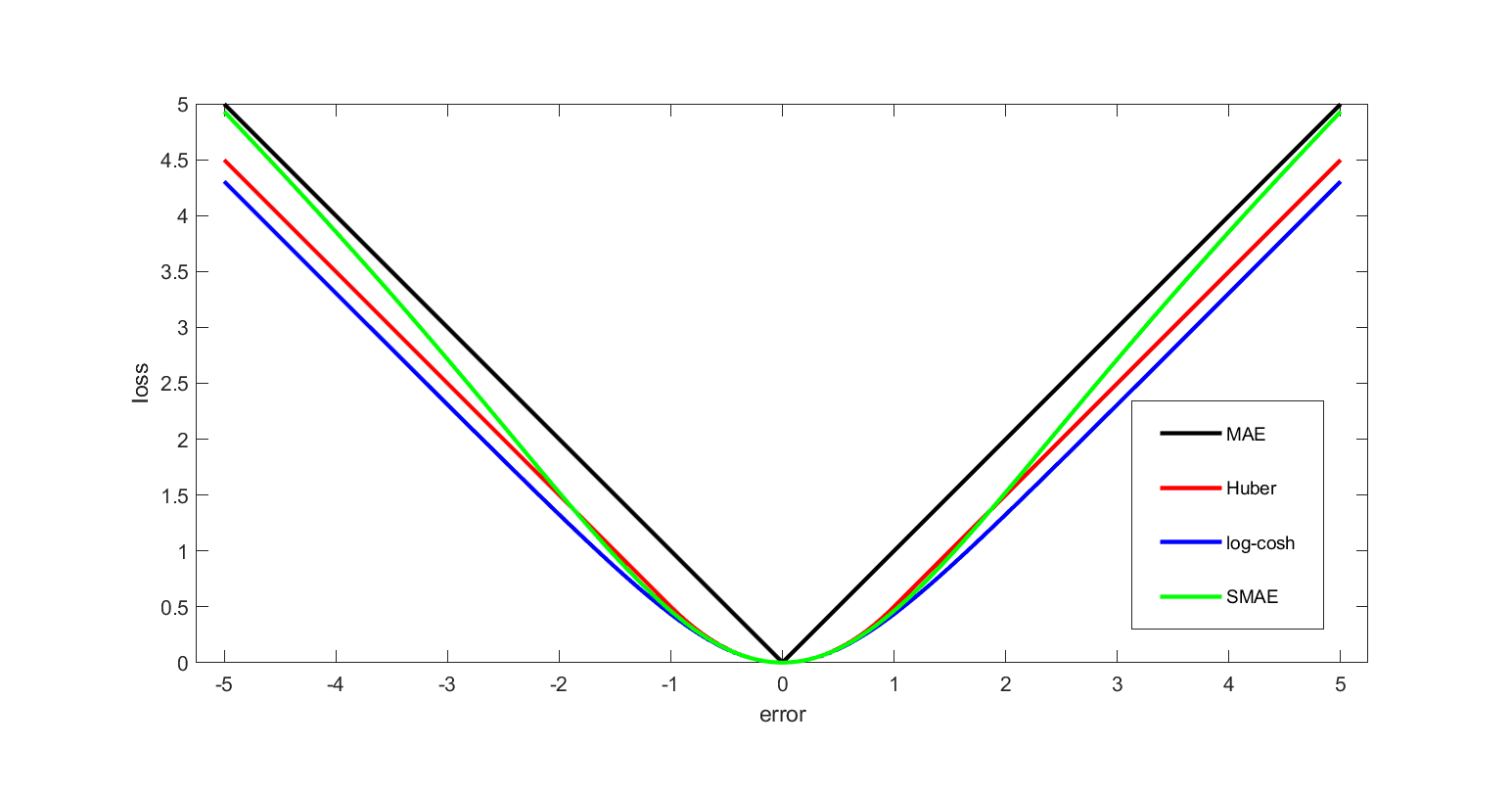
Loss Function: Quantifying 'How Wrong' a Model Is
A loss function is a score that tells a machine learning model how wrong its predictions are. The lower the score, the better. It's the engine of training, guiding the model to adjust its parameters to get closer to the correct answers.

What is the difference between def and async def in Python and FastAPI?
Tests event-loop boundaries: async def yields control via await for non-blocking I/O, def runs in a threadpool. Use async def only with async libraries; def covers blocking calls. Red flag: claiming async is automatically faster or awaiting inside def.
How does FastAPI leverage Pydantic for request validation and serialization?
This tests your understanding of FastAPI's declarative validation. Explain that type hints trigger auto-parsing, Pydantic enforces schemas and errors, and return types auto-serialize responses. Red flag: manually parsing request.body() or json.loads in routes.
Jev catches changes in an analytics test, but false alarms matter
Amplitude reports a synthetic analytics benchmark. Strong recall alone does not prove reliable production analysis.
Explain Vue as a progressive framework and build-step differences
Tests incremental adoptability. Strong answers define progressive as layer-by-layer adoption, describe script-tag HTML enhancement, and contrast it with compiled SFC SPA toolchains. Red flag: calling Vue lightweight rather than incrementally adoptable.
Stages of an end-to-end ML pipeline
Ingest, validate, preprocess and feature engineer, train, evaluate against a baseline, then register and package for deployment, with gates between stages.
Vue: The Progressive Framework Philosophy
Vue's progressive philosophy means you can use as little or as much of it as you need. Use it for a single interactive widget, or scale it up to a full SPA with official libraries.
Cloudflare uses AI to map cryptography for its post-quantum migration
Cloudflare describes using an internal tool, CryptoLabe, to discover cryptography across its code and plan a 2029 post-quantum migration.
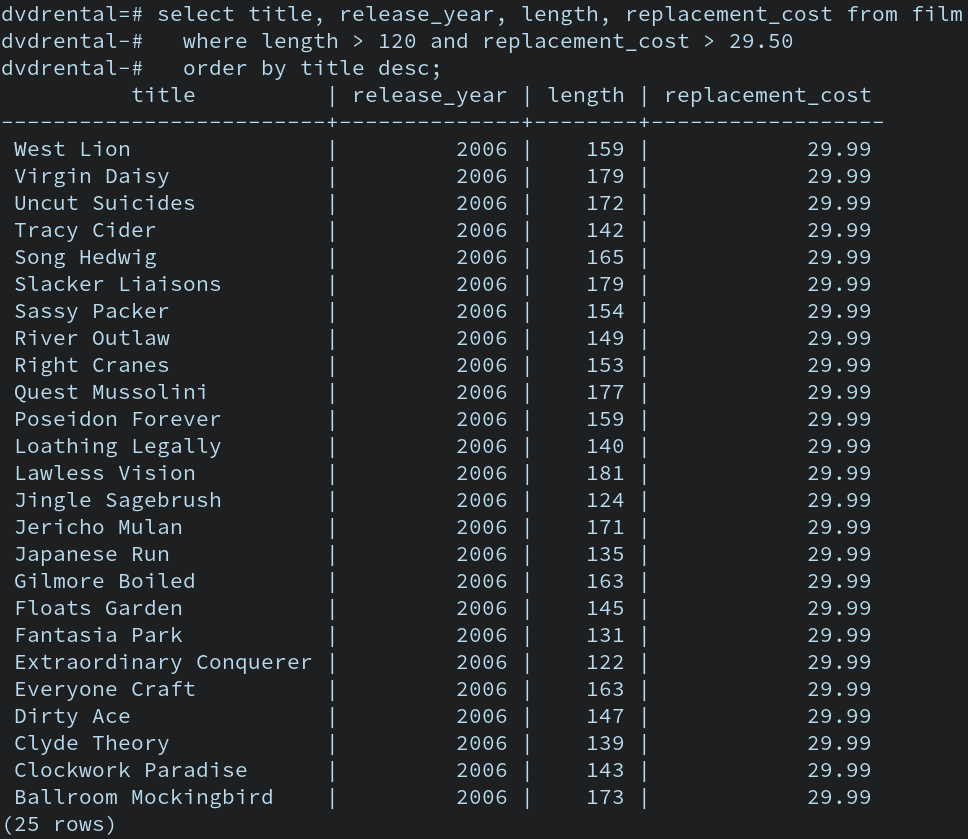
DBMS: The Software That Runs Your Database
A DBMS is the software engine that manages a database, separating your app from raw data files. You use it to query, update, and administer data, like with PostgreSQL or MySQL. The common footgun is confusing the DBMS with the database itself.

Explain word embeddings and why they beat one-hot encoding for large vocabularies
Embeddings cluster similar meanings in low-dimensional space, while one-hot vectors are orthogonal, huge, and semantically blank.
Explain val vs var in Kotlin and null safety risks
Val is read-only, var is mutable; nullables use ? like String?; risk is NullPointerException if checks are missed.
Python summit recap: discussions shaping CPython
Python Insider has published its 2026 summit recap. Topics include free-threading, Rust and garbage collection. These discussions are not a Python release.
Self-Attention versus Recurrent Architectures
Each token attends to all others via query-key-value, enabling parallelism and direct long-range links.
Write an async decorator that logs execution time for FastAPI
Use functools.wraps, wrap perf_counter around awaited call, log ms, and place decorator above path operation.
CNCF announces its 2026–2028 Ambassador cohort
CNCF accepted 58 new ambassadors for its 2026–2028 cohort, while 48 previous ambassadors stepped away.
Explain val, var, and null safety in Kotlin
This tests your grasp of immutability and Kotlin's compile-time null safety. Define val (immutable reference) vs. var (mutable), explain nullable types using ?, and state the risk is NullPointerException. A red flag is confusing val with a constant.
Explain val vs. var and null safety in Kotlin
Tests your grasp of Kotlin's core principles: immutability and compile-time null safety. Define val (read-only) vs. var (mutable), declare nullables with ?, and identify the risk as runtime NullPointerExceptions.
Kotlin Variables: `val` for Constants, `var` for Variables
In Kotlin, val creates a read-only constant you assign once, like a fixed setting. var creates a mutable variable you can change later. Always prefer val unless you explicitly need to reassign a value to prevent accidental state changes.
Next.js fixes September 2026 image and cache vulnerabilities
Next.js 16.3.8 and 15.5.27 fix a critical and a high-severity issue. Check whether Image Optimization uses remotePatterns, whether a self-hosted Pages Router uses SSG or ISR, and whether catch-all or cache-preview features are enabled before patching and retesting.
What do the safe call and Elvis operators do in Kotlin?
?. yields null if receiver is null; ?: provides the right operand when left is null; chain as val len = str?.length ?: 0.
What is the difference between final and const in Dart?
Tests compile-time versus runtime immutability in Dart. A strong answer: final allows single assignment at runtime, but const requires a compile-time constant and deep immutability.
Looking for something specific? Browse by topic or read everything, newest first.
We are hiring for this. Every open role lists the topics its interview covers, so you can prepare for the real thing rather than guessing.
See open roles