Explain Python type hints and their importance in FastAPI
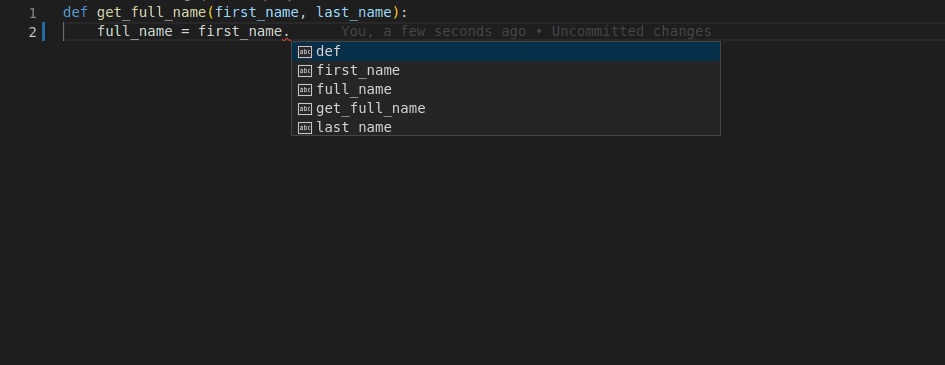
Python type hints describe expected data, but Python itself does not enforce them. FastAPI reads those annotations with Pydantic to parse and validate requests and generate OpenAPI documentation. A strong answer separates language syntax from framework behavior.
What's really being asked
This question checks whether you see type hints as more than cosmetic syntax. At the senior level, the interviewer wants to know if you understand that FastAPI is architected around Python type annotations, using them as the single source of truth for data validation, serialization, and API documentation. They are testing your mental model of framework internals and your ability to reduce boilerplate by leveraging declarative types rather than imperative checks.
The full answer
First, define type hints as optional annotations introduced in PEP 484 that declare the expected type of a variable, function parameter, or return value without imposing runtime behavior. Second, explain that FastAPI reads these annotations at startup to construct Pydantic models under the hood, which then handle request parsing, automatic validation, and error messages. Third, note that the same type information is used to generate OpenAPI schemas and interactive Swagger UI documentation, eliminating manual schema maintenance. Fourth, mention that editors and static analysis tools use the same hints for autocompletion and early bug detection, creating a unified developer experience.
The mistakes people make
A major red flag is asserting that type hints enforce types at runtime; Python ignores them during execution unless an external tool enforces them. Another mistake is saying they are only for IDE autocomplete, which misses the framework-level contract they provide in FastAPI. Candidates who suggest writing manual validation logic inside every route instead of relying on Pydantic-driven type hints also signal a lack of familiarity with FastAPI's design philosophy.
What usually comes next
The interviewer may ask how you would handle complex nested models or optional fields using typing modules like List, Dict, or Union. They might probe whether you know how to use Pydantic BaseModel classes as type hints for request bodies versus primitive types for query and path parameters. Another follow-up could be how type hints interact with dependency injection in FastAPI or how they affect performance during schema generation.
A concrete example
Imagine an endpoint that creates a user. Instead of manually parsing JSON and checking fields, you define a Pydantic model called UserCreate with name as a str and age as an int. You then annotate the request body parameter in the path operation function with user: UserCreate. FastAPI automatically validates that the incoming JSON contains a string name and an integer age, returns a 422 error if validation fails, serializes the response using the same model, and exposes the schema in the generated OpenAPI docs without any extra configuration.
Interview question
When you annotate a FastAPI route parameter with a Pydantic model, what does the framework do with that type hint?
- a.It leverages the hint for automatic request validation and OpenAPI schema generationCorrect
- b.It uses the hint to enforce types at runtime via Python's built-in type checker
- c.It passes the hint to the IDE but performs no framework-level request handling
- d.It ignores the hint and expects manual validation logic inside the route function
Why? this is the answer
FastAPI reads type hints at startup to construct Pydantic models that validate incoming requests and generate OpenAPI schemas automatically. The distractor about runtime enforcement is wrong because Python itself ignores type hints during execution unless an external tool checks them.
Just read this? Test yourself on what you have been reading.
Read the original → fastapi.tiangolo.com
- #python
- #fastapi
- #type-hints
- #pydantic
- #api-design
You just looked this up. Could you explain it out loud?
That is the part interviews actually test. Tezvyn takes questions like this one and gives you what the interviewer is really checking, the answer that lands, and the mistake that ends the conversation, in the four minutes before your next meeting.
The iPhone app is on the way
We are building it. Until it lands, nothing here is held back from you: every interview card, your saved cards, streaks and the job board all work in Safari, plus hundreds of free practice quizzes of thirty questions each. Sign in and it all carries over to the app the day it arrives.
Want it as an icon? Tap Share at the bottom of Safari, then Add to Home Screen. It opens full screen and the cards you have read stay available offline.
We are hiring for this. Open roles that interview on python — each one lists the topics its interview covers.
See open roles