Loss Function: Quantifying 'How Wrong' a Model Is
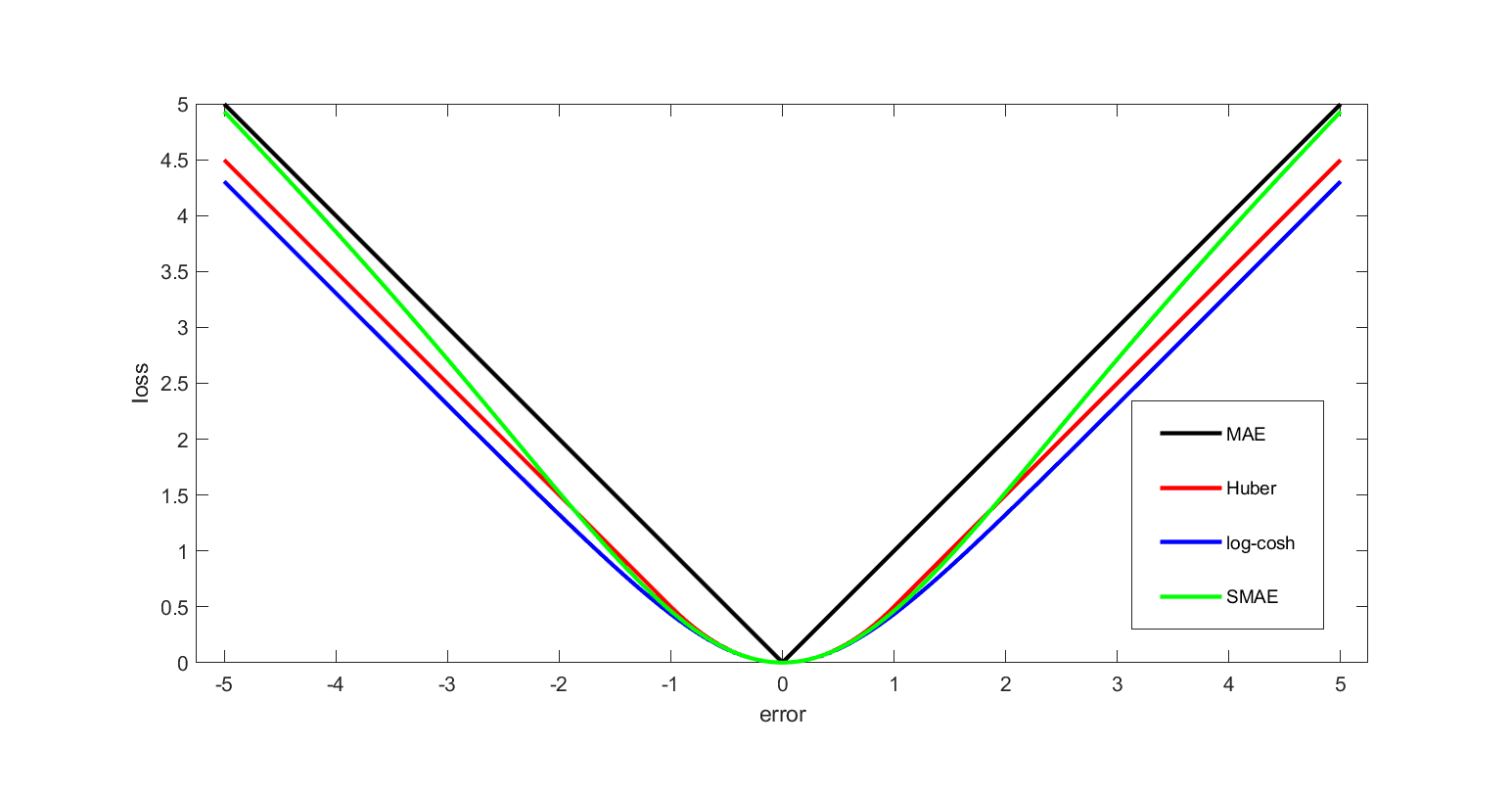
A loss function is a score that tells a machine learning model how wrong its predictions are. The lower the score, the better. It's the engine of training, guiding the model to adjust its parameters to get closer to the correct answers.
Why it exists
Computers don't understand 'good' or 'bad' predictions intuitively. We need a mathematical way to tell a machine learning model precisely how wrong it is and in what direction. A loss function provides this exact, quantifiable measure of error, turning the abstract goal of 'getting better' into a concrete optimization problem.
The mental model
Think of a loss function as a golf score for your model. For every prediction it makes, the function calculates a penalty. A perfect prediction gets a score of 0 (a hole-in-one). A wildly wrong prediction gets a very high score. The model's training process is like a golfer trying to lower their handicap by adjusting their swing (the model's parameters) to consistently get lower scores.
How it works
A loss function takes two inputs: the model's prediction and the true, ground-truth value. It then outputs a single number, the 'loss' or 'cost'. For example, a simple Mean Squared Error (MSE) loss function would take the difference between the predicted value and the true value, square it, and then average these squared differences over many examples. An optimization algorithm then tweaks the model's internal variables to minimize this output number.
When to use it
A loss function is fundamental to the training loop of nearly every supervised machine learning and deep learning model. It's used every time the model's parameters are updated. Different tasks require different loss functions: Mean Squared Error for predicting continuous values like house prices, and Cross-Entropy Loss for classification tasks like identifying a cat in a photo.
When not to use it
A loss function is not a direct measure of business value or final product quality. A model with a low loss score might still produce outputs that are nonsensical, biased, or unhelpful to a user. It is a tool for optimization, not the final arbiter of a model's real-world usefulness. Unsupervised methods also optimize objectives, but their targets differ. For example, k-means minimizes within-cluster squared distances rather than prediction error against labeled answers.
One canonical example
Imagine a simple model that tries to predict tomorrow's temperature. The model predicts 72°F. The actual temperature turns out to be 75°F. A simple L1 loss (Mean Absolute Error) would calculate the cost as the absolute difference: |75 - 72| = 3. An L2 loss (Mean Squared Error) would calculate it as the squared difference: (75 - 72)^2 = 9. The optimizer's job is to adjust the model so that next time, its prediction yields a smaller number.
Interview question
Which situation best illustrates why a loss function should not be the only measure of a model's real-world effectiveness?
- a.The model achieves a low loss score, but its predictions are biased or provide no practical value to users.Correct
- b.The model's training process is slow due to the computational cost of the loss function.
- c.The model is used in an unsupervised learning context where true labels are unavailable.
- d.The loss function outputs a high value, indicating the model's current predictions are inaccurate.
Why? this is the answer
The card explicitly states that a low loss score doesn't guarantee real-world usefulness, as outputs can still be nonsensical, biased, or unhelpful. This highlights that loss functions are for optimization, not the final arbiter of a model's real-world usefulness. Option C describes a scenario where a loss function isn't typically used, rather than a limitation of relying on it as a sole metric when it is applied.
Just read this? Test yourself on what you have been reading.
Read the original → en.wikipedia.org
Put your scrolling time to good use
Learn one idea, try a quiz and save useful cards for revision. Tezvyn makes it easy to learn and stay current in your tech field, a few minutes at a time.
The iPhone app is on the way
We are building it. Until it lands, nothing here is held back from you: every interview card, your saved cards, streaks and the job board all work in Safari, plus hundreds of free practice quizzes of thirty questions each. Sign in and it all carries over to the app the day it arrives.
Want it as an icon? Tap Share at the bottom of Safari, then Add to Home Screen. It opens full screen and the cards you have read stay available offline.
We are hiring for this. Open roles that interview on machine learning — each one lists the topics its interview covers.
See open roles