Everything in Content & Copywriting, page 2
How does scriptwriting differ for live webinars versus pre-recorded tutorials?
Live uses modular chunks and 20-30% Q&A padding; recorded uses tight arcs and cuts to one concept per 2-3 minutes.
Structure a 5-minute video script demonstrating a new API endpoint
Tests your ability to sequence technical information for developers with limited attention. Strong outline: 60s problem hook, 90s live request demo, 60s auth and errors, 30s next steps. Red flag: opening with PRD specs before a working call.
Your button breaks in German: what CSS and API strategies fix it?
Tests i18n resilience. Strong answers pair CSS tactics like text-wrap, min-width, and container queries with API levers such as truncation flags, max-length props, or adaptive icon slots. Red flag: telling translators to shorten text or hardcoding widths.
Design an automated 3-email onboarding sequence with early exit
Tests distributed state management and reliable delayed execution. A good design uses an idempotent state field, scheduled jobs with at-least-once delivery, and an event handler to suppress sends on conversion.
What client-side and server-side validations belong on a campaign sign-up form?
This tests defense in depth and UX trade-offs. A strong answer maps validations to layers: regex and immediate feedback client-side, strict schema and rate limiting server-side, plus duplicate checks. Red flag: claiming client-side validation is sufficient.

How does A/B testing native mobile apps differ from web?
Native mobile constraints versus web deployment. A strong answer covers: app store cycles forcing remote flags; device fragmentation skewing segments; and offline usage delaying events.
How to structure translation keys for dynamic localized strings
Tests ICU MessageFormat and safe interpolation. Outline: one key per sentence with named placeholders; sanitize variables pre-format; use pattern-level plural and select. Red flag: concatenating fragments or injecting raw user input into templates.
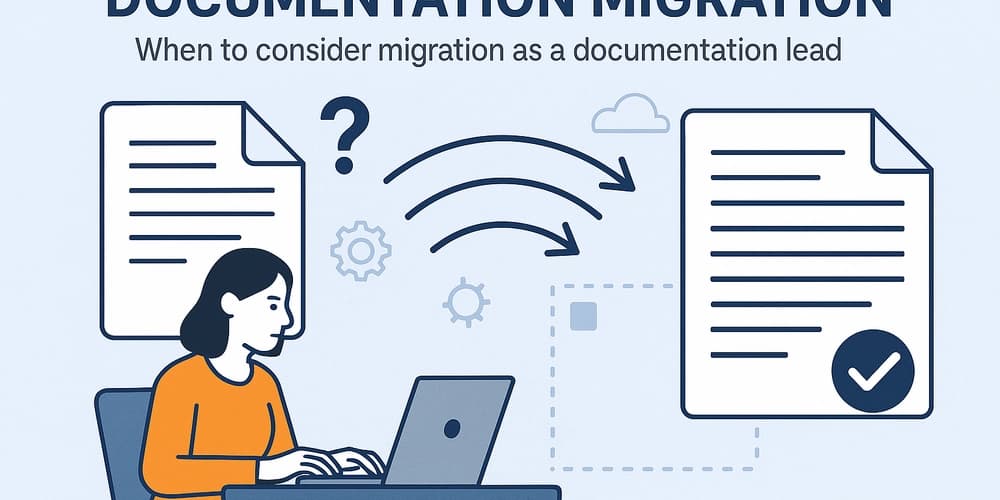
Propose a strategy to migrate fragmented docs into a unified docs-as-code system
Inventory sources; choose SSG by team fit; automate extraction; phased rollout with redirects.
Justify static site generator vs CMS for a portfolio site
Matching tool complexity to static publishing needs. Choose Hugo or Jekyll with Git and a CDN; removing runtime databases eliminates per-request latency and PHP exploit surfaces.
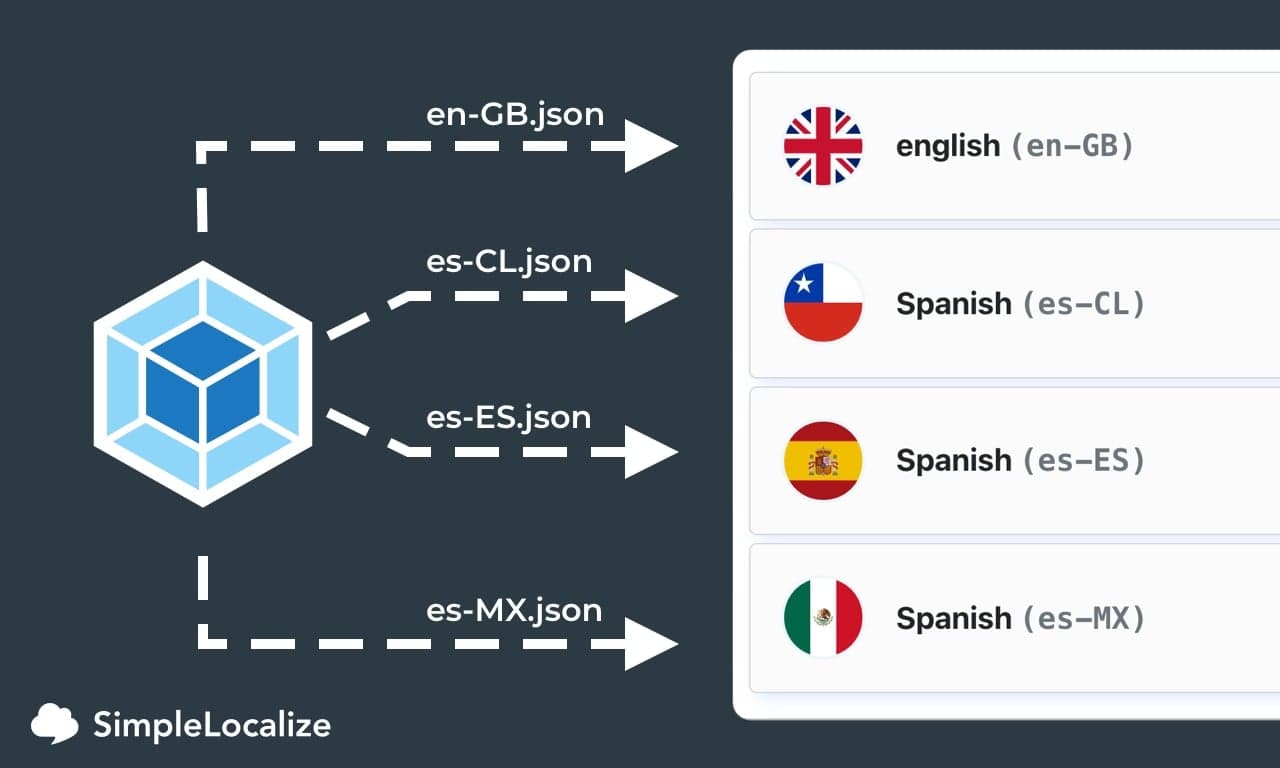
Propose two strategies for lazy-loading SPA localization data
This tests code-splitting for i18n. Strong answers cover: first, per-locale dynamic imports creating separate chunks per language; second, namespace splitting fetching only keys for active UI. Red flag: ignoring bundler chunking or Core Web Vitals impact.

How would you implement a simple editorial status workflow?
Use ENUM or lookup table for status; enforce transitions in app code or a matrix table; audit actor and timestamp.
Explain concurrency vs parallelism: junior paragraph, UI tooltip, justify
This tests audience-adaptive technical writing and conceptual precision. A strong answer gives the junior a structural analogy, the UI a one-sentence action metric, and justifies why detail and brevity swap by context.
Design a scalable CMP for GDPR, CCPA, and global regulations
Tests cross-domain privacy architecture at scale. Great answers: edge-based geo-routing, schema-per-regulation consent stores, signed preference tokens, and a postMessage vendor API. Red flag: plain localStorage or equating GDPR opt-in with CCPA opt-out.

What are the engineering challenges and biases in overlapping A/B tests?
This tests inference across concurrent experiments. A strong answer names interaction effects and collision bias, proposes mutual exclusion or MVT for coupled UI, and stratified bucketing. Red flag: assuming additive lifts without combination validation.

Cut a 15-minute demo script to 10 minutes without losing technical depth
Tests ruthless prioritization. Strong answers: define the single audience outcome; audit sections against it; prioritize clarity over volume; structure around the 10-minute attention reset. Red flag: talking faster or randomly cutting content.
Design a real-time faceted search system for thousands of case studies
Tests inverted index architecture and faceting latency trade-offs. Strong answers compare Elasticsearch and Algolia on indexing speed and query overhead, then outline schema-first ingestion. Red flag: suggesting relational LIKE queries for real-time filtering.

Design an A/B test system for homepage headlines without deployments
Tests decoupling experiment configuration from deploys via a headless CMS and feature flagging. A strong answer covers variation containers, server-side bucketing, conversion tracking, and marketer-controlled copy swaps.
Replace a hardcoded error message with a scalable copy system
Tests decoupling UI copy from code via key-based i18n. Move the string into a JSON namespace, wire through i18next, load dynamically, and lint against hardcoded strings. Manual find-and-replace without keys or fallback is a red flag.
Structure an executive-ready RFC summary for a major architectural migration
One-sentence problem and ask; options with recommendation; quantified impact, tradeoffs, and acceptance criteria.

Refactor this to active voice and explain why it is preferred
This tests spotting passive clauses and why active voice improves clarity. Answer: rewrite to "The script processes the data and sends it to the database," noting active voice is clearer and names the actor. Red flag: claiming passive is more professional.
We are hiring for this. Every open role lists the topics its interview covers, so you can prepare for the real thing rather than guessing.
See open roles