Sprint Planning: Committing to a Goal, Not Just Tasks
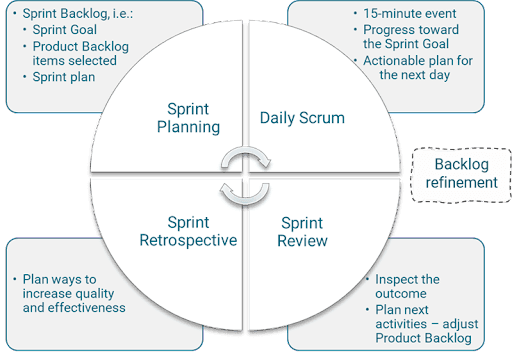
Sprint Planning isn't just picking tasks; it's the team committing to a valuable Sprint Goal. This ceremony kicks off every sprint, aligning everyone on what to build and why.
THE MENTAL MODEL: Sprint Planning is a collaborative negotiation, not a top-down directive. It's where the entire Scrum Team agrees on a valuable goal for the upcoming Sprint and a rough plan to achieve it. The output is a forecast of work the Developers believe they can complete, not an ironclad contract. The primary purpose is to create alignment and focus for the Sprint.
HOW IT WORKS: The meeting addresses three core topics. First, the Product Owner proposes how the product could increase its value in the current Sprint, presenting a business objective. This is crafted into a Sprint Goal. Second, the Developers select items from the Product Backlog to include in the Sprint, discussing them with the Product Owner. They pull work based on their past performance and estimated capacity. Third, the Developers decide how they will build the selected items into a finished Increment. They often decompose Product Backlog Items into smaller tasks or a plan for the first few days of the Sprint.
WHEN TO USE IT: Use Sprint Planning at the very beginning of every Sprint. It's a mandatory event in the Scrum framework that sets the stage for all the work that follows. It provides the team with a shared objective and a clear, actionable plan, which helps in managing expectations and creating a sustainable pace.
WHEN NOT TO USE IT: This ceremony is specific to sprint-based agile frameworks like Scrum. In flow-based systems like Kanban, there is no formal Sprint Planning for a time-boxed iteration; work is pulled continuously from a backlog as capacity permits. It's also ineffective if the work is purely reactive, like in some IT support roles, where planning more than a day ahead is impossible.
ONE CANONICAL EXAMPLE: An e-commerce team starts Sprint Planning. The Product Owner's objective is to improve the checkout experience. Together, they craft a Sprint Goal: "Enable guest checkout to reduce friction for new customers." The Developers then pull backlog items like "Create guest user profile" and "Allow shipping address entry without login." They estimate this is achievable within the Sprint. They then break down the first item into smaller tasks: "Design guest DB schema," "Build API endpoint for guest cart," and "Create guest checkout form UI." This becomes their initial Sprint Backlog.
Read the original → en.wikipedia.org
Get five bites like this every day.
Tezvyn delivers a daily feed of 60-second tech bites with quizzes to lock in what you learn.