Text-to-Image Generation: From Words to Pixels
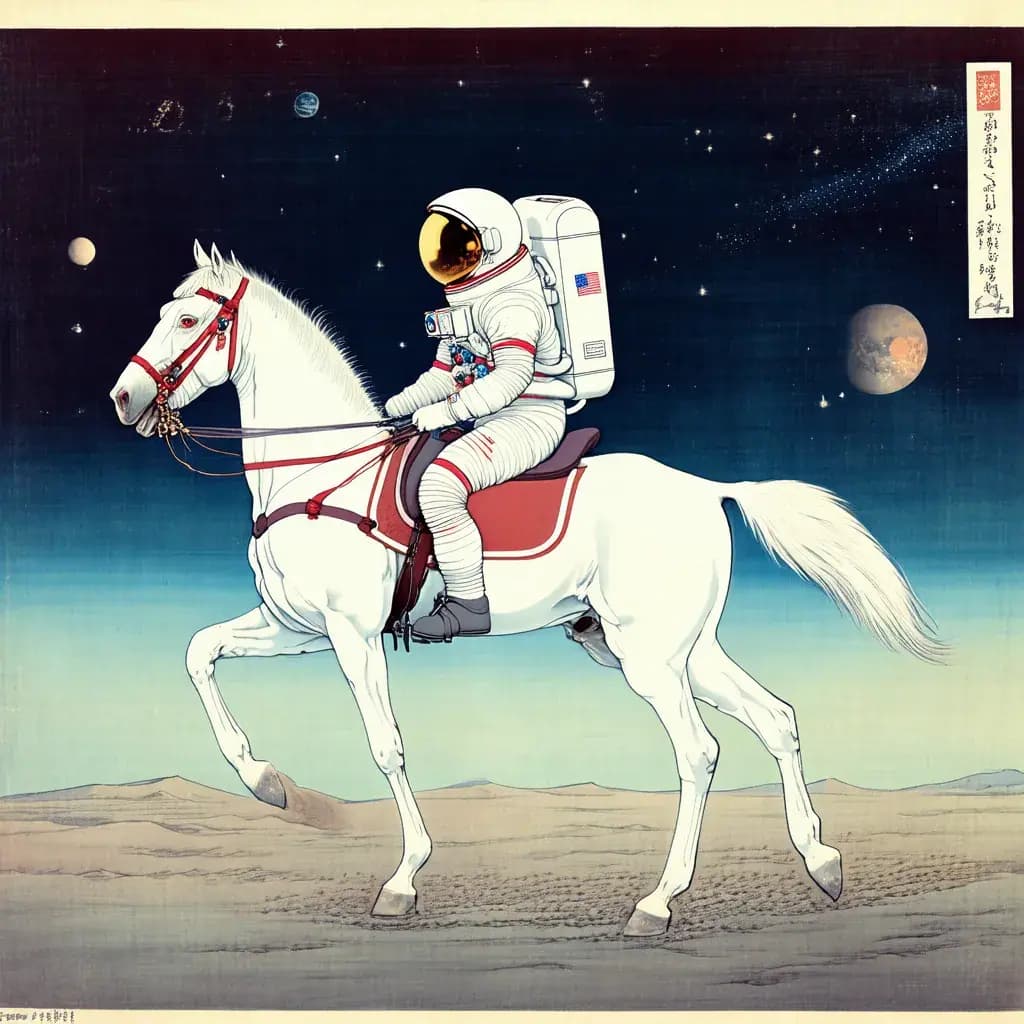
Text-to-image models act like a digital artist, translating language into visuals. They're used to create art, marketing materials, and prototype designs. The main footgun is prompt ambiguity, which can lead to bizarre or nonsensical images.
WHY IT EXISTS: Text-to-image models exist to bridge the gap between human language and visual creation. Previously, generating a specific, custom image required significant artistic skill, time, or the difficult task of finding a suitable stock photo. These models democratize visual content creation, allowing anyone to produce novel images simply by describing them.
THE MENTAL MODEL: Think of a text-to-image model as a machine that has studied millions of captioned pictures, learning the relationship between words and pixels. It's not a search engine for existing images. Instead, it's a synthesizer that takes your prompt, understands the objects, their attributes, and how they relate, and then generates a brand new image from scratch that represents that description.
HOW IT WORKS: At its core, a text-to-image model is a complex machine learning system. It is trained on a massive dataset containing billions of image-text pairs from the internet. During this training phase, it learns deep statistical patterns connecting textual descriptions to visual elements, styles, and compositions. When you provide a new prompt, the model uses these learned associations to iteratively generate pixels, often starting from random noise and refining it until it forms a coherent image that it predicts will match your description.
WHEN TO USE IT: Use these models for rapid ideation and concept art, creating illustrations for articles or presentations, generating unique marketing or social media content, and for personal creative exploration. They excel at producing novel styles and compositions that would be time-consuming to create manually.
WHEN NOT TO USE IT: Avoid using these models when you need photorealistic depictions of specific, identifiable people without their consent, due to ethical and privacy concerns. They are also not ideal for tasks requiring precise control over layout and typography, where traditional graphic design software is superior. Furthermore, their use for generating convincing but fake imagery for misinformation is a major pitfall.
ONE CANONICAL EXAMPLE: A user provides the prompt: "A photorealistic image of an astronaut riding a horse on Mars." The model first parses the key concepts: 'astronaut', 'horse', 'Mars', and the relationship 'riding'. It also understands the requested style: 'photorealistic'. It then generates an image that combines these elements, rendering the astronaut in a spacesuit, the horse with realistic anatomy, and the background with the characteristic red, dusty landscape of Mars.
Read the original → en.wikipedia.org
Get five bites like this every day.
Tezvyn delivers a daily feed of 60-second tech bites with quizzes to lock in what you learn.