All bites
The whole library, newest first. Filter by what you are here for, or pick a topic if you already know.
4247 bites
Page 6
Pydantic: Reusable Validation with Annotated Types
Pydantic's Annotated attaches validation logic directly to a type, making it reusable. Define a custom type like SquareNumber once and apply it to any model field, ensuring consistent validation without repeating code.
FastAPI's StreamingResponse: Send Data in Chunks
StreamingResponse sends data piece by piece, like a live broadcast, instead of sending a complete file all at once. This keeps your server's memory low for huge responses like file downloads, video streams, or live data from AI models.
Layered Architecture: Separating API from Business Logic
A layered architecture separates your API into distinct jobs: routing, controlling, and serving. This keeps code maintainable, like an organized toolbox. It's crucial for growing FastAPI apps.

asyncio Streams: High-Level Async Network I/O
asyncio Streams are like async file handles for the network. You get a reader/writer pair to await data, simplifying TCP clients and servers for basic protocols. The footgun: the default buffer limit is small; reading large data will fail unexpectedly.
ARQ for FastAPI: Async Background Tasks
ARQ lets your FastAPI app offload heavy work to background workers, keeping the API responsive. It's a task queue built for asyncio. Use it for slow tasks like sending emails or processing data. The footgun is using blocking task libraries with async code.
Serialize Pydantic Models with model_dump
model_dump turns a Pydantic model into a plain Python dict, bridging typed objects and JSON serializers in FastAPI endpoints. Call it when you need raw data before returning a response. Do not confuse it with model_dump_json, which emits a string, not a dict.
Per-Field Validation with @field_validator
@field_validator scrubs a single Pydantic field before it enters the model. Use it for rules like 'password must contain a digit' or 'port must exceed 1024'. It only sees one field at a time, so cross-field checks belong in a model validator instead.
Custom Field Serialization with @field_serializer
@field_serializer is an exit-only adapter for one field: it reshapes data leaving the Pydantic model without changing internals. Use it to format decimals, mask secrets, or tweak datetimes for FastAPI JSON. Never use it for validation; it only runs on output.
Docker Compose for Local FastAPI Stacks
Docker Compose turns your laptop into a one-command datacenter. Define Postgres, Redis, and your FastAPI app in one YAML file and they boot as a networked stack.
Dart Variables: var, final, and const
In Dart, var creates a mutable variable, while final and const are for single-assignment. Use var for changing state, final for runtime values set once, and const for compile-time constants. The footgun is confusing final with const.
Dart's Core Data Types: Everything is an Object
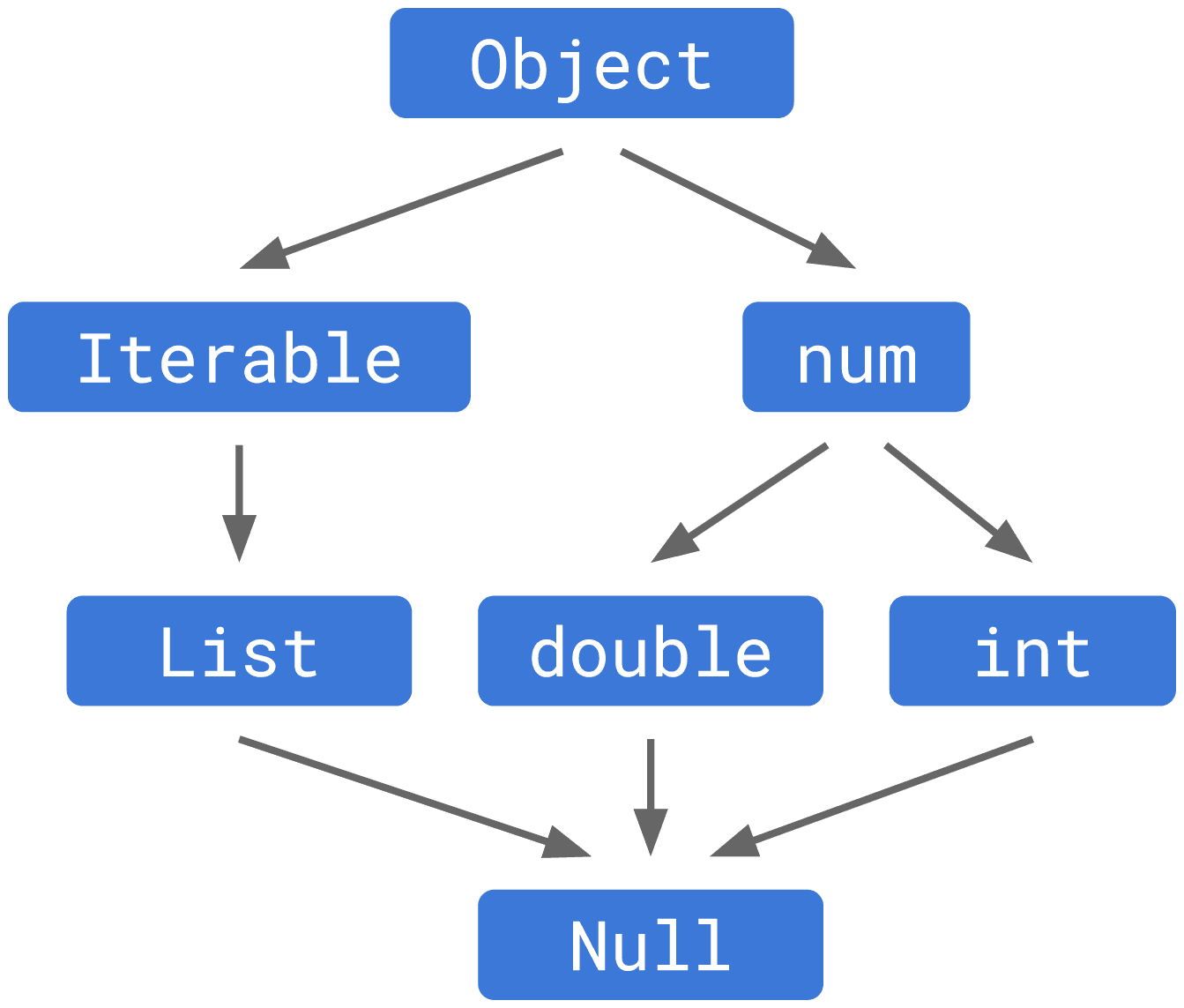
In Dart, everything is an object, from numbers to functions. This means even a simple int or String has methods and properties, unlike primitive types in other languages. The main footgun is forgetting that null itself is a type, Null.
Dart's Control Flow: Telling Your Code What to Do Next
Control flow statements are the road signs for your code, directing execution beyond a simple top-to-bottom path. Use if/else for decisions, for/while for loops, and try/catch to handle errors. The footgun is forgetting break in a switch case.
Dart Function Syntax: Block Body vs. Arrow Notation
Dart functions use a block body {} for multiple statements or arrow syntax => for a single expression. Use => for simple one-liners like bool isEven(int n) => n % 2 == 0;. The footgun is using => for multi-step logic; it only works for.
Dart Collections: Choosing List, Set, or Map
Dart collections organize data: use a List for ordered items, a Set for unique items, and a Map for key-value pairs. This choice is fundamental for storing UI widgets or parsing JSON. The common footgun is using a List for lookups, which is slow; use.
Dart's Sound Null Safety: No More Null Errors
In Dart, variables can't be null unless you explicitly allow it. This flips the usual model, turning potential runtime null pointer crashes into compile-time errors you can fix immediately.
Dart's Null-Aware Operators: Safely Handle Nulls
Null-aware operators let you work with potentially null values without a cascade of if (x != null) checks. Use them to access properties, provide defaults, or assign values only when a variable is null. The footgun is confusing safe ?. with unsafe !.
Dart's Cascade Notation: Chain Calls on One Object
Cascade notation (..) lets you perform a sequence of operations on the same object without repeating its name. It's ideal for configuring new instances in one block.
Dart's async/await: Non-Blocking Code That Reads Synchronously
Dart's async/await makes non-blocking code read like a simple script. Use it for network requests or file I/O to keep your UI from freezing. The biggest footgun is calling an async function but forgetting to await its Future result.
Dart Generics: Type-Safe Containers and Reusable Code
Generics let you define code that works with multiple types without sacrificing type safety. A List<String> is a list that only accepts strings. This is essential for collections.
Dart Streams: Asynchronous Data Sequences
A Dart Stream is like a conveyor belt for asynchronous data, delivering events or file chunks as they arrive. Use them for continuous data flows like button clicks or reading large files.