All bites
The whole library, newest first. Filter by what you are here for, or pick a topic if you already know.
4330 bites
Page 34
Build a Figma toggle switch that controls element visibility using variables
Tests prototype state management with Figma variables instead of frame duplication. A strong answer names a boolean variable, binds it to layer visibility, and wires an On click Set variable action. Red flag: suggesting frame duplication over variable state.
How would you use variables to calculate a real-time cart subtotal?
This tests reactive state in Figma using variables and expressions. Strong answer: store quantity in a number var, wire to a stepper, compute subtotal as qty times 25, and bind that to text. Red flag: static text or manual updates instead of live computation.
How would you structure variables and expressions for a price configurator?
This tests reactive state modeling in Figma. A strong answer uses a string variable for the base model and booleans for add-ons, binding the price text to an expression that maps the base to its cost and sums active extras.
Describe how you would use variables and conditional logic to simulate input validation
Tests dynamic state management in Figma prototypes. Strong answers use a string variable bound to the password field, check length on submit, and conditionally route to error or success. Red flag: hardcoding static frames without variables.
How would you architect interdependent filter variables in a complex dashboard?
Tests reactive variable graphs, not interaction tangles. Strong answers centralize Figma variables, bind component properties to them, and chain conditional actions to derive downstream state. Red flag: duplicating frames instead of using variables and logic.
First Figma steps to turn a brief into low-fi concepts
This tests whether you structure IA before pixels. Strong answers audit the brief, map flows with simple frames, block out grayscale wireframes at target breakpoints, and annotate for async review. Red flag: jumping straight to components or color.
How do you handle a technically complex interaction and propose Figma alternatives?
Cross-functional negotiation and rapid prototyping under constraint. Defer judgment, quantify delay, co-define success, then use Figma variants and low-fi prototypes to test trade-offs. Never sacrifice UX before grasping engineering effort or business impact.
Describe your process for preparing a high-fidelity Figma file for developer handoff
Tests operationalizing the design-engineering boundary. Strong answers cover file structure, auto-layout tokens, responsive annotations, all UI states, and exported assets with naming conventions.
How would you structure design and Figma for phased rollout?
This tests whether you can architect Figma for parallel flag rollouts. A strong answer covers branch pages, versioned components tied to code flags, and a cleanup timeline. A red flag is a single-file replacement or big-bang launch with no coexistence plan.
How would you architect Figma for multi-platform, multi-team products?
This tests design-ops systems thinking at scale. A strong answer outlines a tiered library model: platform-agnostic primitives, platform-specific components, and team files consuming shared libraries, plus governance for breaking changes.
What is a container vs a VM?
Containers share the host kernel and isolate via namespaces and cgroups; VMs run a full guest OS on a hypervisor; containers are lighter and faster.
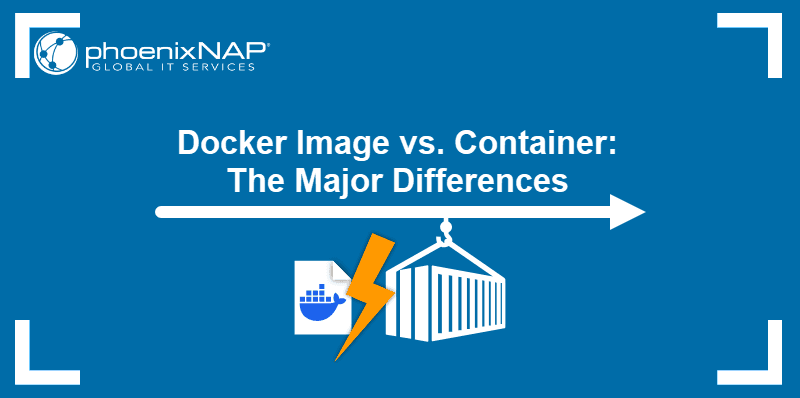
How do Docker images and containers differ and relate?
This tests your grasp of the immutable template versus mutable runtime boundary. A good answer: an image is a read-only layered template with code and dependencies; a container is a runnable instance with a writable layer on top.
Name three Linux namespaces and explain what each one isolates.
Name three of PID, Network, Mount, UTS, IPC, User, Cgroup, Time; say what each hides; cite CLONE_NEW* or /proc/pid/ns.
How do containers enforce CPU and memory limits via cgroups?
Cover CPU CFS quota and shares, memory limits and OOM, and runtime cgroup config.
Describe the relationship between containerd and runc in starting a container.
Tests the OCI runtime split and lifecycle ownership. A great answer states containerd handles image pull, storage, and API lifecycle, then invokes runC to spawn the isolated process.
Explain layered filesystems like OverlayFS and their efficiency vs monolithic models
This tests copy-on-write layering and deduplication in container storage. A strong answer covers lowerdir/upperdir/merged mounts, layer reuse across images, and why diff-based distribution beats monolithic blobs.
What is the OCI and why do its specs matter?
OCI defines vendor-neutral specs for image format and runtime so any compliant tool interoperates; runc implements the runtime spec; this prevents lock-in.
Trace a container process's syscalls from the host
Find the host PID via docker inspect or ps, then strace -p that PID from the host, since the container shares the host kernel.
Build, tag, and run a container with port mapping
Docker build -t my-app:1.0 . to build and tag; docker run -d -p 8080:80 my-app:1.0 to run detached with host:container port mapping.
Dockerfile COPY versus ADD
COPY just copies local files; ADD also auto-extracts local tarballs and can fetch remote URLs; prefer COPY for predictability, use ADD for local archive extraction.