All bites
The whole library, newest first. Filter by what you are here for, or pick a topic if you already know.
4330 bites
Page 41
How a service mesh enables automatic mTLS
The control plane issues short-lived workload certificates, sidecars present them, both sides verify identity and encrypt the channel.
Retries and circuit breaking in a mesh
Configure bounded retries with timeouts for transient errors, and a circuit breaker via outlier detection plus connection-pool limits to shed load from a failing dependency.
Diagnosing latency with distributed tracing
Follow the trace ID across spans, compare per-span durations to find the slow hop, distinguish service time from network and queueing.
Method-aware authorization with Istio policy
An ALLOW policy on user-service granting frontend's principal POST plus the users path, another granting all principals GET; deny is implicit once any ALLOW exists.
Guardrails for GitOps sync outages
Pre-merge schema validation, dry-run, policy gates and review; post-merge progressive sync, health checks with automated rollback, and pruning controls.
Istio Gateway vs Kubernetes Ingress
Ingress is a simple built-in L7 entry abstraction; an Istio Gateway configures only ports and hosts at the edge while VirtualServices do routing, unlocking mesh features.
What makes a process a container to the kernel
Namespaces isolate and cgroups limit, but also capabilities, seccomp filters, mount/pivot_root for the rootfs, and SELinux/AppArmor labels.
Container registries: public vs private
A registry stores and serves versioned image layers by digest; public registries are open and rate-limited, private ones add access control, scanning, signing and network isolation.
Impact of losing etcd quorum
Without quorum etcd goes read-only-ish and the API server cannot persist writes, so scheduling and changes stall, but kubelets keep running existing pods.
Scaling on queue length with the HPA
Expose queue length through an external metrics adapter behind the metrics API, point the HPA at that external metric with a target per pod; KEDA packages this.
Docker layers and build cache efficiency
Each instruction makes a content-addressed read-only layer stacked by a union FS; shared layers are pushed/pulled once, and ordering the Dockerfile so volatile steps come last maximizes cache reuse.
Image signing with Cosign vs trusting a digest
A digest proves content has not changed but not who produced it; Cosign cryptographically signs the digest so a verified key proves provenance, and policies enforce it at admission.
How mounted ConfigMap updates propagate to pods
Kubelet refreshes mounted files within roughly a sync period via an atomic symlink swap, but the app must reload on its own; env-var injection never updates.
Mesh control plane vs data plane availability
The control plane configures and distributes policy; the data plane is the sidecars carrying traffic with cached config, so a brief control-plane outage keeps existing traffic flowing but…
Vanishing Gradients and Why ReLU Helps
Saturating activations shrink gradients across layers, ReLU's flat-one derivative preserves them.

Explain word embeddings and why they beat one-hot encoding for large vocabularies
Embeddings cluster similar meanings in low-dimensional space, while one-hot vectors are orthogonal, huge, and semantically blank.
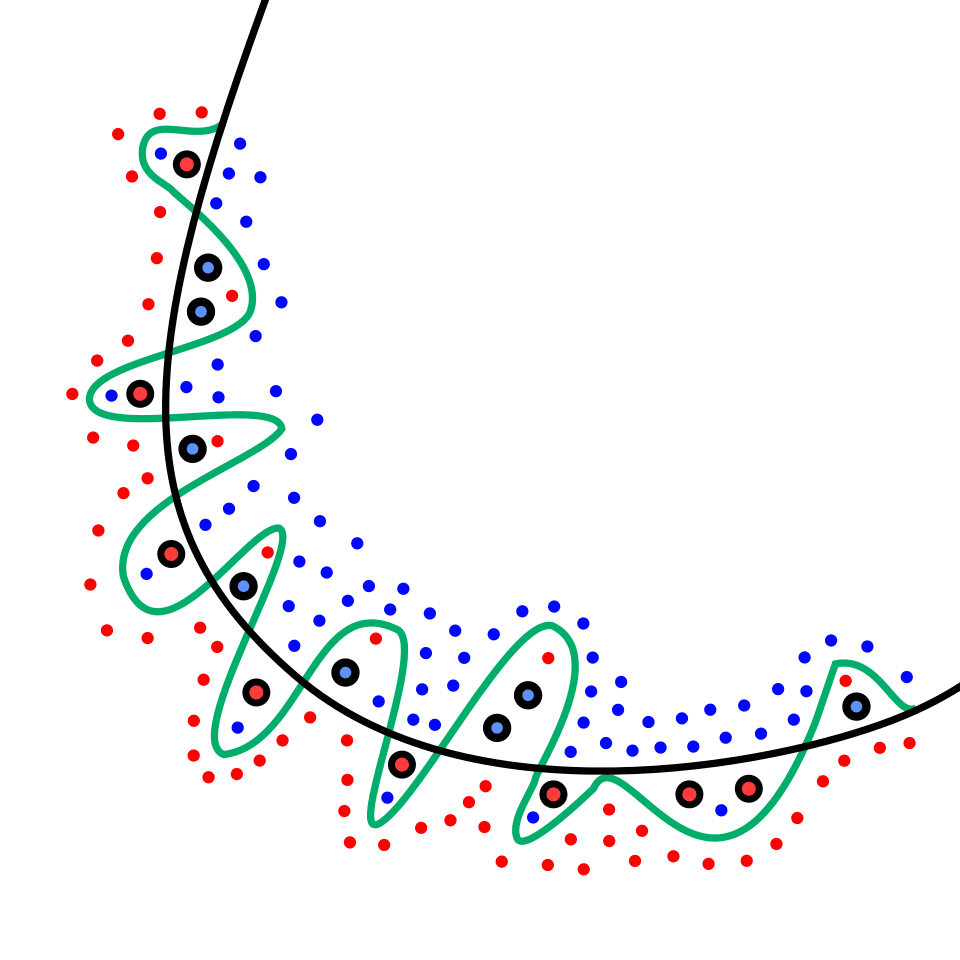
Validation loss increases while training loss decreases: what is this?
This tests recognition of overfitting and regularization. A strong answer names it, offers early stopping, dropout or weight decay, and data augmentation or more data. A red flag is suggesting longer training or more parameters without fixing generalization.
Explain BPTT and its computational and memory challenges for long sequences
Tests whether you see RNNs as deep unrolled graphs. Good answers define BPTT as backprop over T steps, flag O(T) memory from hidden states, and note vanishing or exploding gradients. Red flag: calling memory constant or confusing BPTT with online updates.
Attention in Sequence-to-Sequence Models
Attention computes per-step weighted sums over all encoder states, fixing the information bottleneck for long inputs.
Explain positional encodings in Transformers and their necessity
Explain encodings inject order into embeddings; cite sinusoidal or learned vectors.