All bites
The whole library, newest first. Filter by what you are here for, or pick a topic if you already know.
4330 bites
Page 7
Limits of BackgroundTasks vs Celery or ARQ
BackgroundTasks run in the same worker with no persistence, retries, or visibility, and die with the process; Celery or ARQ add durability, retries, scheduling, and separate workers.
Zero-downtime blue-green deploys on Kubernetes
Run blue and green deployments, switch a Service or ingress selector to the new color after readiness probes pass, drain old pods gracefully, and handle backward-compatible DB migrations.
Secure refresh token flow for access renewal
Short-lived access token, longer-lived refresh token stored server-side, a refresh endpoint that validates and rotates the refresh token issuing a new pair.
Testing a DB endpoint via dependency override
Use app.dependency_overrides to swap the real get_db for one yielding a test database session, run against a disposable SQLite or test Postgres, and assert through TestClient.
Pydantic BaseModel vs dataclasses in FastAPI
BaseModel validates and coerces data at runtime, parses and serializes JSON, integrates with OpenAPI schema generation, and supports rich validators; dataclasses only store data with no validation.
Mapping camelCase JSON to snake_case Pydantic fields
Set an alias_generator (to_camel) plus populate_by_name in model config, accept aliases on input, and serialize with by_alias=True so responses come out camelCase.
Pydantic computed fields in response models
A @computed_field decorated property is excluded from input and validation but included in serialization and the OpenAPI schema, ideal for values like full_name derived from other fields.
Streaming large file downloads efficiently
Use StreamingResponse with a generator that yields chunks (or FileResponse for an on-disk file), set media_type and a Content-Disposition header, so memory stays flat regardless of file size.
Feature-based vs layer-based project structure
Layer-based groups by technical role and is simple early but scatters a feature across folders; feature-based groups by domain, improving cohesion and ownership at the cost of some duplication and…
selectinload vs joinedload for eager loading
Use eager loading options to avoid lazy N+1; joinedload uses a single JOIN (good for many-to-one) but can fan out rows on collections; selectinload issues a second IN query (better for one-to-many).
OAuth2 social login with your own JWT
A login endpoint redirects to the provider with a state param, a callback exchanges the code for the provider token, you fetch the user profile, upsert the local user, then mint your own JWT.
Reading the full response body in middleware
Responses stream as multiple body messages and headers go first, so you cannot add a header after seeing the body; you must buffer all chunks, compute the hash, set the header, then resend.
Choosing Uvicorn worker count in production
Workers exist to use multiple CPU cores past the GIL; a common starting point ties count to cores, then you tune by load testing, balancing CPU and memory (each worker is a full copy) against connection-pool…
What is the difference between final and const in Dart?
Tests compile-time versus runtime immutability in Dart. A strong answer: final allows single assignment at runtime, but const requires a compile-time constant and deep immutability.
Explain Dart positional vs named parameters and write one signature
Tests Dart parameter syntax. A strong answer covers required positional args, optional positional args in square brackets, and named args in curly braces with defaults. Red flag: claiming named parameters are always optional or confusing bracket types.
Describe Dart's null-aware ?. and null assertion ! operators
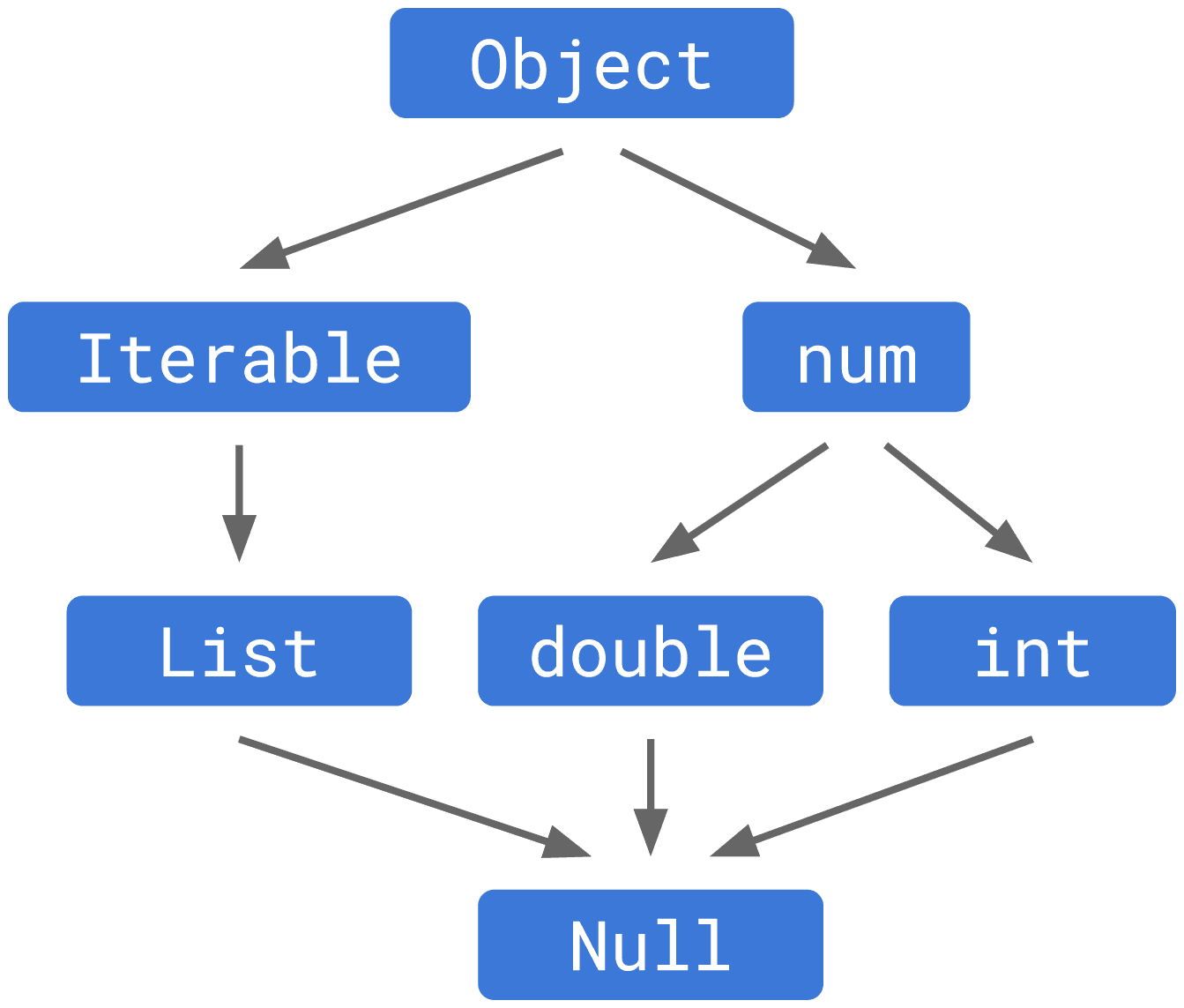
Tests Dart null safety mechanics: ?. short-circuits member access on null, while ! casts away nullability. A strong answer notes ?. avoids NPEs and ! is a risky opt-out. Red flag: claiming ! is safe or that ?. provides a default value.
What problem does late solve in Dart?
Tests definite assignment and lazy init in null-safe Dart. Strong answers cover: deferred non-nullable field init, lazy final evaluation, and LateInitializationError on early access. Red flag: treating late as nullable or saying it bypasses null safety.
How do you use collection-if and collection-for to declaratively build a list?
Tests Dart's declarative collection control-flow features. Answer: show collection-for to filter inside a literal, collection-if for conditional items, and combine both in one expression. Red flag: imperative loops and add() instead of literal syntax.
What is a Dart closure? Write a function that returns a function.
Tests lexical scoping: define a closure as a function plus its captured environment, show a makeAdder where the inner function uses a parent variable after the parent returns.
What are Dart extension methods? Implement toIntOrDefault on String.
Tests Dart extension syntax and static resolution. A strong answer defines an extension on String, uses int.tryParse with a fallback, and notes extensions do not mutate the original type. Red flag: using try-catch over tryParse or claiming dynamic dispatch.