Everything in Product Management, page 8
Sprint Review vs Retrospective: purpose, focus, and audience
Review inspects the Increment with stakeholders to adapt the backlog; Retrospective inspects process to improve ways of working.

How do you identify and elevate your team's primary constraint using TOC?
Map value stream, measure queue and cycle times to find the slowest stage, exploit it, subordinate upstream WIP, elevate via automation, repeat.
How does Agile welcome changing requirements without chaos?
Whether you know that Agile embraces change only when supported by engineering discipline. Distinguish planned adaptability from reactive chaos by citing short feedback loops, evolutionary architecture, and continuous integration.
Design a measurement framework and experimentation plan for a risky feature rollout
This tests balancing upside against operational risk. A strong answer defines guardrail metrics for stability and cost, sequences canary before A/B tests, and sets rollback thresholds. A red flag is ignoring latency or cost to chase engagement lift.

Explain the difference between Objectives and Key Results in OKRs
Objectives inspire direction; Key Results are measurable proof; cite an engineering example on technical quality like uptime.
How would you technically evaluate a major product pivot?
Structured feasibility under uncertainty. Strong answers: define requirements and SLOs, timebox spikes to de-risk unknowns, audit architecture, data, infra, security, and team skills against thresholds.
How does product strategy influence architectural decisions? Provide a specific example.
This tests if you tie architecture to product outcomes like iteration speed. A strong answer picks patterns by company stage, cites a concrete tradeoff, and treats reliability as a product feature.
How would you evaluate investing in a complex, high-engagement feature?
This tests prioritization over gut feel. A strong answer maps the feature on a Value versus Complexity matrix, weighing business and user value against effort and risk versus alternatives. A red flag is deciding purely on feasibility or user excitement.

How do you build a 3-year vision supporting roadmap and future options?
This tests strategic planning and executive communication. Map the 1-year roadmap to gaps, invest in extensible primitives, and frame enabling work as optionality with metrics. Red flag: an engineering wishlist disconnected from business outcomes.
Describe a time you influenced the roadmap via a technical opportunity
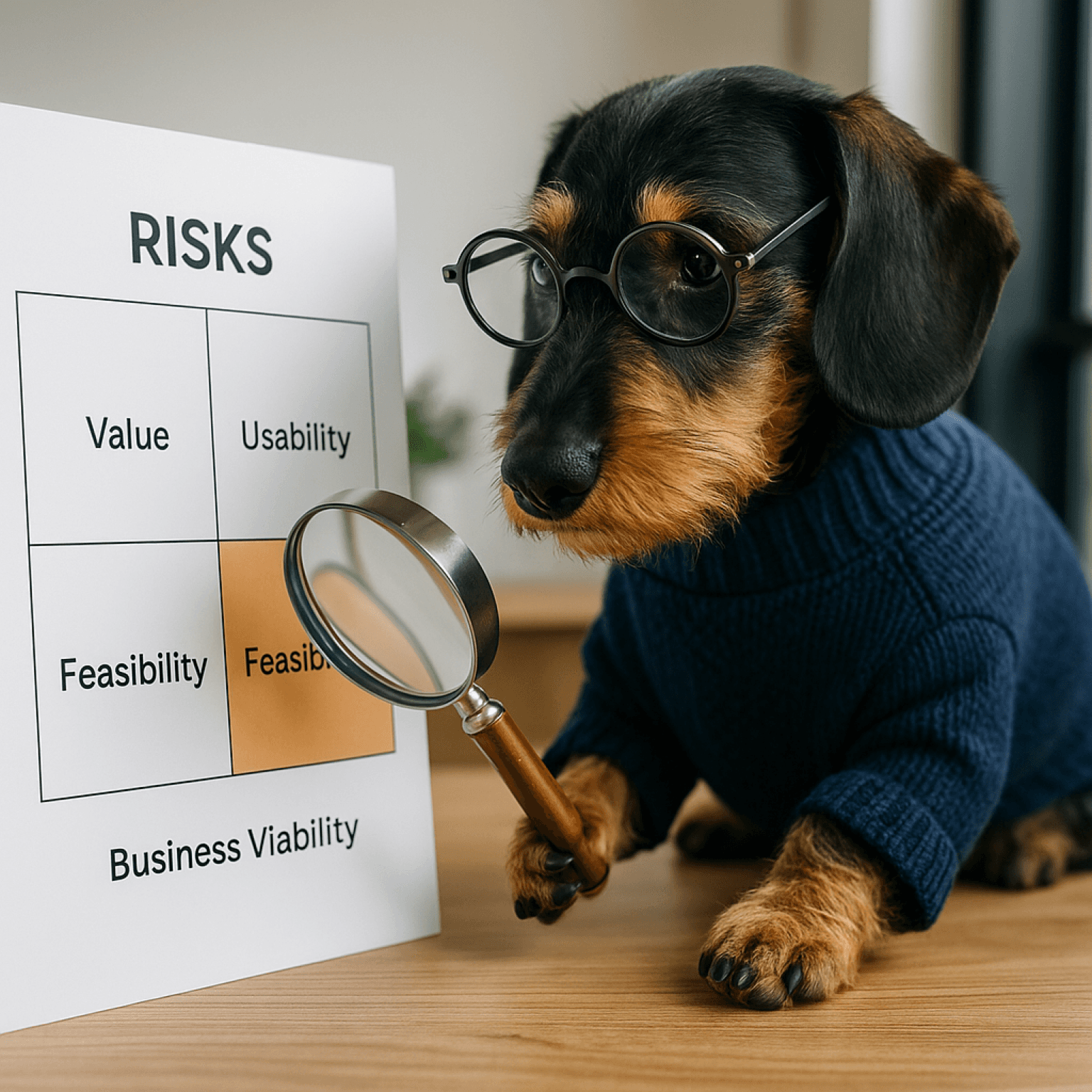
This tests converting technical insights into business cases that shift roadmaps. A strong answer names the SVPG risk, quantifies value for leadership, identifies who was persuaded, and cites discovery artifacts.
How do you re-evaluate roadmap and communicate an enterprise-to-SMB pivot?
Tests strategic alignment during a business model shift. A strong answer contrasts enterprise versus SMB needs, triages in-flight work by impact, and explains trade-offs with data. Red flag: cutting everything without weighing sunk cost against pivot value.
Describe artifacts and forums to align teams on API contracts and timelines
Tests API governance across teams. Propose: versioned OpenAPI specs in a shared catalog, weekly syncs, contract tests and mocks in CI, plus a joint staging environment. Red flag: Slack and meetings alone without versioned artifacts or automated validation.

How do you communicate technical complexity and propose alternatives to a PM?
Tests translation of technical complexity into product tradeoffs. Strong answers lead with the business goal, quantify timeline and risk, then offer 2-3 simpler options with clear tradeoffs. Red flag: jargon-heavy pushback or a hard no without alternatives.
Walk me through your technical design document process and sections
Tests turning ambiguity into a structured engineering plan. A strong answer sequences discovery, then covers goals, architecture, data model, APIs, rollout, and metrics. Red flag: jumping to implementation before clarifying requirements with stakeholders.
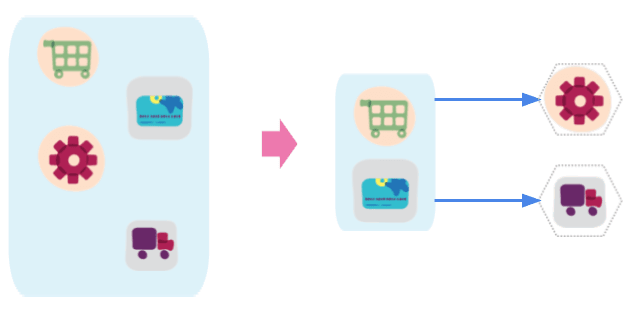
Propose a long-term strategy to decompose a monolith while maintaining API stability
This tests strategic prioritization and incremental migration without ecosystem breakage. Start with simple decoupled capability, go macro first then micro, split vertically by domain owning data, and use atomic steps with facades to preserve APIs.

How would you detect, mitigate, and penalize a noisy neighbor?
This tests multi-tenant fairness and governance. A strong answer covers tenant telemetry, graduated throttling, autoscaling with cost caps, and penalty tiers that curb abuse yet allow spikes. Red flag: hard limits before detection or graduated response.

Compare webhooks to sandboxed plugins for monolith extensibility
Tests distributed vs in-process extensibility. Webhooks are async, loosely coupled, and isolated but add network latency. Sandboxed plugins run in-process for low-latency UI depth yet need strict host API permissions and lifecycle gating.
Roll out a breaking change to a core public API
This tests risk management while evolving a public API contract. A strong answer covers versioning, phased deprecation with SLAs, migration tooling, and proactive communication. Red flag: proposing a hard cutover without sunset or migration support.

What technical metrics monitor third-party developer ecosystem health?
Tests your ability to define product-level platform metrics beyond infrastructure health. Great answers include time-to-first-call, API funnel conversion, SDK error rates by version, and community contribution velocity.

Describe the chicken-and-egg problem for a two-sided platform and a seeding strategy.
Tests grasp of interdependent platform value and why seeding empty rooms matters. Answer: each side needs the other; propose a one-sided technology core to attract first users and pull the second side.
We are hiring for this. Every open role lists the topics its interview covers, so you can prepare for the real thing rather than guessing.
See open roles