Everything in Product Management, page 9

Design a cross-product user journey data architecture
This tests portfolio-scale data platform design. A strong answer outlines streaming event ingestion, a unified identity graph, consent-aware PII vaults, and schema registries with data contracts.

What technical areas would you investigate in acquisition due diligence?
Tests strategic integration risk beyond code quality. Cover: architecture compatibility and tech debt; data model overlap and migration cost; security and compliance gaps; team retention; roadmap conflicts.
Design a cross-product feature flag strategy for coordinated release
This tests distributed coordination across service boundaries. A strong answer proposes a unified namespace, central config with local caches, and one user-scoped gate evaluated consistently in both products.

Architect a 14-day Pro trial with abuse prevention
Tests stateful billing lifecycle and anti-abuse tradeoffs. Strong answers cover: idempotent trial state machine with scheduled expiry; retention on downgrade; progressive friction via device intel and rate limits; and behavioral monitoring.
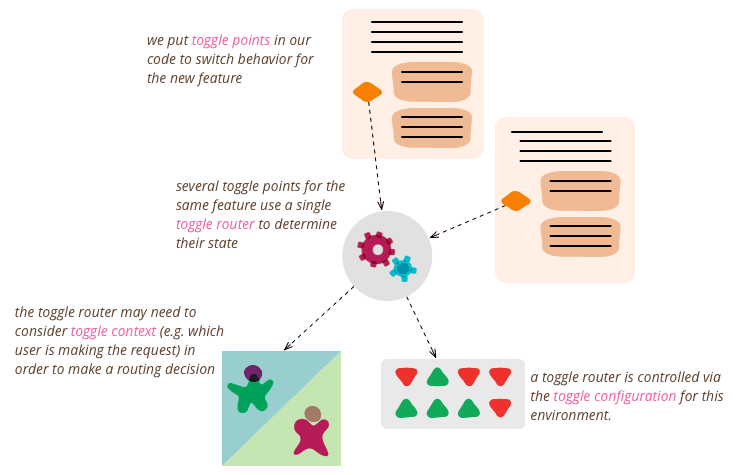
Describe an architecture that decouples business launch from code deployment
This tests feature-flag architecture separating deployment from release. Strong answers cover toggle categories and decision decoupling. They need lifecycle management to limit carrying cost. Red flag: treating flags as permanent or ignoring toggle debt.
.avif&w=1600&q=75)
What pre-launch tools prevent support ticket escalations to engineering?
Tests proactive operational design versus reactive firefighting. Great answers include real-time health dashboards, automated ticket triage with user context, self-service runbooks, and escalation guardrails with pre-populated logs.

How do you technically implement an A/B test for onboarding flows?
Tests experiment pipeline design: deterministic user bucketing, an exposure event before rendering, and an event schema linking actions to variant_id. Red flag: re-randomizing per session or skipping exposure logs.
How does a fixed marketing launch date change your development approach?
Acknowledge the business case, fix time and flex scope via Iron Triangle, front-load risk.
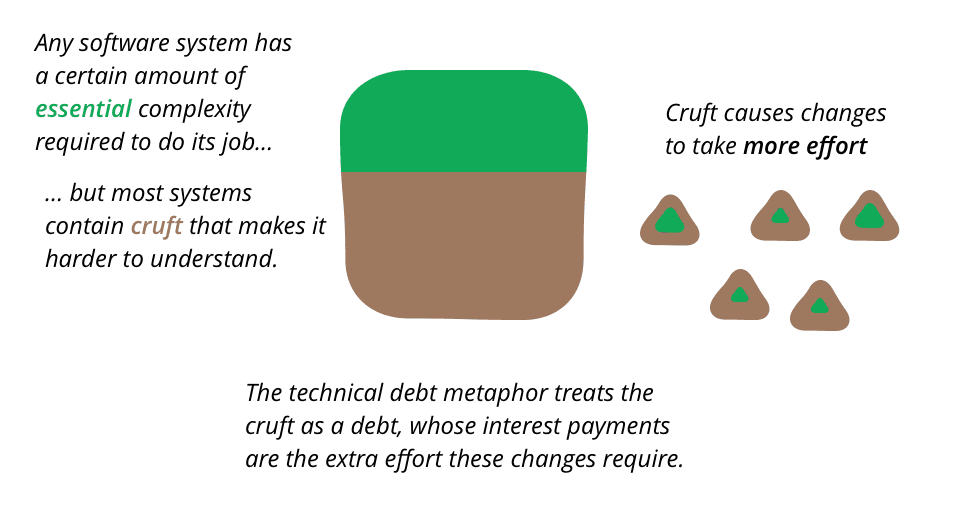
How do you justify API refactoring over new features to stakeholders?
Tests turning technical drag into business cost. Frame cruft as interest on velocity; quantify incident cost, MTTR, and lead time; advocate incremental cleanup with product work. Avoid demanding a six-month rewrite without product tie-in.

Use Cost of Delay to decide which project to start first
Tests if you quantify economic burn rate of sequencing, not raw ROI. Calculate CoD by dividing monthly value by duration: Project B is $5k/mo, Project A is $2.5k/mo, so start B first. Red flag: static NPV or "quick win" logic without computing delay cost.
Decide between cutting a feature versus taking technical debt for a deadline
Quantify business risk of both paths, secure buy-in, and lock a time-boxed post-launch remediation plan.
How would you apply RICE scoring to prioritize these three initiatives?
This tests translating technical tradeoffs into quantified RICE scores. A strong answer maps Reach to users, Impact to latency or revenue, Confidence to data quality, and Effort to person-weeks. Red flag: uniform confidence or vague t-shirt sizing.

How do you prioritize a P1 bug versus a sales-driven feature request?
Use impact-effort or weighted scoring; check if the 1% crash hits paid tiers; verify deal size, probability, and stage; weigh maturity.
How would you propose an MVP for a social sharing feature?
Tests whether you can isolate the smallest releasable slice that validates user value. Propose one sprint covering auth, share creation, and a minimal feed. Avoid cutting every requirement by 30 percent or skipping observability.

How would you track technical health against the strategic roadmap?
Bridging engineering health signals to roadmap decisions. Combine DORA metrics, performance budgets, and architectural fitness into a scorecard with thresholds that force roadmap negotiation when health declines. Wrong: no feedback loop into roadmap.

What process do you initiate when a competitor disrupts your core value?
This tests strategic technical judgment under market pressure. A strong answer covers rapid threat assessment, feasibility spikes, and option analysis weighing speed versus debt, then proposes a staged plan.

How would you structure a technical strategy parallel to the product roadmap?
Anchor on product vision; use RICE for work vs features; ship incremental milestones; validate with product.
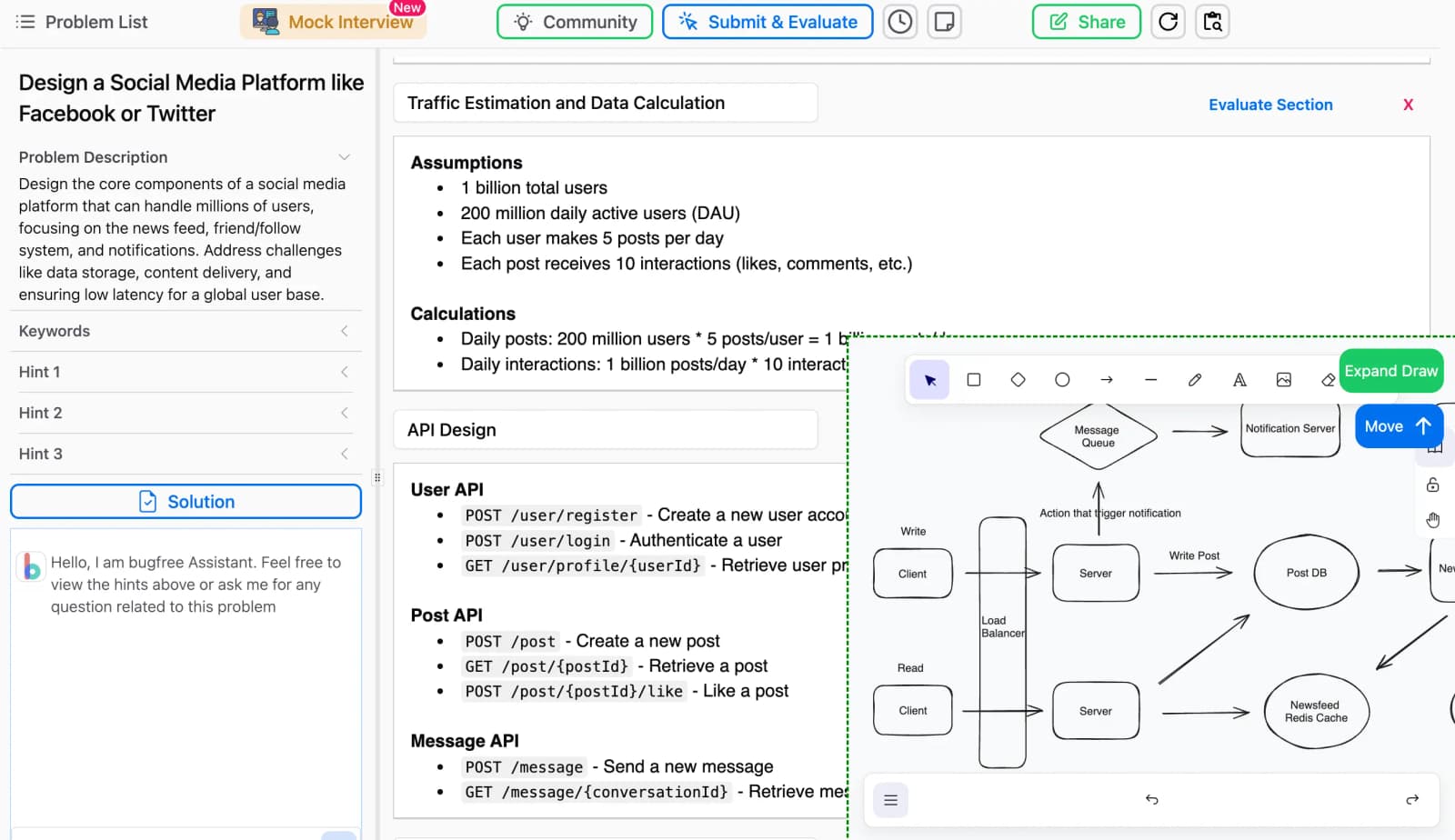
Your feature launches but engagement doesn't move. What's engineering's role in diagnosis?
Validate data, segment users, test tech and behavioral hypotheses, propose experiments.
What artifacts and processes mitigate cross-team API dependency risks?
This tests de-risking external API dependencies via contracts. A strong answer proposes an OpenAPI spec as the source of truth, mock servers for parallel work, and automated CI validation.
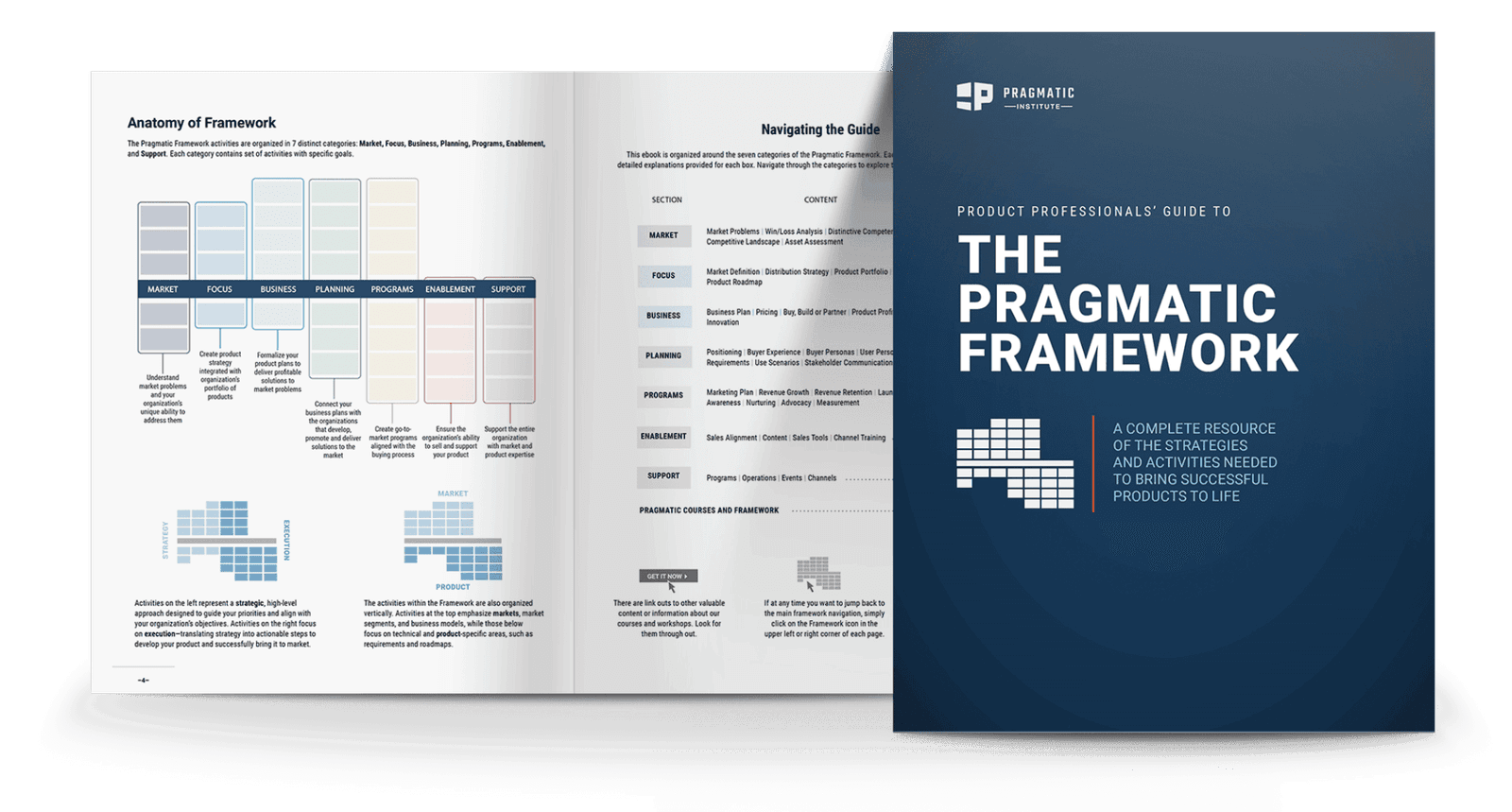
What questions assess strategic alignment before estimating effort?
This tests whether you validate business context before scoping. Ask: what market problem is solved, which company competency or asset is leveraged, and what metric proves success. Red flag: estimating before confirming strategic fit.
We are hiring for this. Every open role lists the topics its interview covers, so you can prepare for the real thing rather than guessing.
See open roles