How do you justify API refactoring over new features to stakeholders?
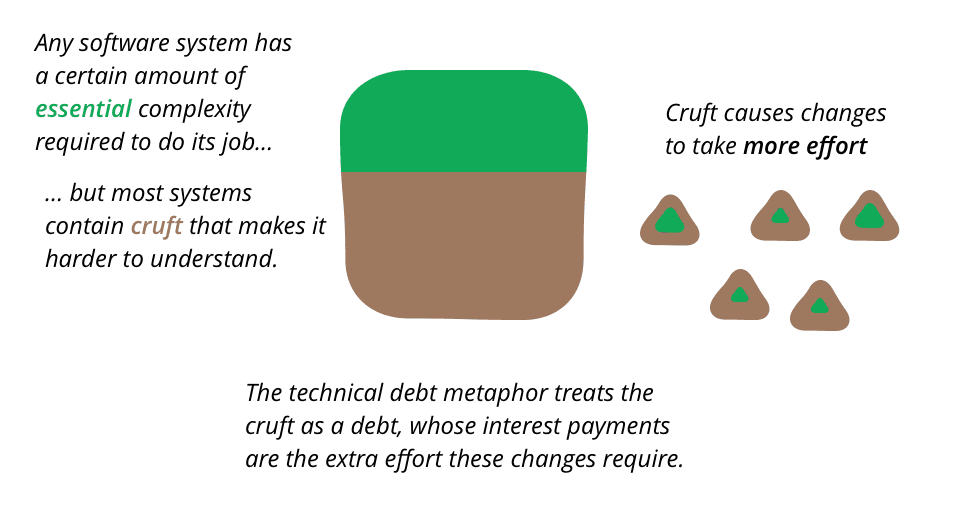
Tests turning technical drag into business cost. Frame cruft as interest on velocity; quantify incident cost, MTTR, and lead time; advocate incremental cleanup with product work. Avoid demanding a six-month rewrite without product tie-in.
What's really being asked
This question tests whether you can translate internal software quality into a language that product and finance understand. The interviewer wants to see business acumen, not just engineering opinion. You need to show that brittle systems create a measurable tax on delivery and that you know how to negotiate scope to pay down that tax without halting the roadmap.
The full answer
First, frame technical debt using the metaphor Ward Cunningham coined exactly as Martin Fowler describes it. Explain that cruft is the deficiency in internal quality and the extra time to build new features is the interest. Give concrete numbers such as a feature that should take four days but takes six because of the brittle API. Second, admit that you CannotMeasureProductivity precisely, so you build a proxy dashboard. The data to present includes incident cost in dollars, mean time to resolution, error rate trends, on-call burden measured in engineer-hours per week, and feature lead time regression. Third, propose paying the principal gradually rather than a big-bang rewrite. Fowler notes that spending an extra couple of days on the first feature to remove some cruft reduces the interest rate on future enhancements. Tie every refactor milestone to a product deliverable so stakeholders see continuous value. Fourth, prioritize by activity level. High-churn areas deserve zero tolerance for cruft because the interest payments are crippling, while stable but crufty modules can be left alone.
The mistakes people make
The biggest red flag is asking for a six-month feature freeze to rewrite the API with no product tie-in. Another mistake is claiming that quality is priceless and cannot be measured. Non-technical stakeholders tune out immediately. A third error is ignoring the operational tax and focusing only on developer happiness or clean code aesthetics.
What usually comes next
The interviewer may ask how you would handle a product manager who still rejects the refactor. They may also ask what you do if the data shows the API is rarely modified but causes incidents, or how you would structure an incremental strangler fig migration versus a big-bang replacement.
A concrete example
Say your API takes six days per feature instead of four because of tangled error handling. You estimate cleanup at five days. If you only build one feature, cleanup is a net loss. But the product roadmap has three similar features this quarter. Paying the five-day principal now saves two days on each of the next three features, yielding a one-day net gain within the quarter. You present the on-call data showing twelve pages per week costing four engineer-hours each, and you propose folding the error-handling cleanup into the first feature so the product team still ships on time while lowering the interest rate for the rest of the quarter.
Interview question
You are advocating to product and finance for time to refactor a brittle API. Which strategy best frames the request in business terms while keeping the roadmap intact?
- a.Request a six-month feature freeze to rewrite the API so the team can build faster afterward
- b.Quantify the extra days and incident dollars the cruft adds per feature, then embed incremental cleanup into the next product milestoneCorrect
- c.Promise that refactoring will double story-point velocity by eliminating technical debt
- d.Argue that messy APIs hurt engineer retention and that talent loss is the hidden cost of inaction
Why? this is the answer
Option B is correct because it translates technical debt into stakeholder-friendly operational costs and pays down the principal incrementally alongside product work. Option C is tempting because it offers hard numbers, but claiming to measure productivity via story points undermines credibility since engineering productivity cannot be measured precisely.
Just read this? Test yourself on what you have been reading.
Read the original → martinfowler.com
- #technical debt
- #product strategy
- #stakeholder communication
- #refactoring
- #metrics
You just looked this up. Could you explain it out loud?
That is the part interviews actually test. Tezvyn takes questions like this one and gives you what the interviewer is really checking, the answer that lands, and the mistake that ends the conversation, in the four minutes before your next meeting.
The iPhone app is on the way
We are building it. Until it lands, nothing here is held back from you: every interview card, your saved cards, streaks and the job board all work in Safari, plus hundreds of free practice quizzes of thirty questions each. Sign in and it all carries over to the app the day it arrives.
Want it as an icon? Tap Share at the bottom of Safari, then Add to Home Screen. It opens full screen and the cards you have read stay available offline.
We are hiring for this. Open roles that interview on technical debt — each one lists the topics its interview covers.
See open roles